Opinions
D.C. violence requires more than hashtags to halt
Council members should quickly adopt Mayor Bowser’s crime proposals


The numbers at the morgue grew 42 percent higher than 2014, surpassing last year with four months remaining.
Washington is at its worst dealing with hometown issues when self-conscious about being the national capital. Public dialogue suddenly becomes all hashtag-this and sloganeering-that, leading to debilitating inertia and rhetorical babble by both elected officials and policy advocates.
Local matters like the surging wave of violence become “nationalized” through the prism of polarizing coast-to-coast politics. We disenfranchise our own search for solutions while simultaneously complaining about being denied the right to fully exercise self-governance as a jurisdiction under partial federal control.
That’s what happened last week when D.C. Mayor Muriel Bowser stood inside a closed-down public school in the doubled-in-homicides Congress Heights neighborhood east of the Anacostia River to announce her response to a startling summer of gunfire throughout whole swaths of the city, including both worst-off and doing-well areas. A shocking series of drive-by shootings, random violence and street attacks prompted return of the fear when the city was the “murder capital” of the country.
A rising tide of resident anxiety and anger was fueled by reaction to the initially inept diagnosis by Bowser and a flatfooted Police Chief Cathy Lanier. They offered only the use of synthetic drugs and lingering beefs over street-corner dice games as feeble explanations, as if afraid to delve further for fear of violating pervasive pressure to remain “politically-correct” in every utterance. D.C. Council member silence became increasingly astonishing.
The numbers at the morgue grew 42 percent higher than 2014, surpassing last year with four months remaining. Where you lived and whether you were suddenly shocked at the danger or merely wearied by its accelerated pace didn’t much matter. A city began clamoring for something to be done to stem the lawlessness that now puts D.C. fourth in the country for rising violence – right behind St. Louis and Baltimore.
The mayor and police chief soon acknowledged that the escalating violence is partly attributable to a violent cadre of repeat offenders committing an “inordinate” number of crimes. Prior homicide or gun-related charges are increasingly common among criminals responsible for rising body counts. Bowser addresses this reality with commonsense specifics to “stop violent criminals from repeatedly victimizing our community.” The D.C. Council should adopt those proposals without delay.
When Bowser and Lanier started getting real about contributors to the spike in the death toll, the mayor was prevented from publicly detailing her plan due to shouting from Black Lives Matter protesters intent on disrupting her presentation and distorting her proposals. Tediously repetitive rush-hour traffic blockades to protest police misconduct elsewhere transformed to chants of supposedly impending “police terror” here. One disruptor told media “there are people in the community who do not think police are the answer,” adding that the group “doesn’t think the city should be investing more in the police.”
The following night two people were killed in six shootings spanning Adams Morgan in Northwest to the Northeast and Southeast portions of D.C.
From the Woodland Terrace low-income housing project residents in the Southeast neighborhood of Anacostia to those living in the developing Northwest neighborhood of Shaw, the two areas hit hardest by violence and dead bodies in the street, locals clamoring for action by city officials aren’t welcoming of tiresome tantrums of televised theatrics. They simply want the killings to stop.
There is a time for the “citywide meetings” typically called for as a diverting panacea to accommodate discussing larger systemic issues of poverty and hopelessness. City officials, after all, have had decades to do so. The fact that they have failed to provide much focused leadership or develop many effective solutions doesn’t defer the need to end the increasing violence now.
The relevance and worth of government is best measured in how it fulfills core service responsibilities and delivers basic essential functions such as public safety. D.C. officials can only hope to earn the restored confidence of a community calling for a halt to the terror – but only if they do.
Mark Lee is a long-time entrepreneur and community business advocate. Follow on Twitter: @MarkLeeDC. Reach him at [email protected].

Opinions
Trans people need a politics of ordinary life
Seeking the freedom to stop explaining ourselves
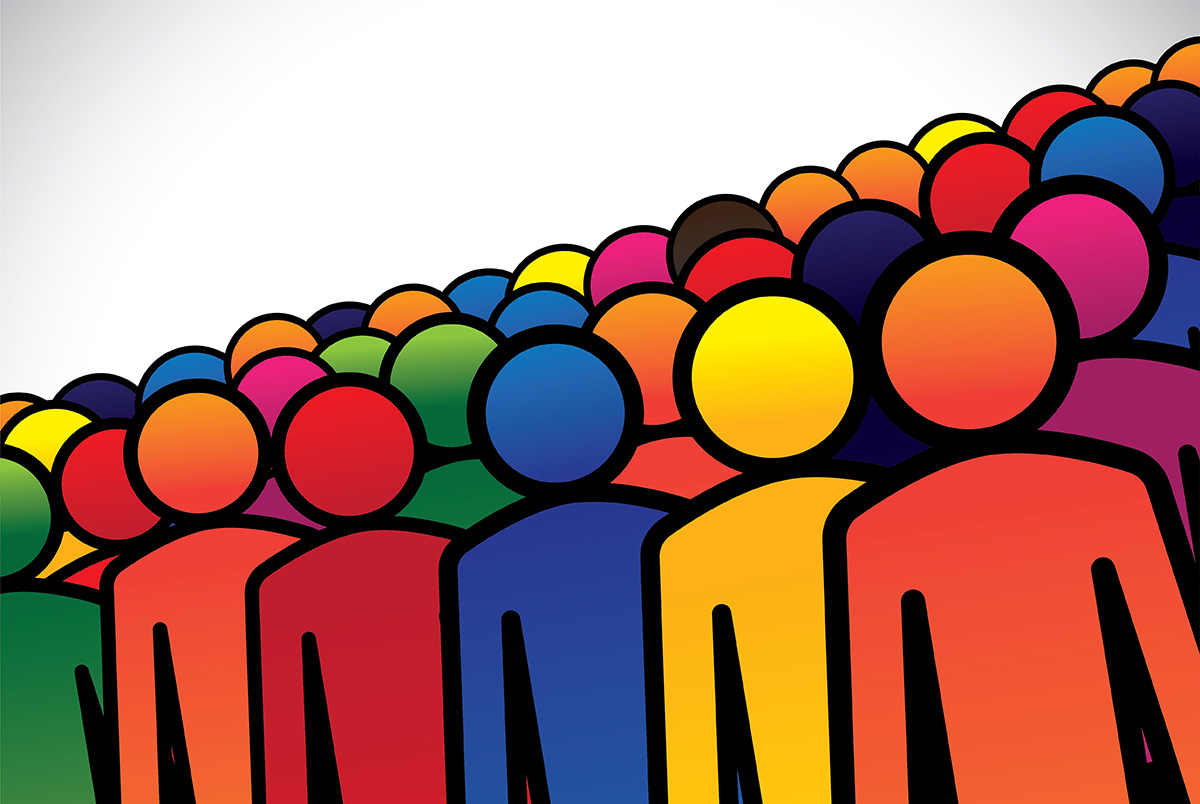
For much of the modern transgender rights movement, our political vocabulary has understandably been a vocabulary of emergency. We talk about healthcare bans, bathroom restrictions, discrimination, violence, court decisions, and executive orders. We organize because something is being taken away, prohibited or threatened.
Those fights are necessary. But they cannot constitute our entire vision of transgender life.
The Williams Institute at UCLA estimates that approximately 2.8 million Americans ages 13 and older identify as transgender, including roughly 2.1 million adults. Transgender people are only about 0.8 percent of the adult population. Yet transgender Americans occupy an extraordinary amount of the country’s political attention.
Behind those political arguments are millions of people doing profoundly ordinary things.
We commute to work. We complain about rent. We walk our dogs. We sit in traffic. We buy groceries. We fall in love with people who sometimes disappoint them. We worry about our parents getting older. We try to make enough money to retire. We drink coffee before work and wonder what to make for dinner.
This ordinariness should be part of the political project.
For years, LGBTQ advocacy has emphasized visibility. Visibility was necessary because silence allowed discrimination to flourish. Americans needed to understand that gay and transgender people existed in their families, workplaces and communities.
But visibility is a means, not an end.
The endpoint of civil rights is not permanent visibility. It is freedom.
And freedom includes the freedom to stop explaining yourself.
There should be nothing remarkable about a transgender accountant preparing someone’s taxes, a transgender teacher grading papers, a transgender novelist writing a book that has absolutely nothing to do with gender, or a transgender retiree arguing with the homeowners association about somebody’s fence.
That sounds almost comically mundane. That is precisely the point.
For many transgender Americans, mundane life remains harder to obtain than it should be. The 2022 U.S. Transgender Survey, which collected responses from more than 92,000 people, found that 34 percent of respondents were experiencing poverty and 18 percent were unemployed. Eleven percent of respondents who had ever worked reported losing a job because of their gender identity or expression. Nearly 30 percent had experienced homelessness during their lives.
Those numbers tell us something important about what transgender politics should accomplish.
A successful movement cannot measure progress exclusively by representation in television shows, corporate Pride campaigns or the number of transgender politicians elected to office. It must also ask whether transgender people can build stable, boring lives.
Can you find a job?
Can you rent an apartment?
Can you go to the doctor without becoming a political subject?
Can you walk into a restaurant with your spouse without calculating whether everyone is staring at you?
Can you spend an afternoon thinking about something other than being transgender?
Even healthcare illustrates the distance between formal inclusion and ordinary dignity. A 2024 KFF analysis found that 33 percent of LGBT adults who had recently used healthcare reported being treated unfairly or disrespectfully by a healthcare provider, compared with 15 percent of non-LGBT adults. Thirty-nine percent said a negative healthcare experience had made them less likely to seek care.
Equality therefore cannot simply mean keeping a clinic open. It must mean being able to enter that clinic, receive competent treatment and leave without feeling that your identity has swallowed the entire encounter.
There is a broader political lesson here.
Transgender Americans have sometimes been transformed into abstractions by both sides of the culture war. To some conservatives, we are evidence of social decline. To some progressives, we become symbols of resistance. Neither description leaves much room for the complicated, frequently uninteresting reality of being a person.
Most people do not wake up every morning thinking about their demographic categories. They think about deadlines, relationships, bills, ambitions, annoyances and whether there is enough milk in the refrigerator.
Transgender people deserve that luxury too.
A politics of ordinary life would therefore defend transgender healthcare and civil rights vigorously while articulating something beyond defense. Its objective would be integration: transgender Americans participating in civic life without every interaction becoming a referendum on gender.
That means protecting employment and housing. It means making competent healthcare routine rather than exceptional. It means creating communities where transgender children can imagine futures that extend beyond surviving adolescence. And it means allowing transgender adults to become bankers, mechanics, professors, parents, entrepreneurs and retirees without expecting them to become activists simply because they are transgender.
There will always be people who choose activism. We need them. There will always be people who speak publicly about their transitions. Their testimony matters.
But there should also be room for the transgender person who wants none of that.
Civil rights movements succeed not merely when marginalized people become visible, but when their presence stops requiring explanation.
The most radical future I can imagine for transgender Americans is therefore surprisingly conventional: a country in which being transgender can become one fact among hundreds about a person rather than the organizing principle of a life.
Perhaps the ultimate measure of transgender equality will not be how frequently America talks about transgender people. It will be the day when it no longer has to.
Isaac Amend is a transgender man and writer based in D.C. In 2017, Isaac starred in National Geographic’s “Gender Revolution” documentary. He sits on the board of the LGBT Democrats of Virginia. His author’s portfolio is available at isaacamend.com and you can find him on Instagram at: @isaacamend.
Opinions
Enlarging the Supreme Court keeps making more sense
If effort to restrict mail in voting stands, we are in major trouble
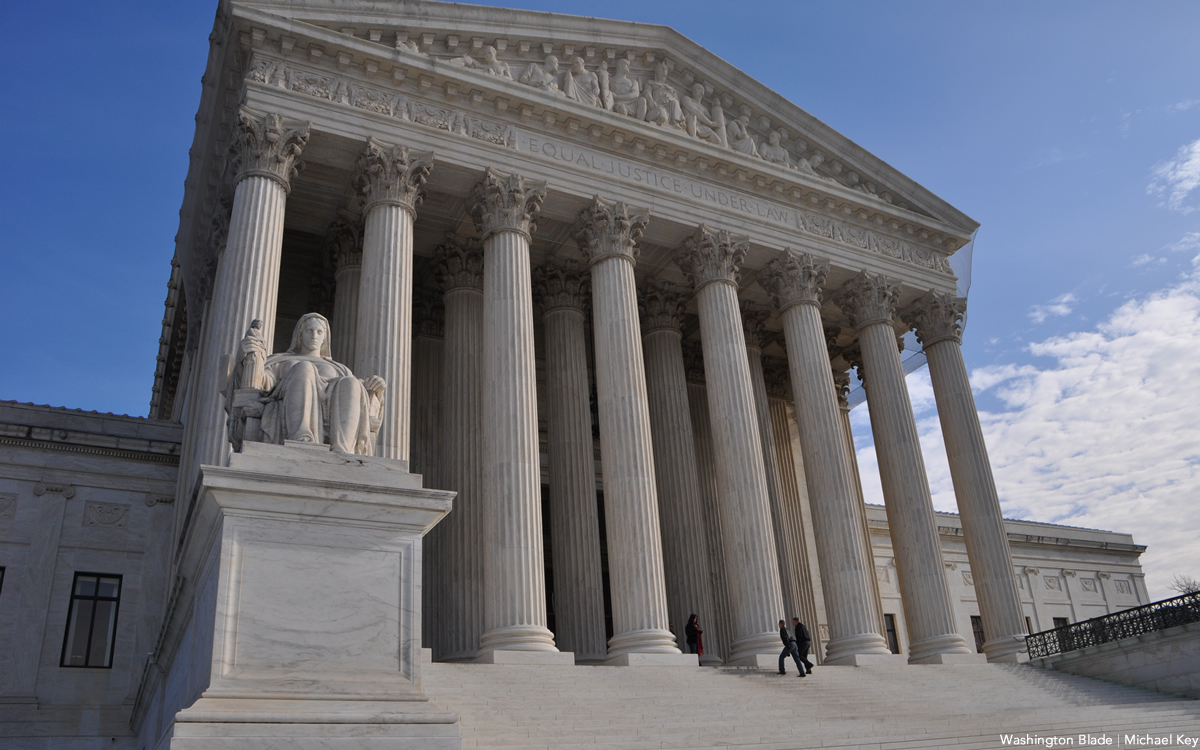
I have been going back and forth on whether I think adding justices to the Supreme Court is the right thing to do. But if the court takes the final step of allowing the felon’s executive order on mail in ballots to move forward, I am definitely for enlarging the court. There are many things this court has done that I find reprehensible, but this would be by far the worst. It would irreparably impact the very cornerstone of our democracy — the right to vote.
The order requires the Department of Homeland Security (DHS) be sent voter lists from each state, and then compile/verify a list of U.S. citizens in each state who are eligible to vote. DHS would undertake the effort to compile the list with the Social Security Administration. We are talking about a list of more than 200 million names. The list would be by state, and then sent to each state. It then directs the U.S. Attorney General to prioritize the investigation and prosecution of “election officials, individuals, and other entities that violate the law by issuing or distributing Federal ballots to ineligible voters.” Then according to the White House fact sheet on the EO, It directs the AG to withhold federal funds from noncompliant states.
In addition, it involves the Postal Service in determining correct ballots, and instructs ballots it transmits to be “placed in secure ballot envelopes marked as Official Election Mail, with unique Intelligent Mail barcodes, that facilitate tracking. So, one has to question does Homeland Security then track every ballot? It is all insane, meant to limit voting, and scaring people into not voting when we already have a safe, proven system in place. All this being done at the whim of the felon in the White House when it is very clear the Constitution vests the administration of elections with the states. It does allow Congress to pass laws pertaining to elections, but is clear the Executive Branch has NO official role in changing election laws, or carrying out elections. The court must be deaf, blind, and dumb, if they don’t know the Congress has refused to pass the President’s SAVE Act, which would have made some changes. Again, they know this, and if they choose to disregard this, and the constitution, and allow the felon to proceed to implement any part of his EO, they should be impeached.
It is clear to anyone with half a brain, that all this, even if it were constitutional, would be totally impossible to do in the eight weeks before the midterm elections. In the 2022 midterm elections, nearly 107.7 million valid votes were cast. Currently, is it difficult to determine the exact number of registered voters, as they are registered by state, but it is generally agreed to be approximately 200 million. The idea the Trump administration could in any way try to validate 200 million names in the next eight weeks is totally insane. Again, this is why it is left to the states to do, and it is an ongoing process. Trump filed 60 lawsuits to try to prove invalid votes in the 2020 election, and he lost all 60. Recently, DHS looked at the Nevada voting rolls, and initially claimed there were about 16,000 illegal voters listed. But when it came down to returning the supposed illegal names to Nevada, election officials there received a list with only about 185 names on it. Over the years where Trump has sued, and there have been recounts, there have never been more than a handful of illegal votes and it was clear they made no difference in the results.
Voting by mail is crucial for so many. Even the felon votes by mail. So, if the court were to side with the felon on this, and approve even part of his executive order, they are clearly doing it to screw up our elections, and be complicit with the felon. Based on such an outcome I would lobby the Senate to add justices to the court. The number of justices on the court has changed five times before. Today we have two justices, Alito and Thomas, whose votes you know in advance on any case before it is even heard. We know there are six conservative justices. So, if Democrats take the Senate they could add four more liberal justices to the court for a liberal majority. Even adding three would provide for an even balance which could make for a serious debate on the issues within the court, and final decisions wouldn’t be forgone conclusions as they so often are today.
Peter Rosenstein is a longtime LGBTQ rights and Democratic Party activist.
Opinions
American democracy on the brink
When Trump threatens voting rights to undermine midterms, we should believe him

President Trump’s favorability is at record lows, dragged down by a reckless and unpopular war, soaring food and gas prices, economic instability and a general sense that he is flagrantly corrupt, more focused on vengeance than governing, flailing and mentally unwell. Assuming the elections take place without interference, Democrats are expected to regain control of the House in November, with odds increasing of a Senate takeover as well.
In normal times, a rational president facing such headwinds would pursue policies designed to regain public support. But we see no sign of that. Instead, we are seeing a renewed focus on repeating the well-litigated and demonstrably false claims that he won in 2020, and that our elections are rife with voter fraud. He recently devoted most of what was billed as a major speech to the nation on regurgitating these imaginary claims, this time alleging that the Chinese had interfered in the 2020 election, thereby augmenting the pretextual narrative with a national security rationale. Although it is unclear whether Trump believes any of this himself, he has convinced most of his supporters to believe it, and that serves a very important purpose. Those false claims drove thousands to storm the Capitol to prevent the certification of the 2020 election, and he appears again to be setting the stage for what he seems willing to do to avoid defeat at the polls.
Since returning to power last year, Trump has systematically fired and replaced personnel at all levels who might not comply with illegal directives and taken other actions to remove the obstacles that constrained him before. He has thoroughly purged the military and the Department of Justice of career professionals and replaced them with die-hard loyalists who will reliably do his bidding. He has totally neutered the Congress, rendering this once-powerful co-equal and independent branch of government totally subservient. And he has cowed much of the judiciary, including the Supreme Court, into a state of complicit compliance. The Department of Justice has been so thoroughly co-opted by him that he routinely and publicly directs the prosecution of his enemies on tenuous or non-existent grounds and indictments soon follow in virtually every case.
Trump has also militarized America’s streets through the deployment of a federalized National Guard deployed primarily in Democratic cities under the pretext of a crime epidemic that local authorities could not contain. Trump has unleashed a highly aggressive and unaccountable Immigration and Customs Enforcement (ICE) force of masked gunmen ostensibly to round up and deport people who were in the country illegally. In fact, ICE has acted with such wanton brutality that it has disappeared and summarily deported people, and murdered people, including several American citizens, in broad daylight and on video with no consequences. These troops, who function almost as independent and unaccountable militias of the president, have terrorized segments of the population and acclimated Americans to a menacing armed presence roaming the streets in a manner that Americans have never experienced before. It is not hard to imagine how these forces could be put to use during the election: to intimidate and suppress the vote in Democratic precincts, to seize voting machines or otherwise interfere with the election process, and/or to provoke chaos and unrest to provide a pretext for the president to contest or nullify the election results.
This is not theoretical. It is telling that Trump’s two top priorities are premised on the big lie about the 2020 election and on creating a pretext for interfering in the upcoming election. He has prioritized legislation called the SAVE Act, which would interfere with states’ rights to administer elections by mandating enhanced voter ID requirements in a manner that would disenfranchise voters, particularly those that tend to vote for Democrats. His other top priority is a $1.8 billion “anti-weaponization” fund designed to compensate and reward convicted Jan. 6 rioters who, at Trump’s instigation, ransacked the Capitol, brutally assaulting police officers and hunting members of Congress with the intent of killing them. The rationale for this massive slush fund is the fiction that these convicted felons were innocents unfairly subjected to baseless, politically motivated prosecutions. This fund was so controversial that two Republican senators had blocked the nomination of Todd Blanche as attorney general until they received a very dubious written assurance — quickly disavowed by Trump — that the fund would not be deployed.
It is also alarming that Trump repeatedly calls for nationalizing the elections process, despite the Constitution specifically vesting these powers with the individual states, and he has demonstrated that he means business. He has pressured states to turn over confidential voter data and taken punitive measures against the non-compliant, including withholding allocated federal funds. He has harassed and intimidated state election officials with threats of criminal prosecution for a variety of specious reasons and has sought confidential personal information about these officials. Notably, he recently abolished the U.S. Elections Assistance Commission, a watchdog agency established by Congress after January 6 to ensure the integrity of our elections. And perhaps most disturbing of all, his servile FBI took the unprecedented step of raiding election offices in Atlanta, Georgia to seize and confiscate voter rolls. There is no reason to believe that he will hesitate to do so again in November. In fact, he recently stated that he may send ICE and National Guard troops to polling places, and some members of Congress and MAGA influencers are calling for him to do just that. Under the right circumstances, which would include accusations of voter fraud and chaos at the polls that could easily be provoked or manufactured, he would have the legal authority to do so.
At the same time, Trump has openly mused that the public might prefer a dictatorship and repeatedly hinted that he might seek an unconstitutional third term. At the White House Correspondents’ Dinner last month, he wore a red cap emblazoned with “Trump 2028”, and just this week, he indicated that he is willing to declare a national security emergency to cancel elections. “Stranger things have happened,” he said, seeming to prepare the public for what might be in store. Trump has so successfully inured the public and the media to such incendiary and anti-democratic threats that they no longer induce opprobrium or outrage.
This president has repeatedly demonstrated and flexed his authoritarian impulses, admired dictators, and increasingly signaled a determination to seize control of the upcoming election up to and including cancelling it. He tried to stage a coup once and came very close to succeeding. This time his actions are increasingly speaking the quiet part out loud. What should alarm anyone paying attention is that the groundwork for Version 2.0 has been very well laid and that, when Trump signals so clearly that he is determined to win by any means necessary, we should believe him.
Peter Pappas is an attorney who served in senior positions in the Obama and Clinton administrations.

‘Here the Whole Time’ delivers queer coming-of-age comedy

Pentagon expands testosterone screening as trans troops face hormone therapy restrictions

Calendar: September 4-10

Swiss government backs nationwide conversion therapy ban

Gloria Steinem dies at 92

Beloved D.C. ‘Old Catholic’ Bishop Charles Braun dies at 86

Top Bulgarian court rules government must legally recognize trans people

Markey’s primary win deemed success for LGBTQ activists

Lou Chibbaro Jr. documentary wins award from NLGJA

The mastery of love
-

 Obituary5 days ago
Beloved D.C. ‘Old Catholic’ Bishop Charles Braun dies at 86
-
Bulgaria5 days ago
Top Bulgarian court rules government must legally recognize trans people
-
2026 Midterm Elections5 days ago
Markey’s primary win deemed success for LGBTQ activists
-
National5 days ago
Lou Chibbaro Jr. documentary wins award from NLGJA