Commentary
It’s time we talk about trauma
Coping with parental rejection a common struggle for LGBTQ community
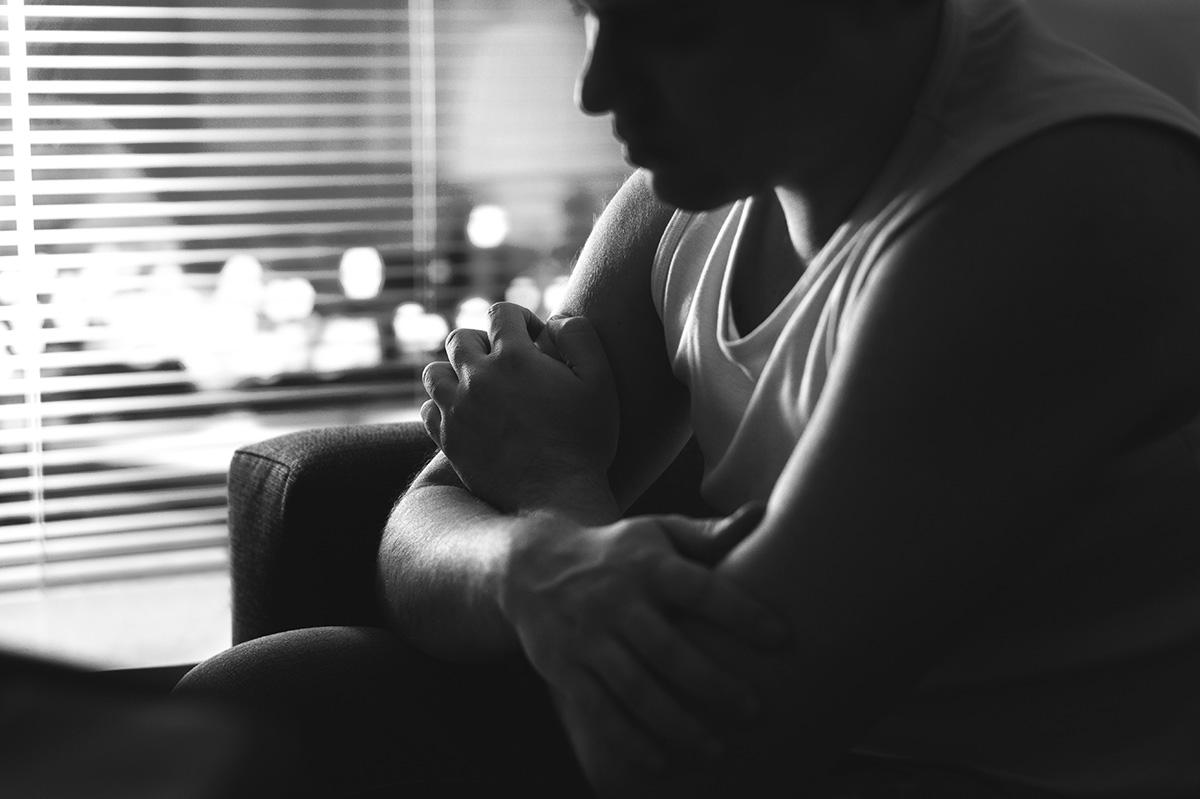
(Author’s note: The content of this article may be triggering for some readers. If you or someone you know struggles with suicidal ideation, support can be found by calling or texting 988.)
In becoming a barback, I dove headfirst into the underbelly of fast-paced, homoerotic nightlife, which can be as stressful as it is fun but almost always entertaining. For me, though, the best part has been the camaraderie formed with my staff, in particular the other barbacks, all of whom bust ass behind the scenes while sharing laughs and memes along the way. Among this crew I’ve formed solid, healthy friendships, although it’s Marsel in particular who sees me in a way most in D.C. never has.
At first, I wasn’t sure if Marsel and I would get along. He’s ripped, tatted, confident, and hot, which is essentially the recipe for intimidating. Then we worked bar shifts together and I finally got to know him. Turns out he’s insanely witty, kind if you’re not an asshole, and overall easy to talk to. As it so happens, he and I are quite similar: two gays in our mid-30s working as barbacks who ended up in D.C. after growing up in rural, ruby-red states. Still, one parallel stands out above the rest: we both also have daddy issues.
That’s right—it’s a cliché and often a punch line of jokes (which can still be funny, by the way), but the reality for many queers is rejection from one or both parents. For some, including Marsel and me, the traits of a toxic parent warps childhood beyond just conservative thinking. Case in point: both of our dads harbored deeply rooted anger and resentment, making their reaction to learning who we are seemingly inevitable.
For Marsel, that pivotal moment came when his parents discovered he had a boyfriend in high school. In addition to filling his mind with fears about being gay, “they made me switch schools, severely monitored all my communications, what I would wear to school, and who I could hang out with. I spent the remainder of my high school years alone with no friends, isolated in a rural town outside of Nashville.”
A few years later, Marsel’s parents kicked him out upon learning he engaged in sexual activity with men. “They expelled me from the family home and, for many years, treated me as though I no longer existed to them. I spent the better part of a year living in my car and the rest of the time couch-surfing, relying on the kindness of friends.”
As for me: my dad served dual roles as patriarch and specter of my family. He was abusive physically and verbally, though still I tried maintaining a connection to the guy, likely fueling my attraction to mean guys but that’s another story. Despite my efforts, my father abruptly ended our relationship shortly after I came out. In our last phone call, he couldn’t even say the word gay, choosing instead “the way you are.” From there he listed everything he disliked about me, none of which was my homosexuality because these days no one admits so boldly to prejudice. Instead, they gaslight you with every other vulnerability as justification for mistreating you.
It’s been well over a decade since I’ve spoken to or even seen my father, and at this point I’m certain he’ll happily march to his grave without seeing me again. Losing a parent is always hard. Losing one because they don’t want to love you anymore, well—it’s a searing pain that rips your heart wide open. I wouldn’t wish it on my worst enemy.
Sadly, stories like these are far from unique among queers, nor are they the sole trauma we experience. From living in shadows and in shame, to schoolyard bullying and alienation, to pressures of religion or toxic masculinity, to a higher likelihood of sexual violence or discrimination in the workplace, we are affronted with so many traumas they’re nearly a marker for our kind. This also doesn’t include intersectionality with other traumas, such as a growing up in America a woman, a person of color, or poor. It’s no wonder, then, that the National Institutes of Health (NIH) published a review last year declaring, “LGBTQ people are at higher risk of PTSD compared with their cisgender/heterosexual peers.”
To most queers, what I just described is neither new nor surprising. In fact, in the face of this collective trauma, queers often come together in the form of fundraisers or Pride events. Yet despite rallying around the common inputs of our trauma, we rarely discuss the outputs. That’s right — emotional trauma has outputs, as neuroscience has proven, and when left untreated those outputs emerge as toxic traits in our adult lives.
To illustrate, let’s take it back to Marsel. While he hoped to leave his past behind in Tennessee, that wasn’t the case. “For things I hadn’t fully processed or dealt with, my past trauma would bubble up to the surface in the form of emotional triggers, which would inevitably spark my anger. My anger manifested in various ways, and I would often find reasons to justify my behavior. I was angry about my relationships, angry about my body, angry about my career – basically, I was angry about everything. And the root of all that anger was the unresolved trauma I hadn’t properly addressed.”
I couldn’t relate more. I tried to be tough and pretend I didn’t care that my father abandoned me, but the thought still crossed my mind and crushed me every time. Then I took that pain and subconsciously projected my anger everywhere — onto friends, onto other gays, onto myself, but especially onto my relationships, where I’d swing like a pendulum between states of hyperattachment and hyperdetachment with almost no in-between. Steadily, my unresolved trauma chipped away at my self-worth, and once that goes, self-destruction is inevitable.
Since the path to self-destruction is riddled with more trauma, the downward spiral only gets steeper. “My most impactful and lasting piece of trauma occurred two days before my 25th birthday,” Marsel told me. “The summer of 2013 I had been more than reckless with the frequency of my sexual encounters. I had often done pretty dangerous and wild things in regard to meeting up with guys. Then, on Dec. 10, 2013, I found out I was HIV positive.
“At the time it was quite Earth-shattering news because I knew no one who was positive and had no idea what this would mean for me. I was pretty hard on myself for being reckless, and it took a bit to pick myself up, but over time I used it to inspire me to live my life fully and authentically.”
Often it takes Earth-shattering events to serve as a wakeup call for change. When my PTSD transformed into social anxiety, it was easy to suppress at first with sex, drugs, and most often alcohol, which inevitably led to the occasional outburst, or the loss of a friend. Yet still I’d go out, even more anxious I’d run into newly formed enemies, so I’d drink more, at times pre-gaming by myself before pre-gaming with others before eventually stumbling into the bars. Naturally this facilitated more outbursts, cost me more relationships, and once landed me a night in jail. The further I unraveled, the more I numbed it with heavier drinking, darker sex, harder drugs, until finally — it pains me to write, but for the sake of honesty I must — I was contemplating, threatening, and attempting suicide.
Sorry to get heavy, but it’s important to dissect why and how queers experience emotional hardship. We don’t struggle simply because we’re queer but rather due to the trauma thrust upon us by a world that still fears queers. As a result, normal events — such as a breakup or losing a job — can feel insurmountable, like proof that those who rejected us were right all along.
Thankfully, queers can rely on each other for support, right? Sounds nice in theory, but in practice we D.C. gays are pretty fucking mean to each other. Sure, we find our friends, but often our community is itching to judge us at every corner. We throw insults, ostracize those deemed “crazy,” and constantly seek validation from people we (Instagram) deem perfect. And no, I am not above this. I’ve been a narcissist. I’ve burned bridges with glee. Looking back, it was my inner turmoil bursting at my seams.
Marsel summarized our behavior well: “Everything is a trauma response. That mean gay you see at the bar – trauma response. That gym obsessed muscle queen – trauma response. That career-driven type-A Capitol Hill gay – trauma response. Most of the time I find when people are treating me a certain way, it has little to do with me and everything to do with their own trauma.”
So, we find ourselves amid a queer trauma cycle in which hurt queer people hurt more queer people. Sounds bleak, but the good news is we also have the power to change that. And we must, for a recent survey by the Trevor Project found a staggering 41 percent of LGBTQ+ youth aged 13 to 24 considered suicide in the last year alone. Queer trauma isn’t going away, so it’s on us to avoid bestowing our trauma to younger queers and instead provide a safe community not only to thrive but to experience inevitable lows as well. That may seem like a tall order, but based on what I’ve learned from Marsel, two measures can move us closer.
First is simple self-reflection, for when trauma goes unnoticed it grows steadily like mold, potentially upending your behavior without you even noticing. “As I moved through different stages of my life,” Marsel explained, “I began to see how this unprocessed trauma and anger influenced so many aspects of who I had become. It colored my reactions to conflict, my relationships with others, and even my relationship with myself.”
The only way to process trauma is to excavate your mind and dissect underlying memories and feelings, which can be accomplished in many ways including journaling, art, or my personal favorite: therapy. While I didn’t start therapy until my 30s, taking that leap became a life-changing, and potentially lifesaving, decision. “Through therapy,” added Marsel, “I was able to uncover the reasons why this trauma continued to follow me throughout my life and how it manifested.”
It all sounds so simple: get therapy, and you’ll get better. However, therapy only goes as far as you let it. Progress is never linear and brutal honesty is a must; as a result, not everyone gets there (no judgment though, for I’m not all the way there myself). In fact, my hardest step was admitting I needed therapy at all, for seeing a therapist is often treated like spotting a UFO — no one wants to admit it out of fear of looking insane. However, often the fear of appearing crazy leads to the most toxic behavior, as I’ve witnessed in D.C. time and time again.
To heal requires dissolving the ego. While tough, it’s truly the first and most important step.
As for the second measure: we need to cut each other some slack. No, this doesn’t mean excusing terrible behavior, but it does mean holding the belief that others — including and especially your queer enemies — can grow. If not, then tell me: who’s supposed to believe in your growth if you don’t believe in the growth of others? And if your response is you don’t need to grow, you likely have the most growing to do.
Writing off one of us is writing off all of us, and if we keep burning each other at the stake for every flaw, we’ll grow weaker as a community. Besides, the rest of the world already does that to us. Why do it to each other as well?
My hope is for more queers to see each other the way Marsel and I do. Not because he and I are perfect — if anything, we’re far from it. Instead, in between inside jokes, we share our mistakes, our hardships, and the work we’re putting in toward self-love and improvement. That feels rare in a city obsessed with perfection, but that’s also why it feels genuine.
And genuine feels worlds better than perfect ever could.
Jake Stewart is a D.C.-based writer and barback.


Commentary
When a church fears the rainbow
Puerto Rico pastor objected to Pride symbols outside congregation
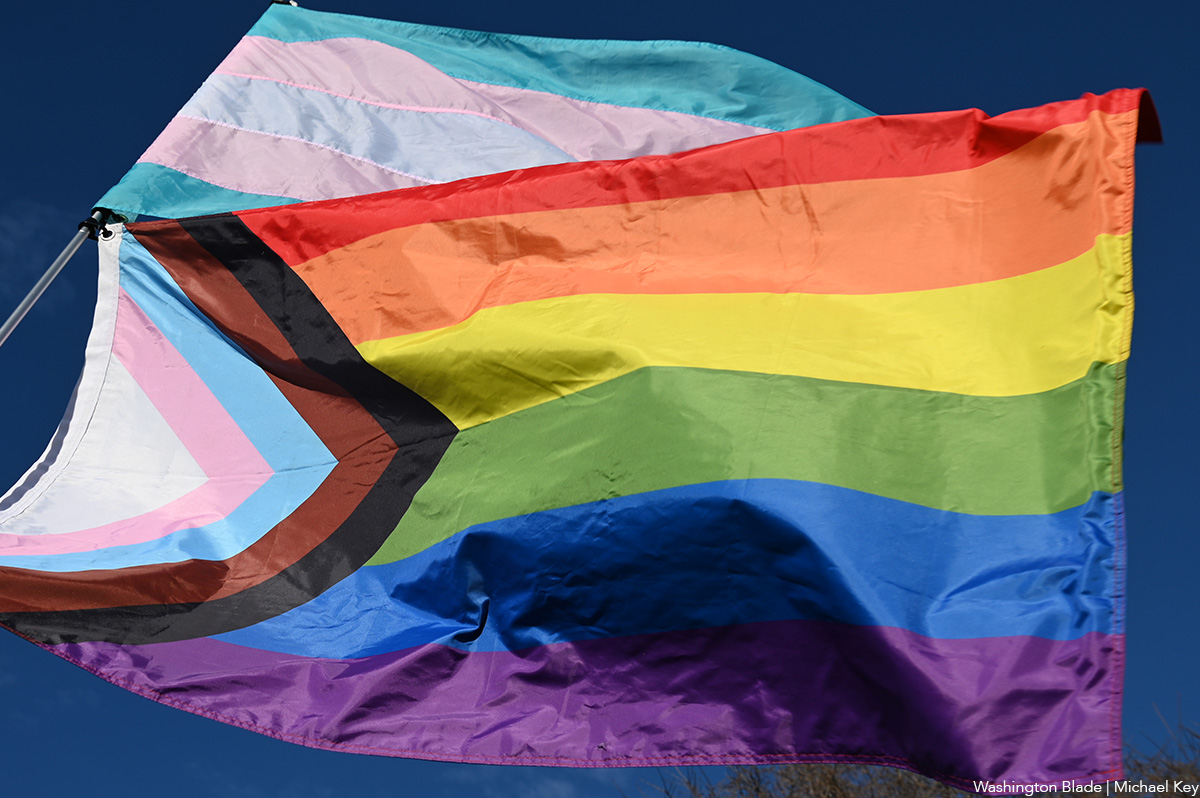
There are moments when an incident stops being merely a local story and begins to reveal something much deeper. What happened on June 28 outside One Church, in Comerío, Puerto Rico, belongs in that category.
I do not know who painted the rainbow colors on the asphalt and on a roadside guardrail. I do not know what motivated them, and it is not my place to justify their actions. If someone believes a law was broken, there are authorities and legal mechanisms to address that. That is not the point of this reflection.
The point is the words that followed.
Hours after those colors appeared, Pastor Jorge J. Santiago Reyes went live on social media. He said he felt threatened. He described what happened as a physical attack against his church. He appeared angry and disappointed. He called those who painted the rainbow “cowards” and “charlatans.” He expressed frustration with the support that, according to him, the municipal government of Comerío has shown toward the LGBTQ community, and with those who support posts related to that community. He repeated several times that the people responsible had “crossed the line.” He ended his message by saying, “These charlatans have to be stopped.”
As I listened to his words, I stopped thinking about the paint.
I began thinking about fear.
There is one phrase the pastor repeated again and again: “They crossed the line.” Yet he never explained what that line was. If he was referring to a possible violation of the law, that is for the authorities to determine. If he meant respect for property, there are also procedures to deal with that. But when that line remains undefined and the message begins to associate a rainbow with a threat, the question changes. It is no longer only about a guardrail or a road. It becomes a question about what boundary, in the pastor’s view, was actually crossed.
Paint can be erased.
A brush can cover the asphalt and return a guardrail to its original color.
What does not disappear so easily is the meaning of those colors.
And perhaps that is where the real conflict begins.
It is significant that this happened precisely on June 28, the day when the LGBTQ community remembers a history marked by exclusion, violence, and the struggle for dignity. What represents memory, hope, and the possibility of living without hiding for millions of people was presented by others as a threat.
I do not know why someone painted that rainbow. I do not need to know in order to ask whether those were the words society should expect from a pastor.
A religious leader may feel hurt, frustrated, or angry. What he cannot forget is the responsibility that comes with every public expression. His words do not end when a livestream ends. They move beyond the space of his church, reach people who may never share his faith, and help shape the way others see those who think differently. When a pastor calls other people “charlatans” and “cowards,” says they “have to be stopped,” and turns a rainbow into evidence of an attack, he is no longer speaking only from frustration. He begins to build a discourse that can feed rejection toward a community far larger than the people responsible for that act.
There was another moment in the livestream that caught my attention. The pastor reminded viewers how much he has served Comerío, how much he has accompanied his community, and how much he has worked for it. I have no reason to question that service. I am sure many people can testify to the good he has done.
That is precisely why it was difficult to hear.
Pastoral vocation is not about reminding a town of everything one has done for it when conflict appears. Service does not lose its value when it goes unrecognized; it loses something when it becomes an argument to claim a moral position from which to speak down to others. A person who serves does so because that is the nature of the calling, not because that service grants authority to discredit those who think differently.
As a pastor, that part of the message left me deeply uneasy. Not because I expect ministers of God to be perfect. We are not. But because our words carry weight, we are called to speak with greater responsibility. Some expressions build bridges. Others raise walls. Some words invite encounter. Others end up justifying rejection.
The paint will disappear. A brush will be enough to cover the asphalt and return the guardrail to its original color.
The words will not disappear as easily.
They will remain recorded in a video, shared again and again on social media, and remembered by those who heard them. They will remain long after the last trace of paint has been erased.
When this episode is remembered, it probably will not be because of the rainbow that appeared outside One Church, in Comerío, Puerto Rico.
It will be because of the words a pastor chose to use when speaking about it.
And that difference changes everything.
Commentary
The boy they refused to forget
Jonathan David Muir Burgos released from Cuban prison after participating in protest
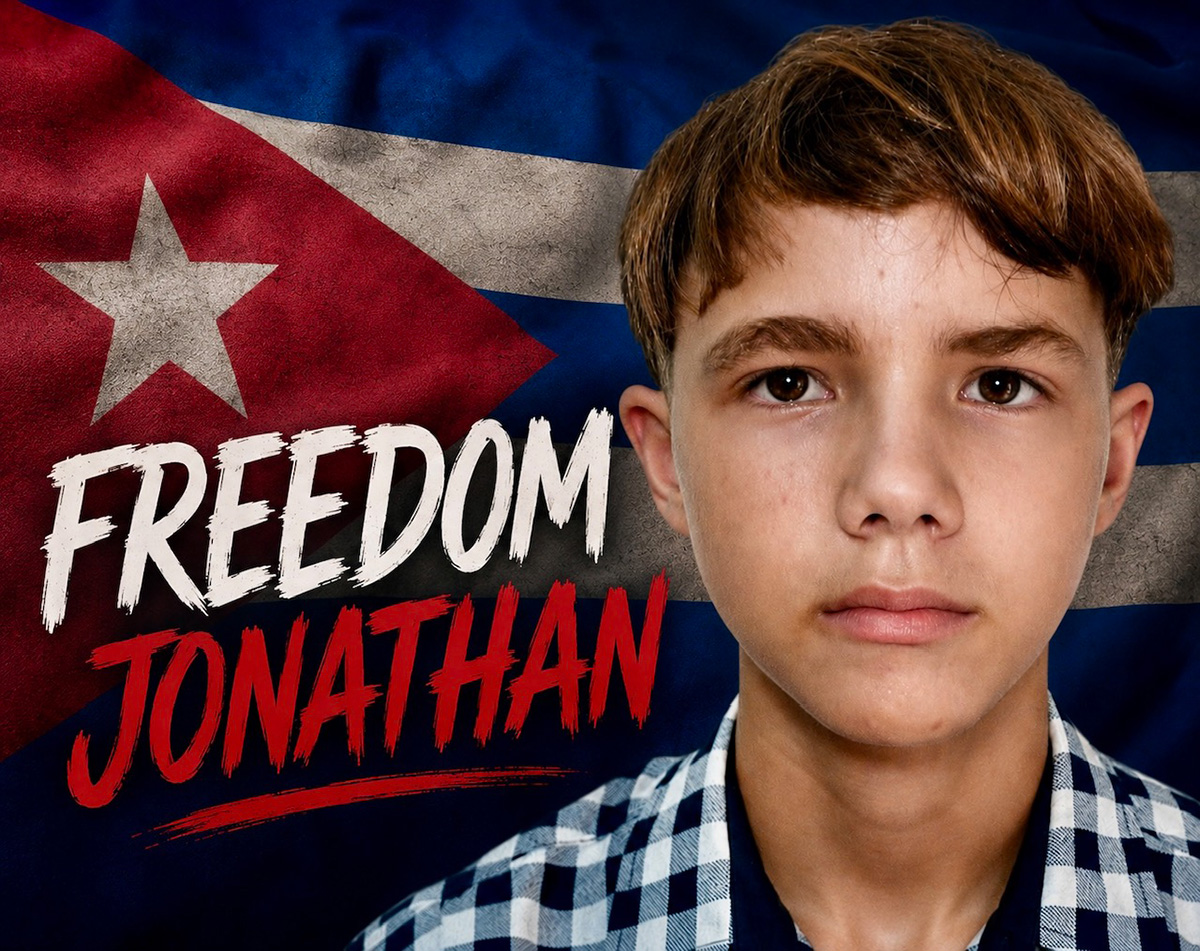
When the Washington Blade first reported the story of Jonathan David Muir Burgos, the news centered on a 16-year-old Cuban teenager who had been sent to prison after taking part in a public protest in Morón, Ciego de Ávila. At the time, the facts were straightforward. A minor had lost his freedom, and his case was beginning to attract attention beyond Cuba’s borders.
Today there is another fact that deserves to be recorded with the same rigor.
Jonathan is no longer in prison.
His release, confirmed by multiple news organizations, closes one chapter of a story that, for months, was followed by journalists, human rights organizations, religious communities, and countless individuals who refused to let his name disappear from public view. Each of them became part of a much larger effort to ensure that the imprisonment of a Cuban teenager would not fade into silence as the news cycle moved on.
That collective attention does not explain every decision that ultimately led to Jonathan’s release, and it would be irresponsible to suggest otherwise. Judicial processes are rarely shaped by a single factor. What can be said with certainty is that Jonathan’s story never disappeared. It continued to be documented, discussed and followed long after the initial headlines were published.
Behind every widely reported case there is a family living a reality that rarely appears in the news. In Jonathan’s case, there was a father who also serves as a Protestant pastor and who spent months speaking publicly about his son while asking others not to forget him. There was a mother enduring the uncertainty familiar to any parent separated from a child. There were classmates, friends, and neighbors waiting for the day when Jonathan would no longer be known as the teenager behind bars, but simply as the young man returning home.
The image of a prison gate opening often marks the end of a news story. In reality, it marks the beginning of something far more difficult. A teenager must resume an interrupted education, reconnect with friends, rebuild ordinary routines, and recover a sense of normalcy after months in confinement. Those experiences seldom become headlines, yet they are part of the true cost of imprisonment.
Jonathan’s release is therefore more than an update to a story previously reported. It is a reminder that public attention has value. Journalism matters because it documents. Human rights organizations matter because they investigate. Communities matter because they refuse indifference. Families matter because they continue to wait, even when the waiting becomes unbearable. None of these efforts should be viewed in isolation. Together they ensure that a person’s story does not disappear simply because time has passed.
Many people leave prison after being forgotten.
Jonathan David Muir Burgos walked out of prison knowing that, throughout those months, thousands of people had continued to speak his name, follow his case and hope for the day when this story could be told differently.
Today, that day has arrived.
Commentary
Religion, spirituality, and humanity: finding meaning in a complex world
LGBTQ refugees find hope in faith, common humanity
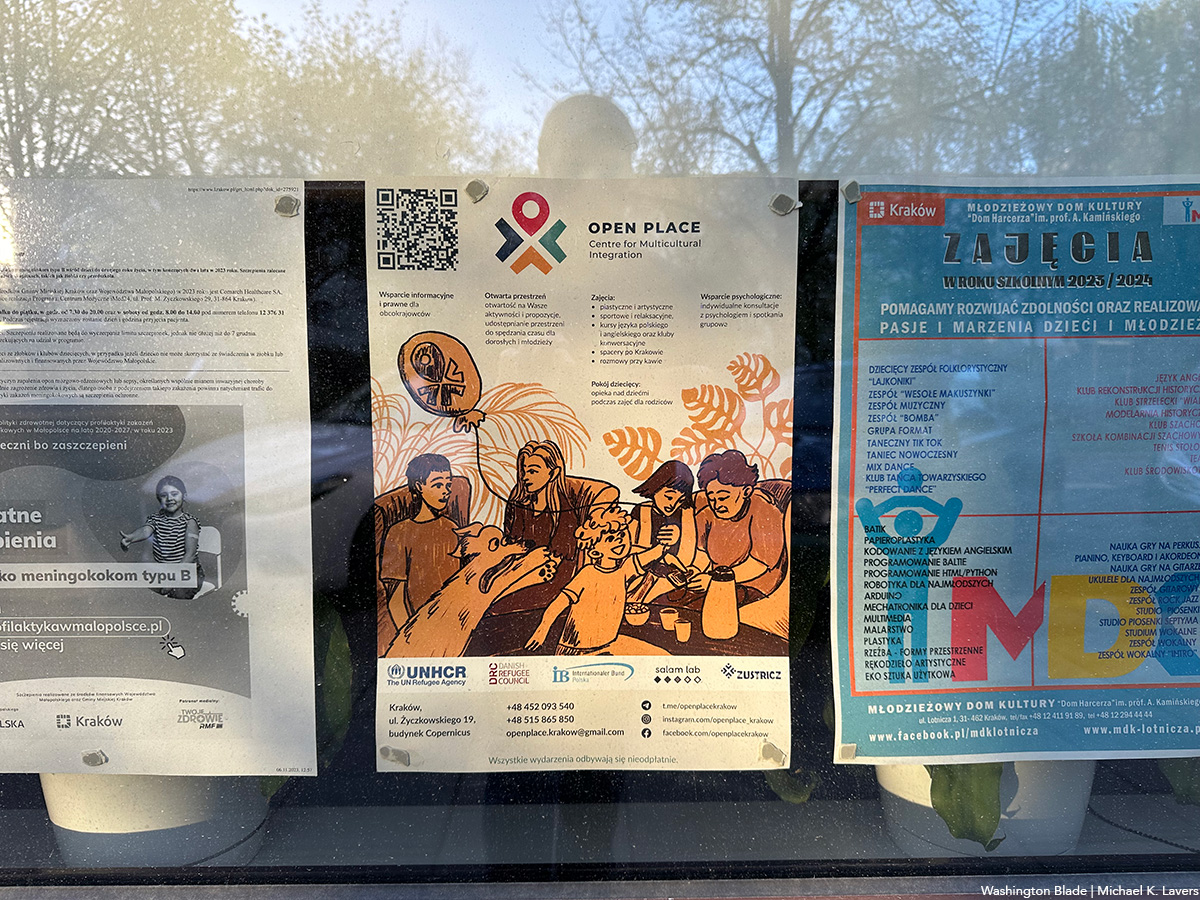
Religion and spirituality continue to shape the lives of billions of people around the world. Whether expressed through organized faith traditions, personal beliefs, cultural practices, or philosophical reflection, they remain powerful influences on how people understand themselves, others, and the world around them.
As a displaced person, I have seen firsthand how religion and spirituality affect people’s lives during times of uncertainty, hardship, and hope. In communities facing displacement, poverty, illness, conflict, and long waits for resettlement opportunities, questions about meaning, purpose, resilience, and belonging are not abstract concepts. They are part of everyday survival.
Religion and spirituality are often discussed together, yet they are not identical. Religion generally involves organized systems of belief, sacred texts, rituals, and communities. Spirituality is often more personal and may involve an individual’s search for meaning, connection, and inner peace without necessarily belonging to a specific faith tradition.
Despite their differences, both seek to answer some of humanity’s oldest questions: Why are we here? How should we live? How do we cope with suffering? What gives life meaning?
A search shared across cultures
Human beings have always searched for answers to the mysteries of existence. Across continents and throughout history, people have developed different ways of understanding life, death, nature, and the universe.
Christians may turn to the Bible. Muslims may seek guidance from the Quran. Jews may draw wisdom from the Torah. Hindus, Buddhists, Sikhs, Indigenous peoples, and many others have their own spiritual traditions and teachings.
Recently, an Australian reader, Eveline Goy, shared a thoughtful reflection after reading one of my earlier articles. She noted that while some people may speak of “false prophets” based on their religious beliefs, others may find truth and wisdom in entirely different traditions. She also highlighted the rich spiritual heritage of Australia’s First Nations peoples, whose stories of the Rainbow Serpent continue to shape cultural identity and understanding of creation.
Her reflection reminded me that while beliefs vary widely, the desire to understand our place in the universe appears to be deeply human.
Religion, love, and LGBTQ people
For many LGBTQI+ people, religion can be both a source of comfort and a source of pain.
Throughout history, faith communities have offered people hope, belonging, and moral guidance. Yet many LGBTQI+ individuals have also experienced rejection, exclusion, or condemnation from religious institutions because of their sexual orientation or gender identity.
As a queer refugee, I know how deeply these experiences can affect a person’s sense of self-worth and belonging. Many LGBTQI+ refugees I work with were not only rejected by society but also by families and faith communities they once trusted. Some were told they were sinful, broken, or unworthy of love. Others were forced to hide their identities in order to remain accepted.
Yet this is not the whole story.
Across the world, there are also religious leaders, churches, mosques, synagogues, temples, and faith communities that embrace LGBTQI+ people and affirm their dignity. Many believers interpret their faith through the values of compassion, justice, mercy, and love rather than exclusion.
At its heart, love is one of the most universal values found across spiritual traditions. Whether expressed through faith, friendship, family, or community, love has the power to heal wounds, build bridges, and restore dignity.
For many LGBTQI+ people, the challenge is not choosing between faith and identity but finding spaces where both can coexist.
Religion and spirituality in difficult times
We live in a world facing numerous challenges. Wars continue across several regions. Climate change affects communities through droughts, floods, and extreme weather events. Economic uncertainty impacts millions of families. Refugees and displaced people face uncertain futures.
In such circumstances, many people turn to religion or spirituality for comfort and guidance.
Here in Gorom Refugee Settlement Camp, I see this every day. Some gather for prayer. Others find strength in sacred texts. Some find comfort in collective worship, while others seek peace through personal reflection and meditation.
For many, faith provides hope when circumstances seem hopeless.
Yet I have also observed something equally important. Not everyone draws strength from religion. Some find resilience through friendship, mutual support, activism, creativity, and the determination to keep moving forward despite adversity.
This reminds us that while religion and spirituality can be sources of strength, so too can our shared humanity.
The human values that unite us
One of the most remarkable aspects of religion and spirituality is that despite their differences, many traditions promote similar values: Compassion, kindness, forgiveness, generosity, honesty, and respect for others.
These values are not exclusive to any single religion or philosophy. They appear across cultures, faiths, and secular worldviews.
Living in a refugee community has reinforced this lesson. Some of the most generous people I have met are deeply religious. Others are not religious at all. What matters most is not necessarily what people believe, but how they treat one another.
When someone shares food with a hungry neighbor, that is compassion.
When a person comforts a frightened child, that is humanity.
When communities stand together despite differences, that is solidarity.
These actions often speak louder than doctrine.
Building bridges in a diverse world
Religion and spirituality have inspired extraordinary acts of kindness throughout history. Yet they have also contributed to division when people become convinced that only their own beliefs are valid.
In today’s interconnected world, we encounter a greater diversity of perspectives than ever before. This diversity can enrich societies, but it also requires humility, curiosity, and respect.
No individual, community, or tradition possesses all the answers to life’s mysteries.
The challenge is not to eliminate differences but to learn how to coexist peacefully despite them.
For LGBTQI+ people, refugees, people of faith, and those without religious beliefs, dialogue and mutual respect remain essential. We all benefit when societies create space for people to live authentically while respecting the dignity of others.
Religion and spirituality continue to play important roles in human life. They help many people find meaning, resilience, comfort, and community during difficult times.
At the same time, the values that often matter most compassion, dignity, kindness, justice, and love are not confined to any single religion or belief system.
My experiences as a queer refugee have shown me that hope can emerge from many places. Some find it in prayer. Some find it in philosophy. Some find it in activism. Some find it in human connection.
Perhaps what ultimately matters is not which path we follow, but whether that path encourages us to become more compassionate, understanding, and caring human beings.
In an uncertain world marked by division and conflict, our shared humanity may be the strongest foundation upon which we can build a more peaceful, inclusive, and loving future for LGBTQI+ people, for people of faith, and for all humanity.
Aby lives in the Gorom Refugee Settlement Camp in South Sudan.

Gay-owned pizzeria in Dupont Circle burglarized

Advocates honored at Engendered Spirit Awards

Two awesome, affordable rides

Proposed Indian foreign funding law overhaul could further pressure LGBTQ groups

Why we need to protect ‘sacrilegious’ art

Black Educated Lesbians: A movement rooted in community

I respect AOC, even though I often disagree with her

Chicago’s LGBTQ+ youth: Why their zip code still matters

Hegseth uses transphobic slur while campaigning for Iowa congressman

Trump-Vance administration’s LGBTQ brain drain: what you need to know
-

 Opinions5 days ago
I respect AOC, even though I often disagree with her
-
Opinions5 days ago
Black Educated Lesbians: A movement rooted in community
-
Illinois5 days ago
Chicago’s LGBTQ+ youth: Why their zip code still matters
-
U.S. Military/Pentagon5 days ago
Hegseth uses transphobic slur while campaigning for Iowa congressman