World
Countries relax restrictions on gay blood donors
HHS examining possibility of ending lifetime ban
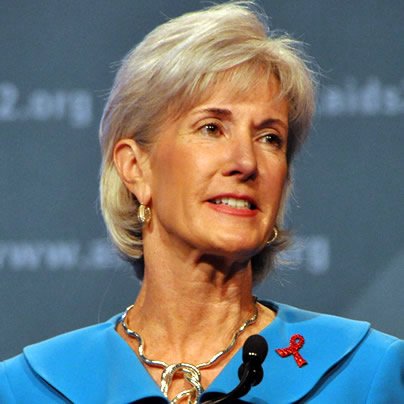
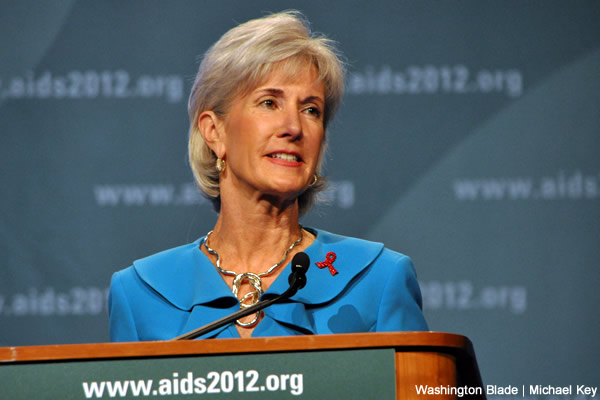
Secretary of Health and Human Services Kathleen Sebelius speaks at the International AIDS Conference. (Blade photo by Michael Key)
Is the United States any closer to repealing the lifetime ban on gay blood donors?
The Department of Health and Human Services’ Advisory Committee on Blood Safety and Availability in 2010 categorized the current policy that has been in place since 1985 as “suboptimal” because it allows some potentially high-risk donors to give blood while excluding other lower-risk groups. Although the committee did not recommend a specific policy change, it did call for additional research on efforts to better screen potential donors and gauge their potential risk to the blood supply if they were able to donate.
Massachusetts Sen. John Kerry and Illinois Congressman Mike Quigley in June applauded HHS Secretary Kathleen Sebelius’ support of a pilot study designed to help the agency with further assessments of the lifetime deferral. Their letter also outlined specific recommendations, including the collection of information from prospective donors on whether they are in a monogamous relationship or practice safer-sex.
“We’ve been working on this a long time and I applaud Secretary Sebelius for taking this important step toward ending the lifetime ban on gay men donating blood, and instead relying on the science of today not the myths of 20 years ago,” wrote Kerry in a letter onto which Colorado Sens. Michael Bennet and Mark Udall, Washington Sens. Maria Cantwell and Patty Murray and U.S. Sens. Frank Lautenberg (D-N.J.,) Carl Levin (D-Mich.,) Jeanne Shaheen (D-N.H.,) Kirsten Gillibrand (D-N.Y.,) Daniel Akaka (D-Hawaii,) Bernie Sanders (I-Vt.,) and Mark Begich (D-Alaska) signed. “We’ll at last have an informed evaluation of the final roadblocks to ending a ban against healthy, responsible Americans donating blood.”
Several countries in recent years have modified their existing bans on gay blood donors or eliminated them altogether.
The U.K. Department of Health announced last September that men who have not had sex with another man in 12 months are able to donate blood in England, Scotland and Wales. Australia has a similar policy, while South Africa allows MSM donors who have not had sexual contact with another man in six months. Gay and bisexual New Zealand men who have not had sex with another man in five years are able to donate blood.
Chilean health officials in May announced that a potential donor’s sexual orientation cannot specifically exclude them from donating blood. The new regulation is expected to take effect in the coming weeks; Colombia, Romania and Russia have already adopted similar rules.
Italy and Spain screen both heterosexual and gay potential blood donors based on specific behaviors that include the number of sexual partners they have had and whether they engage in sex work.
“We’re hopeful that is what HHS will consider with this pilot,” said Nathan Schaefer, director of public policy at Gay Men’s Health Crisis in New York City. “We really look to those examples as ideally what we’d like to see.”
The HHS study has an 18 to 36 month timeline. Schaefer, who gave a presentation on gay-specific blood donor bans and deferrals last week during the International AIDS Conference at the Walter E. Washington Convention Center, conceded it remains unclear when the Food and Drug Administration, which is within HHS, will ultimately announce its decision on the ban.
“The rest of the world is really looking to the U.S. in terms of what we’ll do,” he said.




Hungary
Charges against Budapest mayor for organizing Pride march dropped
Country’s new government took office last month
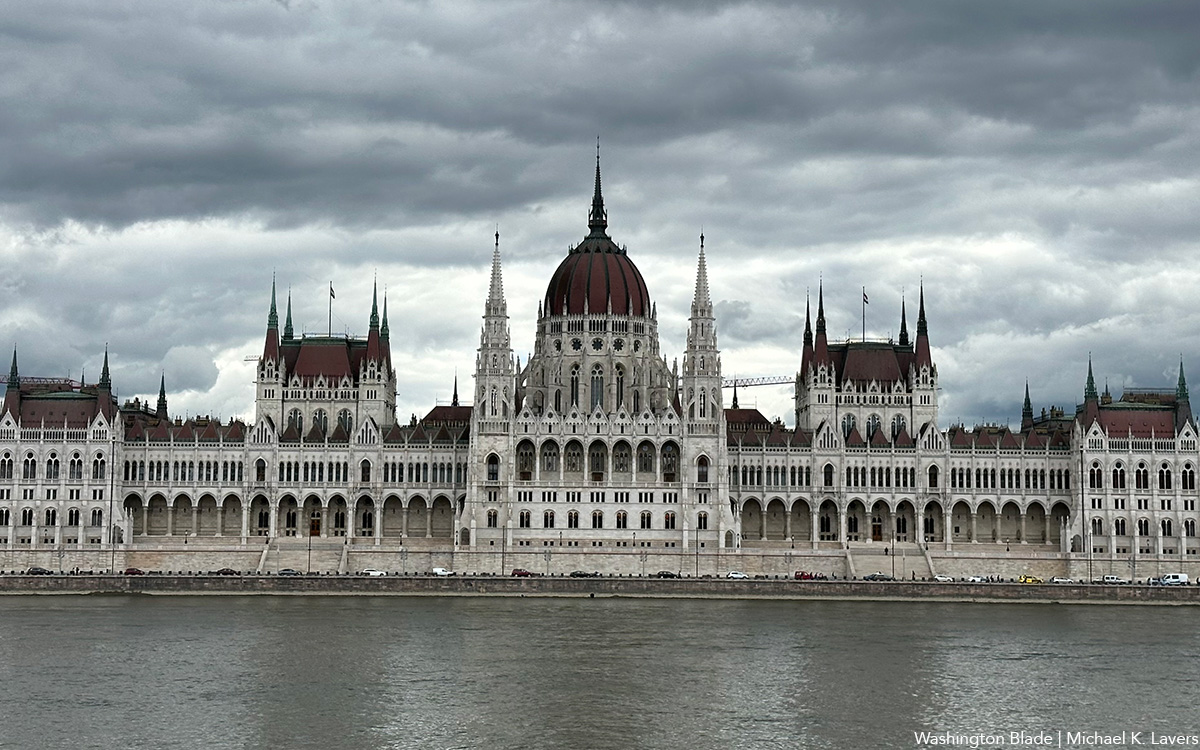
Hungarian authorities on Thursday dropped charges against Budapest Mayor Gergely Karácsony over his role in organizing the city’s 2025 Pride march.
Karácsony spoke at the event, even though then-Prime Minister Viktor Orbán’s government banned it.
More than 100,000 people defied the ban and participated in the march that took place on June 28, 2025. The Associated Press notes the Budapest Chief Prosecutor’s Office in January charged Karácsony with “organizing the unlawful assembly despite a prohibition order.”
Karácsony, who has been Budapest’s mayor since 2019, described himself as a “proud defendant” after his indictment.
“It seems that in this country, this is the price you pay if you stand up for your own freedom and the freedom of others,” he said in a statement, according to the AP. “If anyone thinks they can ban me, deter me, or prevent me and my city from doing so, they are gravely mistaken.”
Budapest is Hungary’s capital and largest city.
Prime Minister Péter Magyar took office last month after his center-right Tisza party ousted Orbán’s Fidesz-KDNP coalition in elections that took place on April 12.
Hungarian police on May 29 announced they will allow the Budapest Pride march to take place this year.
The European Union’s top court, the EU Court of Justice, days after Orbán’s ouster struck down Hungary’s anti-LGBTQ propaganda law that MPs approved in 2021. The BBC notes Hungarian authorities cited the decision in their decision to drop the charges against Karácsony.
Authorities in Pécs, a city near Hungary’s border with Croatia, have also dropped charges against Géza Buzás-Hábel, who organized a 2025 Pride event.
Hungary
Hungarian authorities lift Budapest Pride ban
Country’s new government took office last month
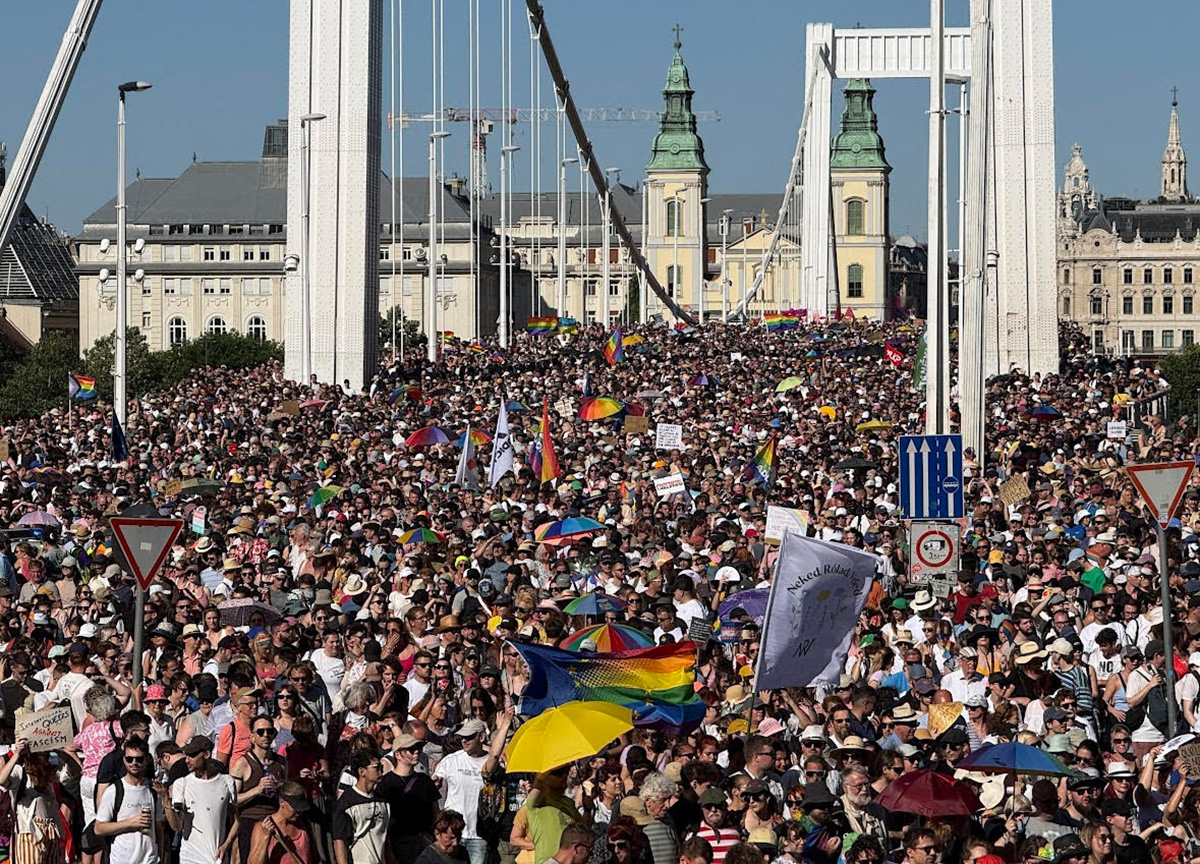
Hungarian police on May 29 announced they will allow the annual Budapest Pride march to take place.
“The Budapest Metropolitan Police has approved the 2026 Budapest Pride Parade and also has issued restrictive orders in relation to three counter-demonstrations,” a Budapest Metropolitan Police spokesperson told Politico.
Budapest is Hungary’s capital and largest city.
Hungarian lawmakers last year passed a bill that banned Pride events and allowed authorities to use facial recognition technology to identify participants. MPs later amended the Hungarian constitution to ban public LGBTQ events.
More than 100,000 people defied the ban and participated in last year’s Budapest Pride parade. The event became one of the largest protests against then-Prime Minister Viktor Orbán and his government since he took office in 2010.
Prime Minister Péter Magyar took office last month after his center-right Tisza party ousted Orbán’s Fidesz-KDNP coalition in elections that took place on April 12. The European Union’s top court, the EU Court of Justice, days after Orbán’s ouster struck down Hungary’s anti-LGBTQ propaganda law that MPs approved in 2021.
The EU on May 29 announced it will release more than €16 billion ($18.59 billion) in funds to Hungary that it withheld while Orbán was in office.
The Budapest Pride march will take place on June 27.
“We will march freely in fresh air for our rights, for the democratic Hungary,” said Budapest Pride on its Facebook page.
Colombia
Claudia López comes up short in Colombian presidential election
Former Bogotá mayor would have been country’s first lesbian head of government
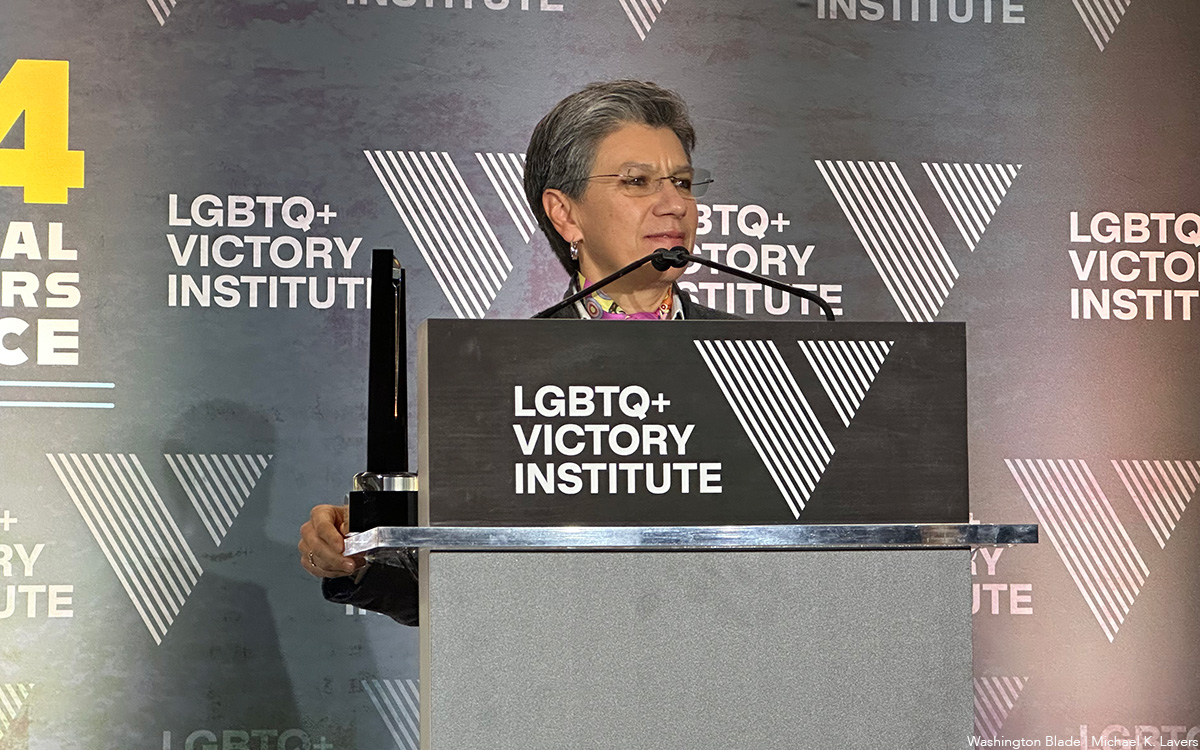
Former Bogotá Mayor Claudia López on Sunday finished fifth in the first round of Colombia’s presidential election.
López, a centrist who ran as an independent, received 225,517 votes. This figure is .95 percent of the total votes cast.
López was the Colombian capital’s mayor from 2020-2023. She was a member of the Colombian Senate from 2014-2018. López, whose wife is outgoing Colombian Sen. Angélica Lozano, would have become the country’s first female and first lesbian president if she would have won the election.
The LGBTQ+ Victory Institute honored López in D.C. in 2024.
“We need to listen to each other again, we need to have a coffee with each other again, we need to touch each other’s skin,” she told the Washington Blade during an interview. She hadn’t yet declared her candidacy, and did not specifically discuss her plans to run.
Runoff to take place June 21
Abrelardo de la Espriella, a far-right lawyer who has praised U.S. President Donald Trump and Salvadoran President Nayib Bukele, on Sunday finished first with 43.74 percent of the vote. Senator Iván Cepeda, a member of outgoing President Gustavo Petro’s Historic Pact party, came in second with 40.9 percent of the vote.
Neither men received a majority of votes. A runoff between them will take place on June 21.

Gay 1920s-era Hollywood star to be honored in Staunton, Va.

Why I’m supporting Gary Goodweather for D.C. mayor

Don’t just vote for change — vote for Hope Solomon for mayor

Vote Kenyan McDuffie for D.C. mayor

Your queer D.C. voting guide

Timothy Nelson on the premiere of his opera ‘Song of Sakuntala’

PHOTOS: ‘Soul Divas’

‘Mighty Real’ explores history of LGBTQ music

D.C.’s housing reality: Cautious optimism meets landlord strain