World
Church of England to allow partnered gay bishops
Clergy must remain celibate under Anglican teachings
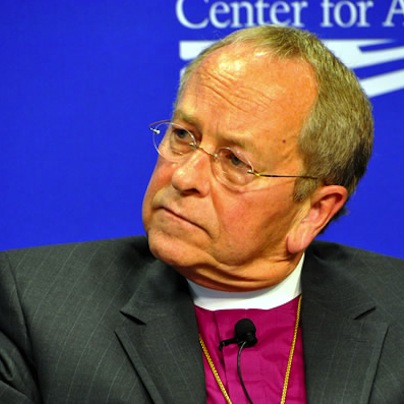
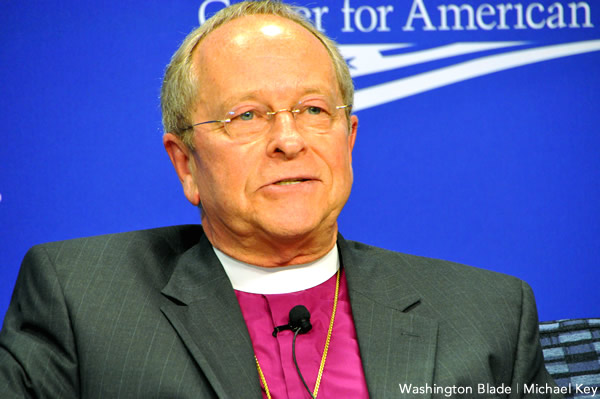
Bishop Gene Robinson became the Episcopal Church’s first openly gay Bishop in 2003, setting the stage for a decade of advances for LGBT people in the church. (Washington Blade file photo by Michael Key)
“The House has confirmed that clergy in civil partnerships and living in accordance with the teaching of the church on human sexuality can be considered as candidates for the episcopate,” Rt. Rev. Graham James said on Friday on behalf of the House of Bishops of the Church of England. “The House believed it would be unjust to exclude from consideration for the episcopate anyone seeking to live fully in conformity with the church’s teaching on sexual ethics or other areas of personal life and discipline. All candidates for the episcopate undergo a searching examination of personal and family circumstances, given the level of public scrutiny associated with being a bishop in the Church of England. But these, along with the candidate’s suitability for any particular role for which he is being considered, are for those responsible for the selection process to consider in each case.”
The House of Bishops said in 2005 before a law that allowed same-sex couples to register as civil partners in the United Kingdom took effect that gay celibate men could become clergy. The body voted to extend the policy to bishops last month during a meeting outside London.
The ordination of gay bishops in the Church of England has remained controversial since Rev. Jeffrey John in 2003 became the first person in a same-sex relationship successfully nominated as bishop. He stepped down before he was to have been officially consecrated.
Gay New Hampshire Bishop V. Gene Robinson’s 2003 election sparked a firestorm of controversy that threatened to divide the broader Anglican Church — he wore a bullet proof vest during his consecration that took place inside a hockey area on the University of New Hampshire. Sharp-shooters were stationed on nearby rooftops during the ceremony, while protesters gathered outside the venue.
Archbishop of Canterbury Rowan Williams barred Robinson from attending the decennial Lambeth Conference in England in 2008.
Los Angeles Bishop Mary Glasspool in 2010 became the first partnered lesbian to be ordained within the Episcopal Church. John had been considered a candidate to become Bishop of Southwark the same year, but his nomination was blocked.
LGBT rights advocates largely mocked the church’s statement — and especially its insistence on celibacy.
“We’re sure many Anglicans will be happy to hear of the church’s latest epiphany on gay clergy, although many lesbians will be disappointed that they remain unable to serve as bishops,” Ruth Hunt, spokesperson for Stonewall, an LGBT rights group in the U.K., told the Washington Blade earlier on Friday. “I’m sure celibate gay men will be thrilled by this exciting new job opportunity, if perhaps somewhat perplexed as to how it will be policed by the church.”
Reverend Colin Coward, director of Changing Attitude, an LGBT Anglican group, did not immediately return the Blade’s request for comment. He told the British Broadcasting Corporation that the church’s statement “will be laughed at by the majority in this country.”
Conservative Anglicans criticized any effort to allow gay bishops within the church.
“That would be a major change in church doctrine and therefore not something that can be slipped out in the news,” Rev. Rod Thomas, chair of Reform, an evangelical group within the Church of England, told the BBC. “It is something that has got to be considered by the General Synod.”
The church’s announcement coincides with the British government’s plan to introduce a bill later this month to introduce a bill that would legalize same-sex marriage in England and Wales. Scottish lawmakers are expected to consider a similar measure this year.



Hungary
Charges against Budapest mayor for organizing Pride march dropped
Country’s new government took office last month
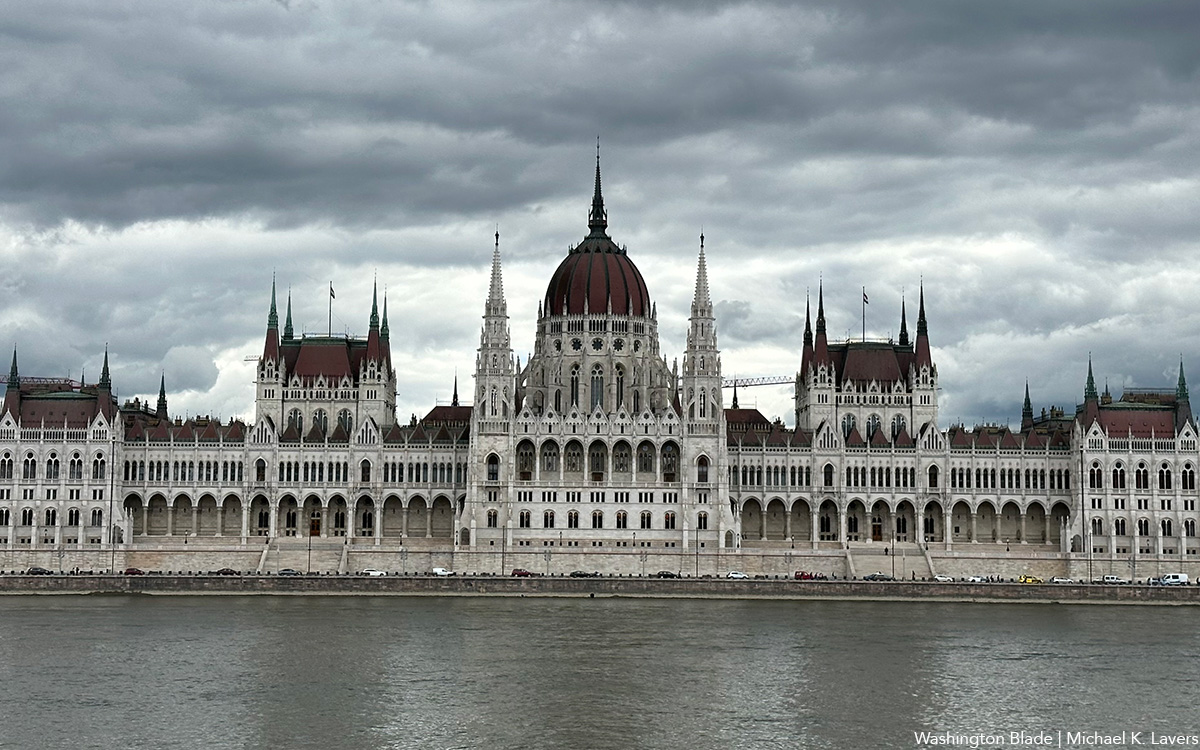
Hungarian authorities on Thursday dropped charges against Budapest Mayor Gergely Karácsony over his role in organizing the city’s 2025 Pride march.
Karácsony spoke at the event, even though then-Prime Minister Viktor Orbán’s government banned it.
More than 100,000 people defied the ban and participated in the march that took place on June 28, 2025. The Associated Press notes the Budapest Chief Prosecutor’s Office in January charged Karácsony with “organizing the unlawful assembly despite a prohibition order.”
Karácsony, who has been Budapest’s mayor since 2019, described himself as a “proud defendant” after his indictment.
“It seems that in this country, this is the price you pay if you stand up for your own freedom and the freedom of others,” he said in a statement, according to the AP. “If anyone thinks they can ban me, deter me, or prevent me and my city from doing so, they are gravely mistaken.”
Budapest is Hungary’s capital and largest city.
Prime Minister Péter Magyar took office last month after his center-right Tisza party ousted Orbán’s Fidesz-KDNP coalition in elections that took place on April 12.
Hungarian police on May 29 announced they will allow the Budapest Pride march to take place this year.
The European Union’s top court, the EU Court of Justice, days after Orbán’s ouster struck down Hungary’s anti-LGBTQ propaganda law that MPs approved in 2021. The BBC notes Hungarian authorities cited the decision in their decision to drop the charges against Karácsony.
Authorities in Pécs, a city near Hungary’s border with Croatia, have also dropped charges against Géza Buzás-Hábel, who organized a 2025 Pride event.
Hungary
Hungarian authorities lift Budapest Pride ban
Country’s new government took office last month
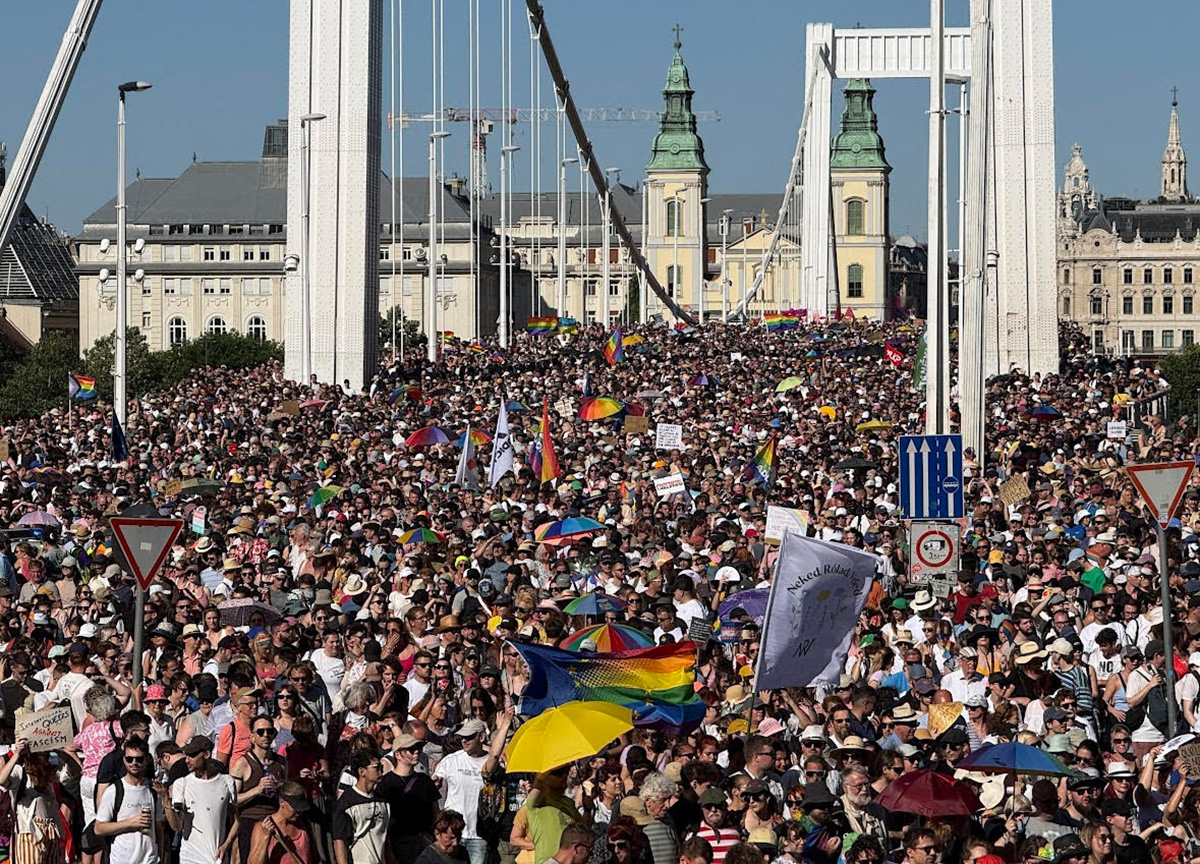
Hungarian police on May 29 announced they will allow the annual Budapest Pride march to take place.
“The Budapest Metropolitan Police has approved the 2026 Budapest Pride Parade and also has issued restrictive orders in relation to three counter-demonstrations,” a Budapest Metropolitan Police spokesperson told Politico.
Budapest is Hungary’s capital and largest city.
Hungarian lawmakers last year passed a bill that banned Pride events and allowed authorities to use facial recognition technology to identify participants. MPs later amended the Hungarian constitution to ban public LGBTQ events.
More than 100,000 people defied the ban and participated in last year’s Budapest Pride parade. The event became one of the largest protests against then-Prime Minister Viktor Orbán and his government since he took office in 2010.
Prime Minister Péter Magyar took office last month after his center-right Tisza party ousted Orbán’s Fidesz-KDNP coalition in elections that took place on April 12. The European Union’s top court, the EU Court of Justice, days after Orbán’s ouster struck down Hungary’s anti-LGBTQ propaganda law that MPs approved in 2021.
The EU on May 29 announced it will release more than €16 billion ($18.59 billion) in funds to Hungary that it withheld while Orbán was in office.
The Budapest Pride march will take place on June 27.
“We will march freely in fresh air for our rights, for the democratic Hungary,” said Budapest Pride on its Facebook page.
Colombia
Claudia López comes up short in Colombian presidential election
Former Bogotá mayor would have been country’s first lesbian head of government
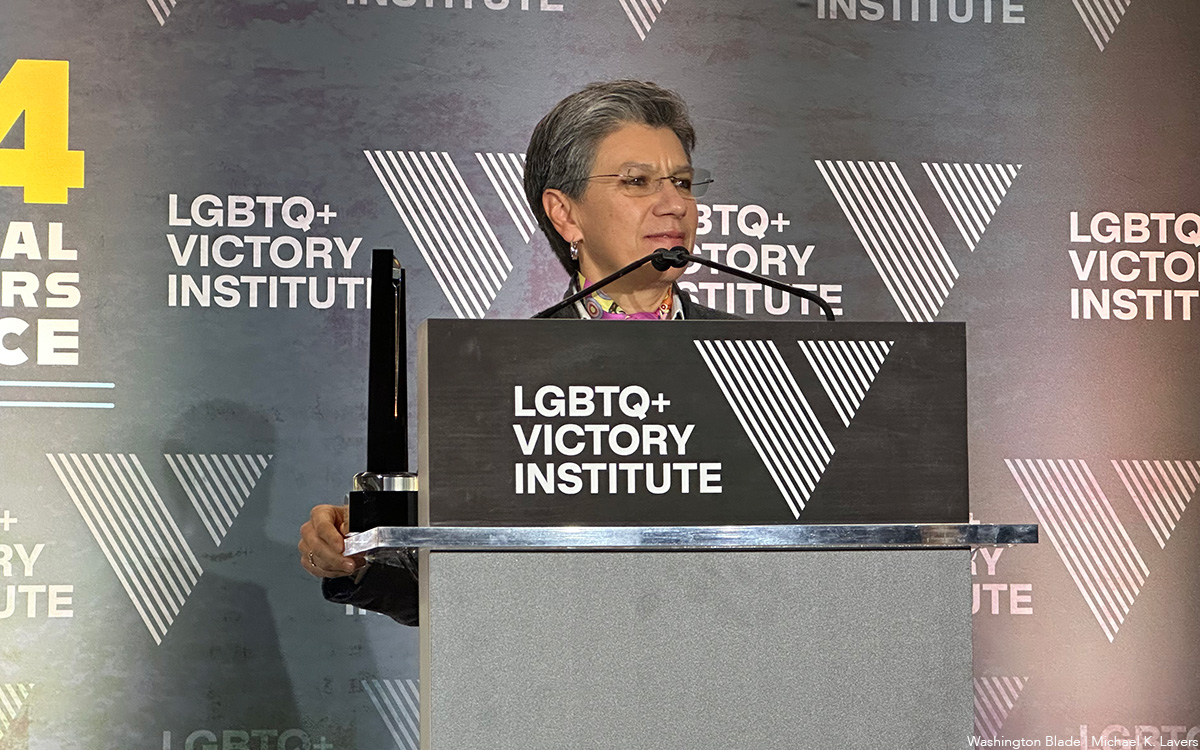
Former Bogotá Mayor Claudia López on Sunday finished fifth in the first round of Colombia’s presidential election.
López, a centrist who ran as an independent, received 225,517 votes. This figure is .95 percent of the total votes cast.
López was the Colombian capital’s mayor from 2020-2023. She was a member of the Colombian Senate from 2014-2018. López, whose wife is outgoing Colombian Sen. Angélica Lozano, would have become the country’s first female and first lesbian president if she would have won the election.
The LGBTQ+ Victory Institute honored López in D.C. in 2024.
“We need to listen to each other again, we need to have a coffee with each other again, we need to touch each other’s skin,” she told the Washington Blade during an interview. She hadn’t yet declared her candidacy, and did not specifically discuss her plans to run.
Runoff to take place June 21
Abrelardo de la Espriella, a far-right lawyer who has praised U.S. President Donald Trump and Salvadoran President Nayib Bukele, on Sunday finished first with 43.74 percent of the vote. Senator Iván Cepeda, a member of outgoing President Gustavo Petro’s Historic Pact party, came in second with 40.9 percent of the vote.
Neither men received a majority of votes. A runoff between them will take place on June 21.

Gay 1920s-era Hollywood star to be honored in Staunton, Va.

Why I’m supporting Gary Goodweather for D.C. mayor

Don’t just vote for change — vote for Hope Solomon for mayor

Vote Kenyan McDuffie for D.C. mayor

Your queer D.C. voting guide

Timothy Nelson on the premiere of his opera ‘Song of Sakuntala’

Controversial ‘Blue Film’ pushes past taboos for gripping drama

PHOTOS: ‘Soul Divas’

‘Mighty Real’ explores history of LGBTQ music