World
Jamaican gay rights advocate visits D.C.
J-FLAG Executive Director Dane Lewis attended mixer at Larry’s Lounge in Dupont Circle.
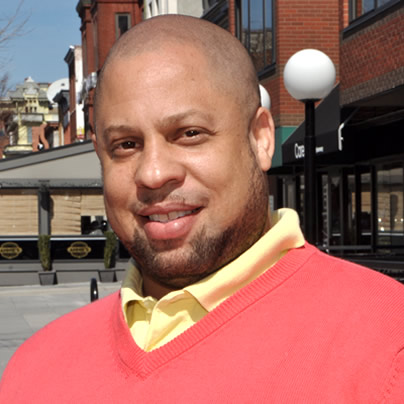
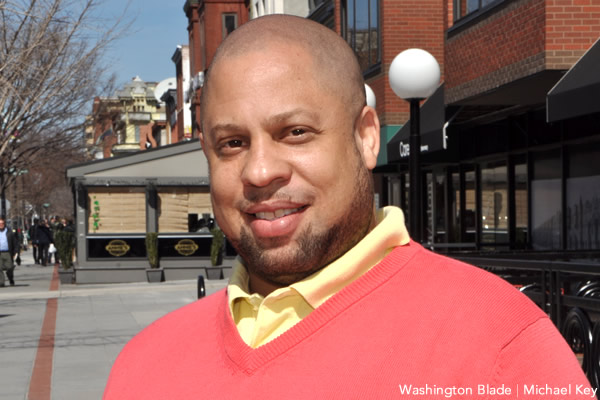
Dane Lewis (Washington Blade photo by Michael Key)
Dane Lewis, executive director of Jamaica Forum for Lesbians, All-Sexuals and Gays, was visiting a gay friend in Kingston, the country’s capital, on a Sunday night in the late 1990s when a group of men slashed three of his car’s tires.
A mob had already formed when he told his friends who were inside the house that they needed to leave. The men eventually stoned Lewis’ car — and a friend who was sitting in the backseat still has shards of glass in his arm after they broke a window.
“We took a girlfriend with us, which we thought would have been a good cover, but that clearly didn’t work,” Lewis told the Washington Blade on Sunday before he attended a D.C. Center-organized mixer at Larry’s Lounge in Dupont Circle. “The community already had an issue with the guy that we went to see and obviously reacted because he had friends that the others thought were gay coming to visit.”
Lewis, who has been with J-FLAG since Feb. 2008, spoke with the Blade roughly two months after he appeared in a public awareness campaign designed to promote greater acceptance of LGBT Jamaicans.
He said reaction to the “We Are Jamaicans” campaign has been “thankfully very positive,” but he has received some negative feedback. This includes a threatening note left on his car outside his Kingston home that read “Batty man for dead” or “Gay man should be murdered” in Jamaican slang.
“We are claiming space in a way that they think we really should keep our lives private and behind closed doors,” Lewis said. “That sadly has been just the way that LGBT people are expected to play to survive in a culture like ours. They would obviously find it offensive that people are being so comfortable with their orientation and the need to speak openly about their realities.”
J-FLAG has faced a number of challenges since its 1998 founding.
A man stabbed Brian Williamson, the organization’s co-founder, to death inside his Kingston home in 2004. Former J-FLAG executive director Gareth Henry sought asylum in Canada in 2008 after he received death threats.
A J-FLAG report said the organization knows of at least 30 gay men who have been murdered in Jamaica between 1997 and 2004. Authorities found honorary British consul John Terry strangled to death inside his home near Montego Bay in 2009 — they found a note left next to his body that referred to him as “batty boy.”
The State Department, Human Rights Watch and other groups have criticized the Jamaican government for not doing enough to curb anti-LGBT violence on the island. J-FLAG is among the organizations that have blasted Buju Banton, Elephant Man, Sizzla and other reggae and dancehall for lyrics they contend incite anti-gay violence.
In spite of these challenges, Lewis notes the country’s LGBT rights movement has seen some advances in recent years.
Jamaican singer Diana King came out as a lesbian last summer in a post to her Facebook page. Beenie Man in the same year apologized for his anti-gay song lyrics.
Prime Minister Portia Simpson said shortly before her Dec. 2011 election her government would review the country’s anti-sodomy law. It has yet to do so, but the Jamaica Supreme Court in June will hear a case that challenges the colonial-era statute on grounds it violates a constitutionally-guaranteed right to privacy.
“It will be a very interesting case to watch,” Lewis said. “It will give a better sense of where the courts are at in terms of protecting the rights of gay, lesbian, bisexual and transgender people.”
Lewis spoke with the Blade a day before Queen Elizabeth II signed a Commonwealth charter with an anti-discrimination statement that reportedly includes an implicit reference to gay men and lesbians. He said President Obama’s statements in support of LGBT rights and same-sex marriage have had a positive effect in Jamaica.
“What it has done has opened up a debate for us around the issue of rights and whether same-sex marriage needs to be on the table,” Lewis said.
Lewis remains optimistic this progress will continue in the years to come.
Health Minister Dr. Fenton Ferguson in December said lawmakers should repeal the country’s anti-sodomy law. A January sexuality symposium included LGBT-specific information, but a recent J-FLAG report found only 17 percent of Jamaicans tolerate gay men and lesbians.
A video showing a mob at a Jamaican university attacking a student whom they reportedly caught in a “compromising position” with another man in a bathroom went viral last November. The clip captures two security officers beating the man while the crowd calls him “batty boy.”
J-FLAG statistics note one third of Jamaicans feel the government has not done enough to protect their LGBT countrymen. Lewis said the Nov. 2012 incident and others like it help “generate the conversation” about gay and lesbian rights in the country.
“We need to capitalize on that energy and begin to have some public discourse,” he said.



Hungary
Charges against Budapest mayor for organizing Pride march dropped
Country’s new government took office last month
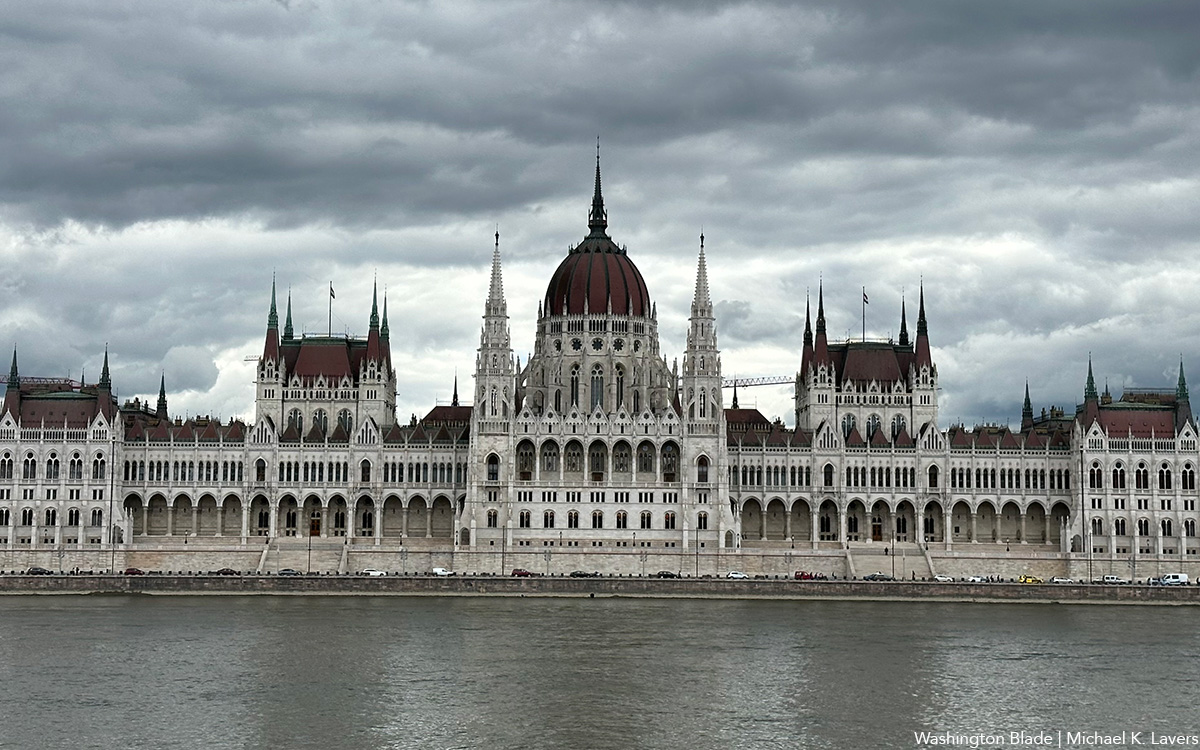
Hungarian authorities on Thursday dropped charges against Budapest Mayor Gergely Karácsony over his role in organizing the city’s 2025 Pride march.
Karácsony spoke at the event, even though then-Prime Minister Viktor Orbán’s government banned it.
More than 100,000 people defied the ban and participated in the march that took place on June 28, 2025. The Associated Press notes the Budapest Chief Prosecutor’s Office in January charged Karácsony with “organizing the unlawful assembly despite a prohibition order.”
Karácsony, who has been Budapest’s mayor since 2019, described himself as a “proud defendant” after his indictment.
“It seems that in this country, this is the price you pay if you stand up for your own freedom and the freedom of others,” he said in a statement, according to the AP. “If anyone thinks they can ban me, deter me, or prevent me and my city from doing so, they are gravely mistaken.”
Budapest is Hungary’s capital and largest city.
Prime Minister Péter Magyar took office last month after his center-right Tisza party ousted Orbán’s Fidesz-KDNP coalition in elections that took place on April 12.
Hungarian police on May 29 announced they will allow the Budapest Pride march to take place this year.
The European Union’s top court, the EU Court of Justice, days after Orbán’s ouster struck down Hungary’s anti-LGBTQ propaganda law that MPs approved in 2021. The BBC notes Hungarian authorities cited the decision in their decision to drop the charges against Karácsony.
Authorities in Pécs, a city near Hungary’s border with Croatia, have also dropped charges against Géza Buzás-Hábel, who organized a 2025 Pride event.
Hungary
Hungarian authorities lift Budapest Pride ban
Country’s new government took office last month
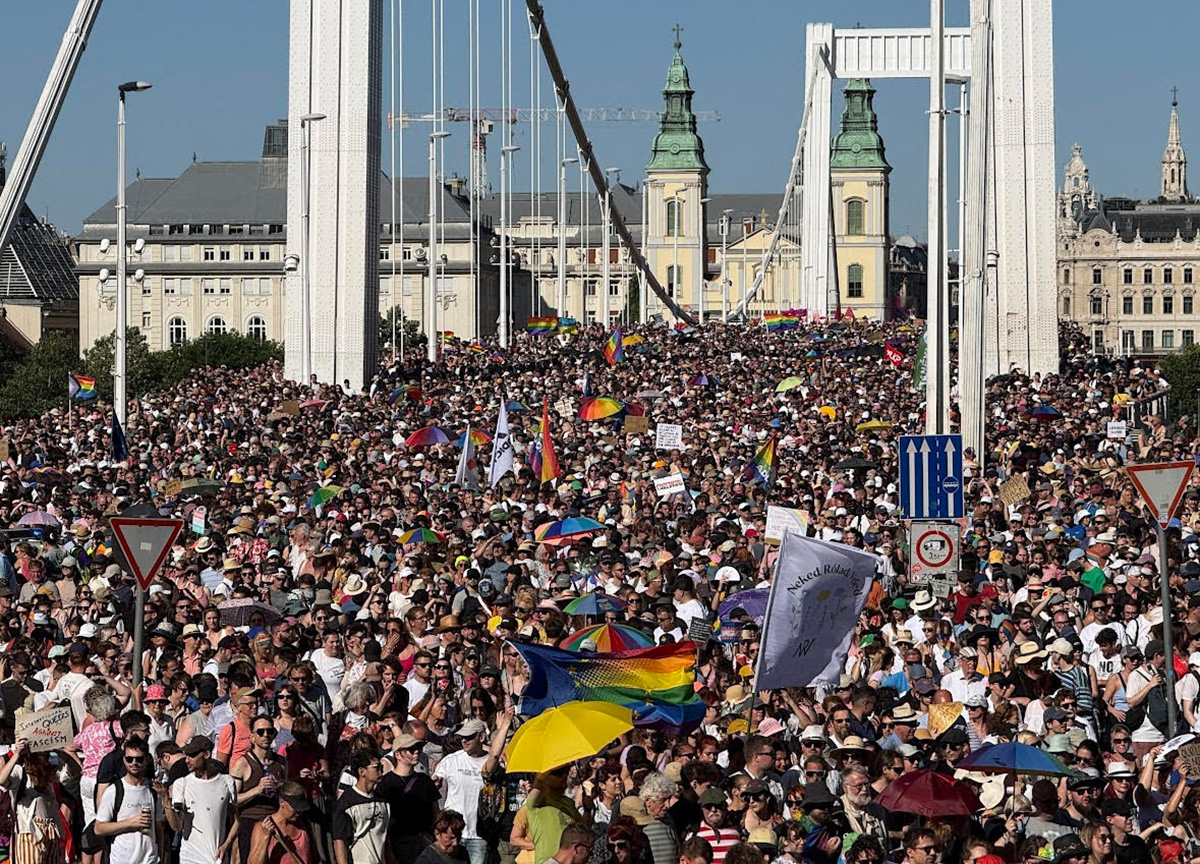
Hungarian police on May 29 announced they will allow the annual Budapest Pride march to take place.
“The Budapest Metropolitan Police has approved the 2026 Budapest Pride Parade and also has issued restrictive orders in relation to three counter-demonstrations,” a Budapest Metropolitan Police spokesperson told Politico.
Budapest is Hungary’s capital and largest city.
Hungarian lawmakers last year passed a bill that banned Pride events and allowed authorities to use facial recognition technology to identify participants. MPs later amended the Hungarian constitution to ban public LGBTQ events.
More than 100,000 people defied the ban and participated in last year’s Budapest Pride parade. The event became one of the largest protests against then-Prime Minister Viktor Orbán and his government since he took office in 2010.
Prime Minister Péter Magyar took office last month after his center-right Tisza party ousted Orbán’s Fidesz-KDNP coalition in elections that took place on April 12. The European Union’s top court, the EU Court of Justice, days after Orbán’s ouster struck down Hungary’s anti-LGBTQ propaganda law that MPs approved in 2021.
The EU on May 29 announced it will release more than €16 billion ($18.59 billion) in funds to Hungary that it withheld while Orbán was in office.
The Budapest Pride march will take place on June 27.
“We will march freely in fresh air for our rights, for the democratic Hungary,” said Budapest Pride on its Facebook page.
Colombia
Claudia López comes up short in Colombian presidential election
Former Bogotá mayor would have been country’s first lesbian head of government
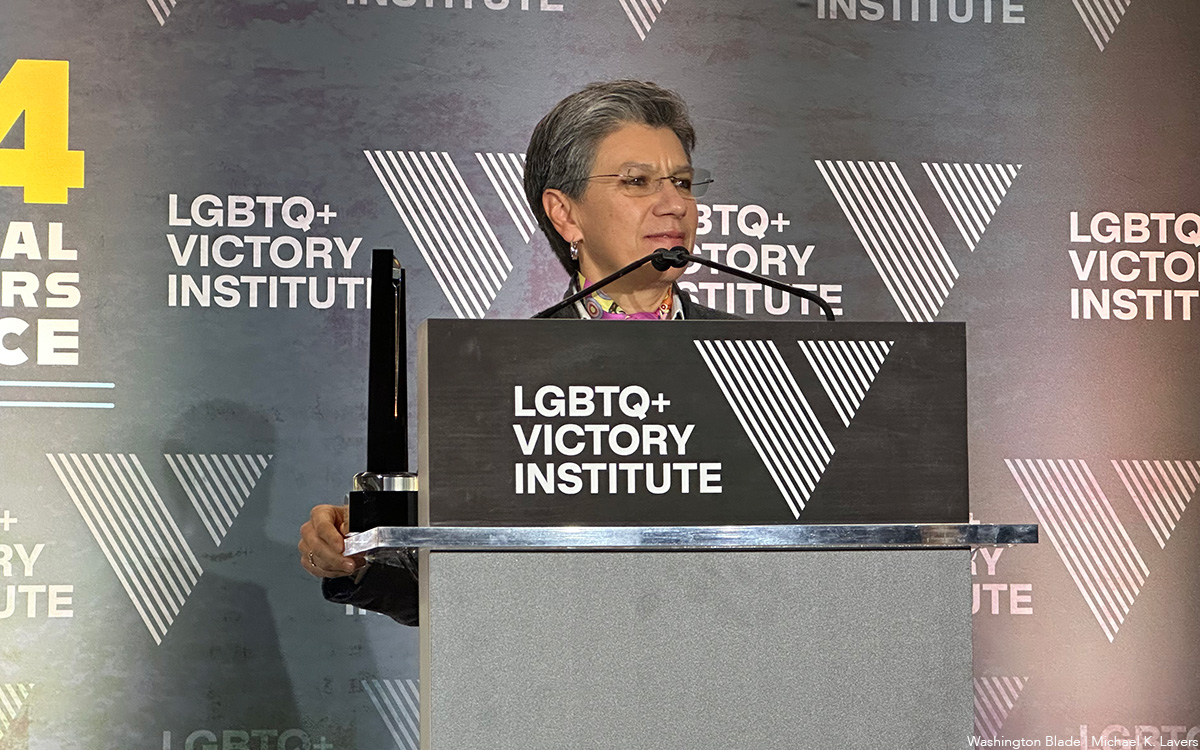
Former Bogotá Mayor Claudia López on Sunday finished fifth in the first round of Colombia’s presidential election.
López, a centrist who ran as an independent, received 225,517 votes. This figure is .95 percent of the total votes cast.
López was the Colombian capital’s mayor from 2020-2023. She was a member of the Colombian Senate from 2014-2018. López, whose wife is outgoing Colombian Sen. Angélica Lozano, would have become the country’s first female and first lesbian president if she would have won the election.
The LGBTQ+ Victory Institute honored López in D.C. in 2024.
“We need to listen to each other again, we need to have a coffee with each other again, we need to touch each other’s skin,” she told the Washington Blade during an interview. She hadn’t yet declared her candidacy, and did not specifically discuss her plans to run.
Runoff to take place June 21
Abrelardo de la Espriella, a far-right lawyer who has praised U.S. President Donald Trump and Salvadoran President Nayib Bukele, on Sunday finished first with 43.74 percent of the vote. Senator Iván Cepeda, a member of outgoing President Gustavo Petro’s Historic Pact party, came in second with 40.9 percent of the vote.
Neither men received a majority of votes. A runoff between them will take place on June 21.

Why I’m supporting Gary Goodweather for D.C. mayor

Don’t just vote for change — vote for Hope Solomon for mayor

Vote Kenyan McDuffie for D.C. mayor

Your queer D.C. voting guide

Blade reporters reflect on covering Pulse massacre 10 years ago

Timothy Nelson on the premiere of his opera ‘Song of Sakuntala’

Controversial ‘Blue Film’ pushes past taboos for gripping drama

PHOTOS: ‘Soul Divas’

‘Mighty Real’ explores history of LGBTQ music