World
Queen Elizabeth II to support anti-discrimination pledge
U.K. newspaper reports charter implicitly includes gays and lesbians
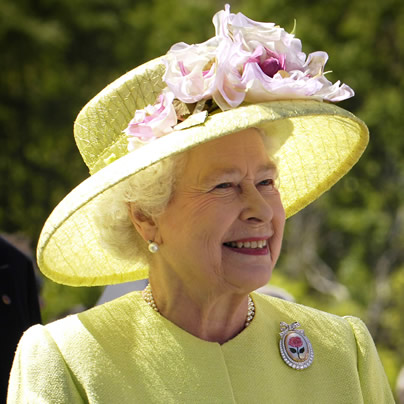
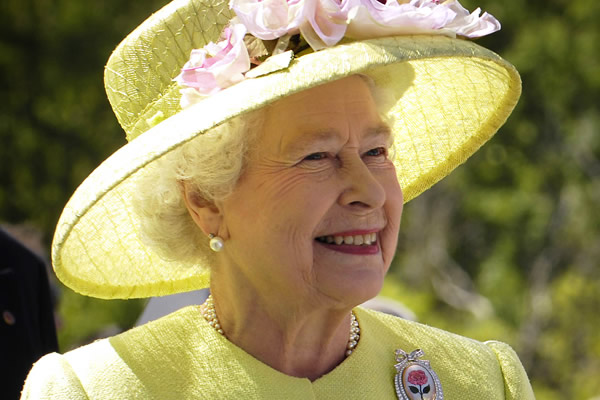
Queen Elizabeth II (Photo public domain)
A British newspaper on Sunday reported Queen Elizabeth II will support a pledge that calls for an end of all forms of discrimination.
Elizabeth on Monday, which is Commonwealth Day in the 54 countries that comprise the British Commonwealth, will sign a charter that includes a statement that declares opposition “to all forms of discrimination, whether rooted in gender, race, creed, political belief or other grounds.” The charter does not specifically refer to gay men and lesbians, but the Daily Mail cites sources within Buckingham Palace who said “other grounds” implies LGBT rights.
“This is an important development,” Andy Wasley of the British LGBT advocacy group Stonewall told the Washington Blade.
The queen will sign the charter less than six weeks after the British House of Commons overwhelmingly approved a bill that would allow same-sex marriage in England and Wales. Scottish lawmakers in the coming weeks are expected to debate the issue.
Anti-sodomy laws remain on the books in a number of British Commonwealth countries. These include Jamaica and Uganda, where lawmakers are poised to debate a bill that would impose the death penalty upon anyone found guilty of repeated same-sex sexual acts.
India’s Delhi High Court in 2009 decriminalized same-sex sexual activity among consenting adults.
A bill that would extend marriage rights to same-sex couples in New Zealand is scheduled to have its second reading in the country’s Parliament on March 13. Gays and lesbians can also tie the knot in Canada and South Africa.
British Prime Minister David Cameron has previously suggested the allocation of international aid should hinge upon a country’s record on LGBT issues.
“The fact that the queen as head of the Commonwealth is publicly endorsing a statement that opposes discrimination on any grounds sends a strong signal to the many Commonwealth countries where homosexuality remains illegal,” Wasley said. “We’re proud that having achieved equality here in Britain we’re now able to challenge anti-gay discrimination around the world with the Commonwealth’s backing.”



Commentary
The boy they refused to forget
Jonathan David Muir Burgos released from Cuban prison after participating in protest
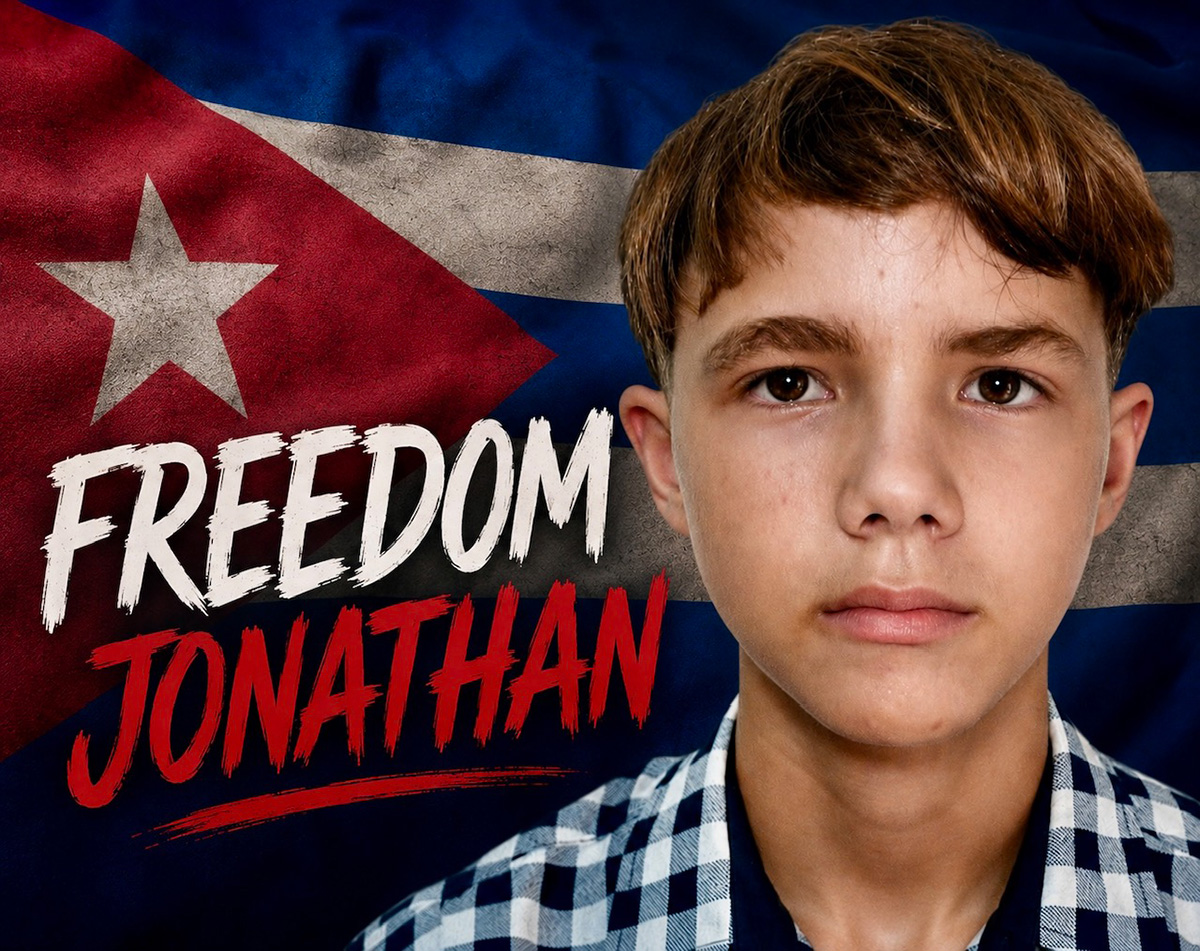
When the Washington Blade first reported the story of Jonathan David Muir Burgos, the news centered on a 16-year-old Cuban teenager who had been sent to prison after taking part in a public protest in Morón, Ciego de Ávila. At the time, the facts were straightforward. A minor had lost his freedom, and his case was beginning to attract attention beyond Cuba’s borders.
Today there is another fact that deserves to be recorded with the same rigor.
Jonathan is no longer in prison.
His release, confirmed by multiple news organizations, closes one chapter of a story that, for months, was followed by journalists, human rights organizations, religious communities, and countless individuals who refused to let his name disappear from public view. Each of them became part of a much larger effort to ensure that the imprisonment of a Cuban teenager would not fade into silence as the news cycle moved on.
That collective attention does not explain every decision that ultimately led to Jonathan’s release, and it would be irresponsible to suggest otherwise. Judicial processes are rarely shaped by a single factor. What can be said with certainty is that Jonathan’s story never disappeared. It continued to be documented, discussed and followed long after the initial headlines were published.
Behind every widely reported case there is a family living a reality that rarely appears in the news. In Jonathan’s case, there was a father who also serves as a Protestant pastor and who spent months speaking publicly about his son while asking others not to forget him. There was a mother enduring the uncertainty familiar to any parent separated from a child. There were classmates, friends, and neighbors waiting for the day when Jonathan would no longer be known as the teenager behind bars, but simply as the young man returning home.
The image of a prison gate opening often marks the end of a news story. In reality, it marks the beginning of something far more difficult. A teenager must resume an interrupted education, reconnect with friends, rebuild ordinary routines, and recover a sense of normalcy after months in confinement. Those experiences seldom become headlines, yet they are part of the true cost of imprisonment.
Jonathan’s release is therefore more than an update to a story previously reported. It is a reminder that public attention has value. Journalism matters because it documents. Human rights organizations matter because they investigate. Communities matter because they refuse indifference. Families matter because they continue to wait, even when the waiting becomes unbearable. None of these efforts should be viewed in isolation. Together they ensure that a person’s story does not disappear simply because time has passed.
Many people leave prison after being forgotten.
Jonathan David Muir Burgos walked out of prison knowing that, throughout those months, thousands of people had continued to speak his name, follow his case and hope for the day when this story could be told differently.
Today, that day has arrived.
South Africa
White House to end PEPFAR funding for South Africa
State Department says country failed to respond to 2025 executive order demands
The Trump-Vance administration will end PEPFAR funding for South Africa.
A State Department spokesperson on Wednesday told the Washington Blade the State Department “will begin a phased drawdown of PEPFAR programming in South Africa, with most programs ending by Sept. 30, 2026, and critical personnel support continuing through March 31, 2027.”
Semafor last week reported South Africa has received more than $8 billion in PEPFAR funding since President George W. Bush created the program to combat the global HIV/AIDS pandemic in 2003.
President Donald Trump on Feb. 7, 2025, issued an executive order that addressed what it described as “egregious actions of the Republic of South Africa.” The State Department spokesperson with whom the Blade spoke noted the directive included five specific requests:
• South African government provides exemptions or alternatives for U.S. companies to Broad-Based Black Economic Empowerment laws and other race-based mandates.
• Senior government officials (e.g., president, deputy president, or minister of justice) unequivocally condemn all race-based incitement to violence, including the “Kill the Boer” song, more frequently.
• The South African government prevents the implementation of measures that would allow expropriation without fair compensation and due process under the Expropriation Act of 2024.
• South African Police Service designates rural crime a “priority crime” and increases resources dedicated to high-crime rural areas.
• South Africa refrains from actions that would significantly interfere with the implementation of the refugee program, within the confines of South African law.
“The United States communicated to the government of the Republic of South Africa multiple times at many levels that PEPFAR funding was likely to be terminated in the absence of progress on the five asks,” said the State Department spokesperson.
The State Department spokesperson further noted South Africa is “one of the largest economies in sub-Saharan Africa” and “has funded the vast majority of its own HIV response, estimated at 76 percent of the total, including procurement of all treatment commodities.”
“South Africa will continue to be supported by the Global Fund, including for the introduction and scale up of lenacapavir through Global Fund Resources,” the spokesperson told the Blade.
Lenacapavir is groundbreaking HIV prevention drug that users inject twice a year. Eswatini, which borders South Africa, is among the African countries that have received doses of the drug through PEPFAR.
HIV/AIDS service organizations in the U.S. and around the world have sharply criticized the Trump-Vance administration over plans to not fully fund PEPFAR and to cut domestic HIV/AIDS funding.
Secretary of State Marco Rubio shortly after the current White House took office issued a waiver that allowed PEPFAR and other “life-saving humanitarian assistance” programs to continue to operate during a freeze on nearly all U.S. foreign aid spending. HIV/AIDS service providers around the world with whom the Blade has spoken say PEPFAR cuts and the loss of funding from the U.S. Agency for International Development, which officially closed on July 1, 2025, has severely impacted their work.
Africa
African leaders once again trade African family values for American family values
Anti-LGBTQ conference backed by US-based groups took place this month in Ghana
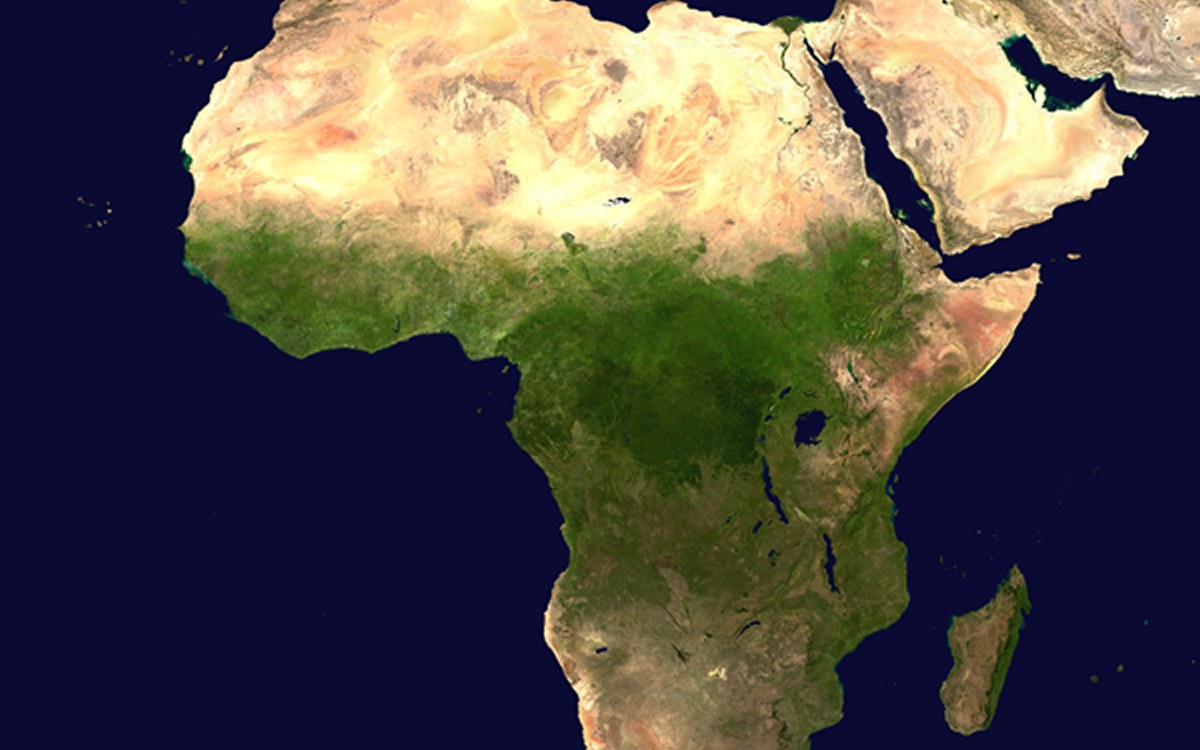
At the moment, some religious and political leaders in Africa are pushing for a charter on family values, lobbying lawmakers, African state institutions, and the African Union to formally adopt it. In the past number of years, they have been holding conferences across Africa with the support and funding of Western religious donors who, in their own countries, are definitely perceived as racist, hateful, and against women. Most recently, they convened the African Regional Interparliamentary Conference on Family Values and Sovereignty in Accra, Ghana. All this raises critical questions about foreign influence and agendas. At this critical time, when Africa faces so many problems, why do people insist on pushing an agenda that is neither ours nor relevant to our prosperity?
The African leaders who claim to protect African family values and sovereignty, unsurprisingly, exhibit traits similar to those of the historical enslavers and similar collaborators. Contrary to what they claim as “pushing back against foreign influence on the African family” and the infamous sovereignty claims, it has been proven that these leaders are directly linked and backed by the conservative “foreign” groups, including the U.S.-based hate organization, Family Watch International, which is closely linked to the anti-rights authors of Trump’s Project 2025, Heritage Foundation; and the Netherlands-based Christian nationalist organization, Christian Council International, another group closely linked to organizations supporting the Trump administration and its continued hate-based policies and atrocities. One might even argue that they serve these groups, their mandates, and their Western agenda, instead of what they want African people to believe: that they are doing this for the good and prosperity of Africa and its sovereignty. The truth, however, is that their so-called African values, culture, traditions, etcetera, could not be further removed from true African cultural values but instead mimic those outlined in America’s Project 2025. Meanwhile, the very same people who are pushing for these family values under Project 2025 are the very same people pushing for the exploitation of Africa’s natural resources, without any care for the impact their actions have on African people and their livelihoods. Adopting their policies verbatim in Africa and claiming them as our own could easily be seen as counterintuitive and self-betrayal.
Africa’s rich history of family, diversity, womanhood, and matriarchy is too beautiful to erase. Africans, especially women and girls, deserve to know about the likes of Queen Modjadji of the Balobedu people, a fierce leader who is traditionally believed to have rainmaking abilities and notably a distinctively matriarchal dynasty where the reign is passed down from woman to woman, from mother to daughter; or Queen Nzinga of modern-day Angola, who led an army that resisted and fought against the Portuguese colonizers. Queer folks and African spiritualists alike deserve to know how women and gender diverse persons held some of the highest spiritual positions in society, like Mbuya Nehanda of Zimbabwe, who was a deeply respected spirit medium and a leader of the resistance against early colonial rule in Zimbabwe, and the transgender priests, the respected agule and okule, female-to-male and male-to-female shamans of the Lugbara, now the Democratic Republic of Congo and Uganda, who led spiritual ceremonies. Even though the mudoko dako of the Langi people in Uganda were known to have been assigned male at birth, they were recognized as a distinct gender that was allowed to marry men. Africans must also know about woman-to-woman marriages that existed in pre-colonial Africa, which, according to research and oral histories, were recognised and served various purposes, from economic and social functions to lineage preservation. Similar practices include those from the Bapedi and Balobedu cultures, ngwetsi ya lapa, which still exists today, where a woman is married into a family or household to raise an heir for the family or to continue the family name, not necessarily the lineage.
As well-intentioned as it may appear, evidence suggests that the African leaders’ draft charter, because of its existing ties to Western ultraconservative partnerships, is neither original nor in good faith. The pace at which they have been moving and their true subsequent agenda should indisputably be questioned and criticised. Regardless of the inclusion of desirable language and terms such as minerals sovereignty and the Ubuntu philosophy, beneath the surface, the charter does not truly reflect these concepts. The charter, instead, does a disservice to African people by misrepresenting Africa’s diversity and disregarding its history as it relates to the diversity of families. The West has no business drafting or helping draft African legislation, especially if the whole of Africa is at risk of their negative impact. One would think the common goal would be to address bread-and-butter issues, such as poverty, unemployment, diseases, and health, to name but a few, instead of pushing the distractive agenda of those responsible for robbing Africa in the first place. No single group is the sole custodian of African knowledge. Africa belongs to all of us, with our diverse families and values, which cannot be defined through a single, narrow lens and are instead very individual issues that will differ from family to family.
Daniel Digashu is a consultant at the Southern Africa Litigation Center (SALC). SALC promotes and advances human rights and the rule of law in Southern Africa, primarily through strategic litigation and capacity-strengthening support to lawyers and grassroots organizations.

Comings & Goings

‘Leviticus’ demonizes homophobia for gripping queer horror yarn

Calendar: June 26-July 2

Orioles take on Nats for Pride Night

My boyfriend is almost perfect

Abelardo de la Espriella elected Colombia’s next president

Capital Pride draws tens of thousands to D.C.

British Prime Minister Keir Starmer to resign

PHOTOS: Capital Pride Festival and Concert