Local
Union leaders among LGBT speakers at MLK rally
Anniversary March on Washington embraces LGBT community as ‘out and equal partner’
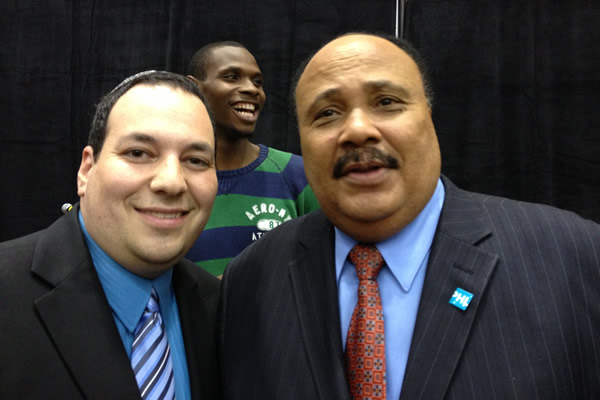
Pennsylvania gay rights leader Adrian Shanker (left), one of at least four LGBT people, including union leaders, scheduled to speak on Saturday at the 50th Anniversary March on Washington, with Martin Luther King III at a Philadelphia event earlier this month promoting the march. (Photo courtesy Equality Pennsylvania)
Union leaders Randi Weingarten, president of the American Federation of Teachers, and Mary Kay Henry, president of the Service Employees International Union, both out lesbians, will be among at least four LGBT rights advocates to speak on Saturday at the 50th anniversary commemoration of the 1963 Civil Rights March on Washington.
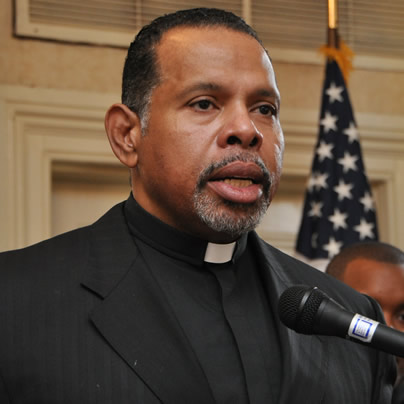
Also confirmed as out gay speakers are Rev. MacArthur Flournoy, director of faith partnership and mobilization for the Human Rights Campaign, and Adrian Shanker, president of the statewide LGBT rights organization Equality Pennsylvania.
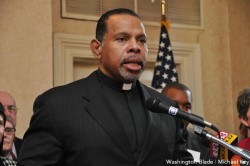
Rev. MacArthur Flournoy (Washington Blade file photo by Michael Key)
Other LGBT advocates were expected to speak at the Lincoln Memorial rally, but organizers of the event said they could not confirm additional speakers until an official list was released later this week.
“Fifty years later, our nation is also more diverse than ever,” said Wade Henderson, president of the Leadership Conference on Civil and Human Rights, the nation’s largest civil rights organization, in discussing the 1963 march, in which famed civil rights leader Martin Luther King Jr. delivered his “I Have a Dream” speech.
“And Saturday’s march will be a true reflection of that diversity,” said Henderson in a telephone news conference this week. “Women, who held no speaking roles at the original march, will play leading roles in Saturday’s event. Latinos, Asian Americans, Native Americans, and Arab Americans will all be represented as well,” he said.
“And whereas Bayard Rustin, executive director of the 1963 march, was silenced because of his sexual orientation, the LGBT community has been embraced as an out and equal partner in Saturday’s event,” Henderson said.
Joining Henderson in speaking at the news conference were Chad Griffin, president of HRC; Sharon Lettman-Hicks, executive director of the National Black Justice Coalition, an LGBT organization; and Rev. Darlene Nipper, deputy executive director of the National Gay and Lesbian Task Force.
Shanker, a marketing director for a company near Bethlehem, Pa., said he was honored to have received a letter from Martin Luther King III and Rev. Al Sharpton inviting him to speak at the event. King III is the eldest son of Martin Luther King Jr. and one of the lead organizers of the 50th anniversary march. Sharpton, president of the New York-based National Action Network (NAN), is another of the lead march organizers.
Shanker has worked on LGBT rights initiatives in Pennsylvania for at least 10 years. This year he said he has followed in the footsteps of his grandfather, Albert Shanker, who, as a teacher’s union leader, helped arrange for thousands of teachers to travel to Washington for the 1963 march.
He said that as part of his organizing for the 50th Anniversary March he recently spoke at an event in Philadelphia promoting the march at which King III also spoke.
“I guess some of the people who were there thought I was a good enough speaker that they wanted me to speak at the march,” Shanker said. “I do a lot of speaking and I do a lot of organizing in Pennsylvania…But I certainly wasn’t expecting an invitation to speak at the march. It’s a major honor.”
He added, “This is a time when we can really make it clear that the LGBT movement is focused on the broader civil rights agenda and is part of that broader civil rights agenda. So I’m very excited to be among many speakers at this event.”
Weingarten and Henry have been vocal supporters of LGBT equality as part of their work in the U.S. labor movement. The unions they head have endorsement LGBT rights, including marriage equality.
Flournoy of HRC is a theologian, author, and preacher who has worked on civil rights issues for more than 30 years. He served as Faith Director for Marylanders for Marriage Equality, the group that led the successful ballot campaign last fall for Maryland’s same-sex marriage law.
In an open letter released on Monday, HRC, NBJC, the Task Force and Pride At Work, an LGBT arm of the AFL-CIO, along with 36 other LGBT advocacy organizations declared their strong support for the 50th anniversary commemoration March on Washington.
“History was made that day 50 years ago when thousands came to Washington, D.C. to lift up their voices in support of civil rights, employment protection, and an end to racial segregation in our nation’s schools,” the open letter says. “On Aug. 24, 2013, we will rededicate ourselves to that dream of equality and justice.”
The letter also notes that the LGBT rights movement celebrated historic victories in the past year, including voter approval of marriage equality in several states and the Supreme Court’s rulings striking down a key provision of the anti-gay Defense of Marriage Act and California’s Proposition 8, which banned same-sex marriage in the nation’s largest state.
But the open letter says that LGBT people – like other minorities and immigrants – continue to face discrimination in employment and other areas, and that gays and transgender Americans continue to be victimized by violence based solely on their sexual orientation and gender identity.
“Working together, this rally and mobilization are an opportunity to lift up the voices of LGBT people as part of a broad progressive agenda for social and economic justice,” the letter says. “Please join us on Saturday, Aug. 24, 2013, at 8 a.m. – 3 p.m. in Washington, D.C. at the D.C. War Memorial at 900 Independence Ave., S.W.
The D.C. War Memorial, located across Independence Ave. from the Martin Luther King Memorial, is being used as the starting point for an LGBT contingent in one of many feeder marches that will culminate at the Lincoln Memorial, where the main rally was scheduled to be held.
At least eight LGBT-related events, including forums and receptions, were scheduled to take place this week and next week in association with the 50th Anniversary March on Washington.
Several of the events will honor Bayard Rustin, whom LGBT activists such as National Black Justice Coalition official Mandy Carter of North Carolina have described as an unrecognized gay hero in the U.S. civil rights movement.
At one of the events Tuesday night, D.C. gay activist Paul Kuntzler was one of four panelists to reflect on their participation in the 1963 March on Washington. Kuntzler told a gathering at D.C.’s Martin Luther King Library that he marched with a contingent of United Auto Workers Union members from Detroit, where he lived before moving to Washington.
March on Washington LGBT-related events
Friday, Aug. 23
- Celebrating the Legacy of A. Philip Randolph & Bayard Rustin 44th Annual A. Philip Randolph Institute National Conference. 8 a.m. – 6 p.m. Hyatt Regency Hotel. 400 New Jersey Ave., N.W.
- What is the Unfinished Business for the LGBT Community? A Conversation and Reception on the Heels of the Anniversary of the March on Washington. 4:30 – 6:30 p.m. Rayburn House Office Building Foyer
- Welcoming Reception for LGBT Participants 50th Anniversary March on Washington . 6–10 p.m. Us Helping Us HIV/AIDS services organization. 3636 Georgia Ave., N.W.
Saturday, Aug. 24
- LGBT March contingent assembles at D.C. Statehood Rally . D.C. War Memorial (North side of Independence Ave. between World War II Memorial and Lincoln Memorial). Mayor Vincent Gray to speak 8:30 a.m. – 9:30 a.m.
- 50th Anniversary March on Washington rally speakers and entertainers to be announced later in week 10 a.m. – 6 p.m., Lincoln Memorial
Monday, Aug. 26
A Tribute to Bayard Rustin & the 50th Anniversary of the 1963 March on Washington. Sponsored by National Black Justice Coalition, American Federation of Teachers, A. Philip Randolph Institute.
6– 9 p.m.,
Lincoln Theater,
1215 U St., N.W.
Wednesday, Aug. 28
The Life and Legacy of Bayard Rustin: How an African American gay man became the lead organizer of the 1963 Civil Rights March on Washington.
Panel discussion and reception, hosted by the Center for Black Equity
and sponsored by the Human Rights Campaign,
7 p.m.
in the HRC Equality Forum Hall,
1640 Rhode Island Ave., N.W.

District of Columbia
Man accused of threatening to shoot D.C. bar employee after making anti-gay slurs
May 24 incident took place near Black Pride events on U Street

D.C. police on Sunday, May 24, at around 4:20 p.m. arrested a Maryland man for allegedly threatening to shoot an employee while using anti-gay slurs at Ben’s Next Door restaurant and bar at 1211 U St., N.W.
According to a statement released by police and a police incident report, the arrested man, identified as Delonte Fraley, 32, of Accokeek, Md., made the threats after the employee told a bartender not to serve the man alcohol.
“The suspect overheard the employee and threatened to shoot the employee and used homophobic slurs against the employee,” the police statement says. “When the employee left the restaurant for the day, the suspect was standing near the employee’s vehicle,” it says.
“The employee returned to the restaurant and called the police,” the statement continues. “The suspect was apprehended by responding officers,” it says.
The police statement says the arresting officers charged Fraley with Felony Threats (Hate/Bias).
D.C. Superior Court records show prosecutors with the Office of the U.S. Attorney for D.C., which prosecutes D.C. criminal cases, escalated the charge to Threatening to Injure or Kidnap a Person (Bias-Related Hate Crime).
The incident occurred during Memorial Day weekend when thousands of visitors and D.C. area LGBTQ advocates and supporters were attending D.C. Black Pride events held in locations across the city, including Black Pride parties hosted by LGBTQ bars in the U Street entertainment area near Ben’s Next Door.
Among the nearby LGBTQ bars hosting D.C. Black Pride events were Nellie’s Sports Bar and Thurst Lounge. Ben’s Next Door is located next to the popular longtime U Street eatery Ben’s Chili Bowl.
Court records show that Judge Robert R. Rigsby at a May 25 presentment hearing released Fraley on personal recognizance with a stay-away order — the details of which were not publicly disclosed pending a June 4 preliminary hearing.
A more detailed arrest affidavit filed in court by D.C. police says Fraley allegedly confronted the employee at Ben’s Next Door with anti-gay slurs on the day prior to his arrest.
“The complainant told the defendant that because he used homophobic slurs towards himself previously on May 23, 2026, and his hostess, as well as making threats to the complainant and calling him a faggot, he was unable to stay in the establishment,” the affidavit states.
It adds, “The defendant became irate stating, ‘I know where your Tesla is at. See me outside faggot, I will slap your ass’ and ‘I will shoot your ass.’” The affidavit says the complainant confirmed to police the Tesla referred to by Fraley was his vehicle. It says as the victim walked toward his car after getting off work, he saw Fraley standing directly in front of the car.
“The complainant stated he felt unsafe while the defendant was standing in front of his vehicle because he felt the defendant was capable of carrying out those threats,” says the affidavit. It says the victim then decided to return to the restaurant and call police without the defendant having seen him.
“The defendant was placed under arrest for Felony Threats Hate/Bias and was transported to the Third District Station for processing,” the affidavit concludes.
It couldn’t immediately be determined whether the victim identifies as LGBTQ or whether any of the Ben’s Next Door patrons had been involved with D.C. Black Pride.
“Established in 2008, Ben’s Next Door is a family-owned and operated restaurant and bar on U Street, Northwest in Washington, D.C.,” a statement on its website says. “As a Black-owned establishment, it’s our goal to deliver a warm, welcoming, familiar, and communal vibe to all guests,” the statement says.
The Comings & Goings column is about sharing the professional successes of our community. We want to recognize those landing new jobs, new clients for their business, joining boards of organizations and other achievements. Please share your successes with us at [email protected].
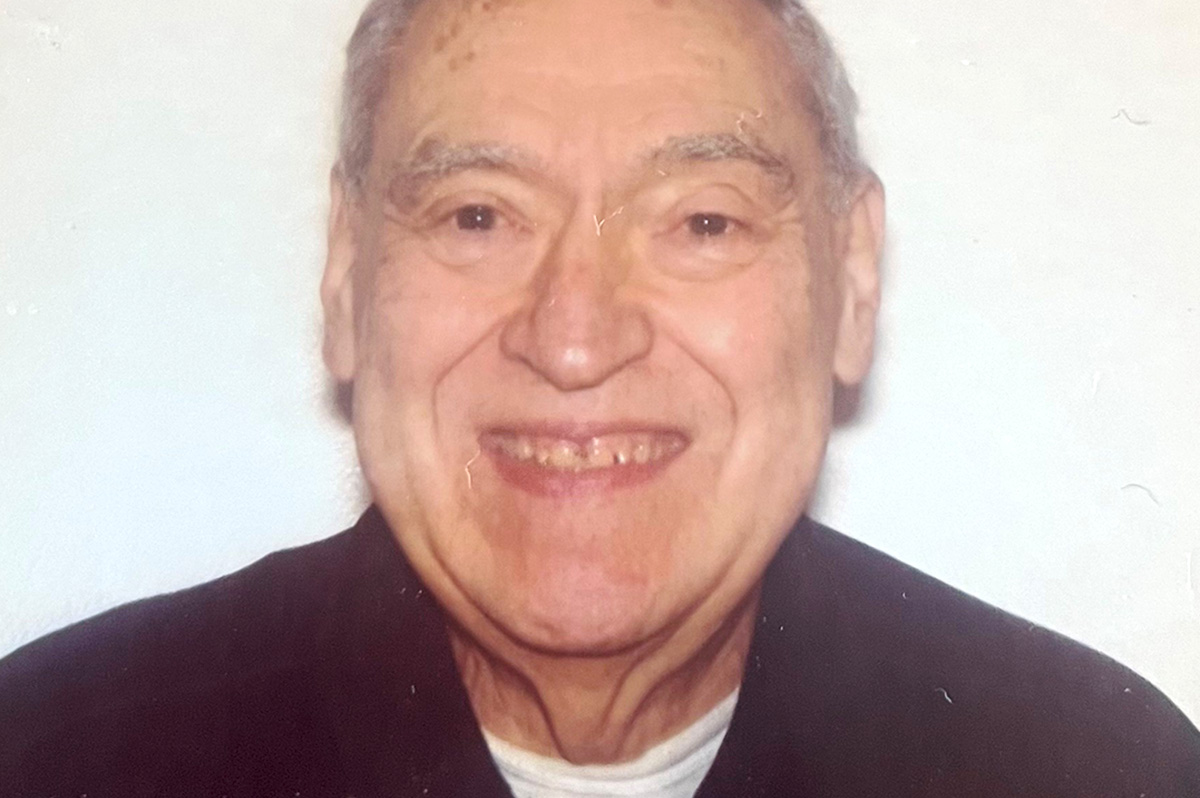
Congratulations to Peter Schott on being honored by Delaware Gov. Matt Meyer on National Honor our LGBTQ Elders Day.
Schott is a prominent LGBTQ advocate and seasoned political strategist who has spent decades advancing civil rights at the national and state levels. Following a distinguished 25-year career as a staff assistant in the U.S. House of Representatives, Schott leveraged his extensive legislative expertise to help organize the National Stonewall Democrats, serving as an influential member of its national board.
After moving to Delaware in 2002, he became a foundational figure in the state’s LGBTQ political landscape, co-founding the Delaware Stonewall PAC, (now Stonewall Delaware) to champion the election of pro-equality candidates. His strategic lobbying and community organizing were instrumental in the successful passage of Delaware’s landmark non-discrimination, civil union, and marriage equality laws. A former member of the State Human Relations Commission, he remains a vital voice for the LGBTQ community in the Mid-Atlantic, continuing to document and drive social progress through his activism and writing. Schott currently serves as vice chair of the Delaware Democratic Pride Caucus, and a board member of Speak Out Against Hate (SOAH). He was a delegate to two Democratic National Conventions.
He earned a bachelor’s degree in Political Science, New York University; and a master’s of Public Administration degree from American University.
District of Columbia
Doc on Blade reporter Chibbaro scores Emmy nomination
‘Lou’s Legacy’ chronicles 50-year career

“Lou’s Legacy: A Reporter’s Life at the Washington Blade” has been nominated for a Capital Emmy in the “Documentary – Historical” category by the National Capital Chesapeake Bay Chapter of the National Academy of Television Arts & Sciences.
“Our members include all of the video content producers who serve our local audiences in Washington, DC, Maryland and Virginia—from the Atlantic to the Appalachians, from Bristol to Baltimore,” said Capitol Emmys President Adam Longo in a press release.
Broadcast last June by WETA PBS in Washington, D.C. and MPT in Maryland, the documentary was directed and produced by Emmy-nominated filmmaker Patrick Sammon in association with the Mattachine Society of Washington, D.C. Additional nominees who worked on the film include producer Julianne Donofrio and editor Amir Jaffer.
“Lou’s Legacy” tells the story of two D.C. icons — legendary Washington Blade reporter Lou Chibbaro Jr. and beloved drag performer Donnell Robinson, known to generations of Washington audiences as “Ella Fitzgerald.” Through Chibbaro’s nearly five-decade career at the Blade and Ella’s return to the stage after a three-year hiatus following COVID, the 29-minute documentary explores the history of Washington’s LGBTQ community and today’s rising backlash against LGBTQ rights, including laws targeting drag performers.
“We’re honored that Lou’s Legacy has been recognized alongside such an impressive group of historical documentaries,” said Sammon. “This nomination is especially meaningful because the film preserves and celebrates the stories of people who helped shape queer history in Washington, DC — often without recognition from mainstream institutions. We’re deeply grateful to the Mattachine Society, Lou Chibbaro Jr., Donnell Robinson, WETA PBS, and everyone who helped bring this project to life.”
“Lou’s Legacy” premiered on WETA PBS in June 2025 during Pride month. The documentary also broadcast on Maryland Public Television and is streaming nationally on PBS.org. WETA will rebroadcast “Lou’s Legacy” several times during Pride month, including June 15 th at 9 p.m. Winners of the Capital Emmy Awards will be announced at the Capital Emmy Gala on June 20 at the Bethesda Marriott Hotel.

Man accused of threatening to shoot D.C. bar employee after making anti-gay slurs

Bree Fram’s congressional campaign ends but her fight continues

Rev. Peter Leland DeGroote dies at 86

Kenyan High Court issues landmark transgender rights ruling

Peppermint made her mark on ‘Drag Race.’ Now, her advocacy is front and center

Eight Democrats break with party as House advances ‘Don’t Say Trans’ bill

ROSENSTEIN: Marylanders should again reject Trone

Quest for fame becomes an obsession in entertaining ‘Lurker’

Here’s how to celebrate Black queer joy

When impunity meets history
-

 Congress4 days ago
Eight Democrats break with party as House advances ‘Don’t Say Trans’ bill
-
Opinions4 days ago
ROSENSTEIN: Marylanders should again reject Trone
-
Movies4 days ago
Quest for fame becomes an obsession in entertaining ‘Lurker’
-
Out & About4 days ago
Here’s how to celebrate Black queer joy