District of Columbia
New D.C. Transgender Oral History Project launched
Effort funded by Humanities DC grant
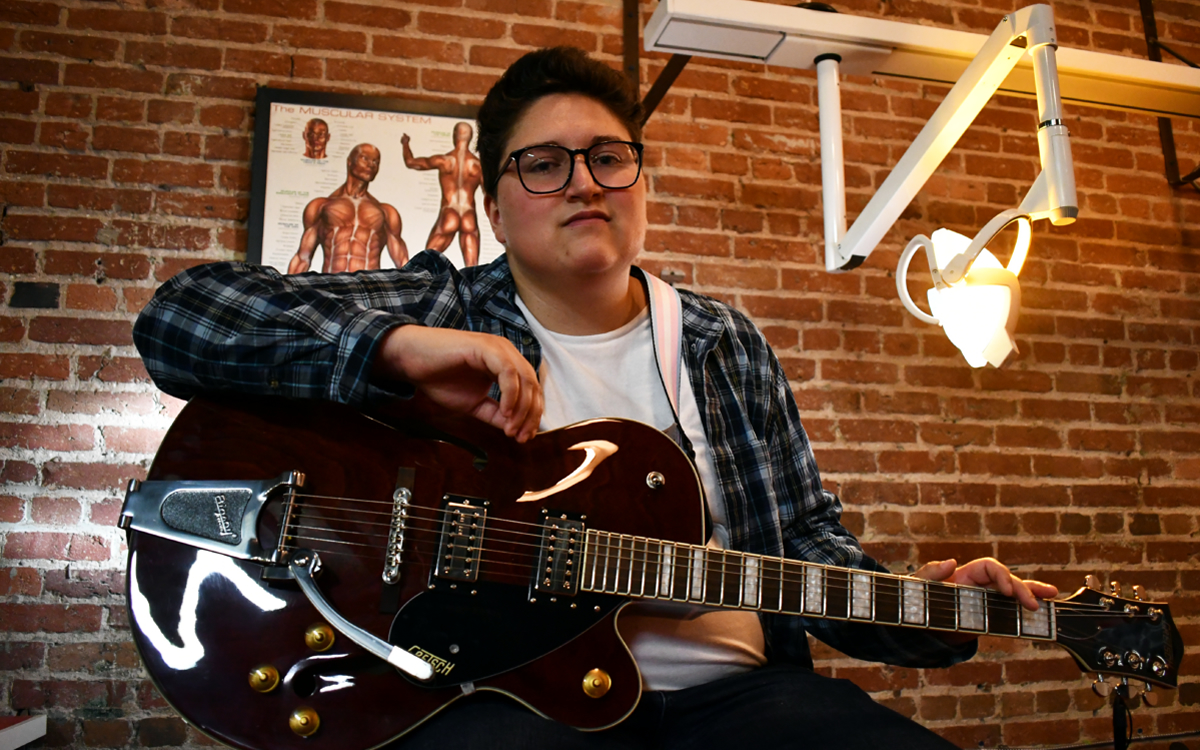
Cooper Joslin, a local D.C. web developer and multimedia artist, has announced the launch of a D.C. Transgender Oral History Project aimed at recording oral histories of members of the transgender community in the local area.
Joslin, who identifies as nonbinary, said the project is being funded by a grant from Humanities D.C., a local grant making organization affiliated with the National Endowment for the Humanities. Joslin said the project would also be carried out in collaboration with the D.C. Oral History Collaborative, which will support efforts to line up interviews with local trans residents.
“These interviews will eventually end up with the D.C. Public Library, but they will also be featured on a website called the DC Trans Guide, which will feature both oral histories and resources on changing your name, accessing gender affirming care, and finding support groups in the area,” Joslin said in a statement.
The interviews for the project will be conducted both in person and virtually, according to Joslin.
Joslin’s trans oral history project comes about six months after the D.C. Rainbow History Project announced it had received a $15,000 D.C. government grant for a project called the Trans History Initiative that, among other things, would also obtain oral histories from local transgender residents.
“The Trans History Initiative will help Rainbow History Project deepen its connections with the Trans community through expanded efforts to preserve the history and cultural contributions of Washington-area trans communities,” a statement released by the group says.
Vincent Slatt, Rainbow History Project’s director of archiving, told the Blade he was glad to learn of Joslin’s trans oral history project. He said in this type of history gathering there is “no such thing” as competition or duplication of efforts.
“More history, more research, more collecting is good for everyone—we support an ‘all hands-on deck’ approach,” he told the Blade. “I’m glad to hear this project has begun.”
Joslin said members of the local transgender community interested in having their history recorded through the D.C. Transgender Oral History Project can apply through this online form:
DC Trans Guide Oral History Intake Form here.



District of Columbia
Mary’s House founder, CEO retires
Dr. Imani Woody played leading role in opening DC’s first home for LGBTQ seniors
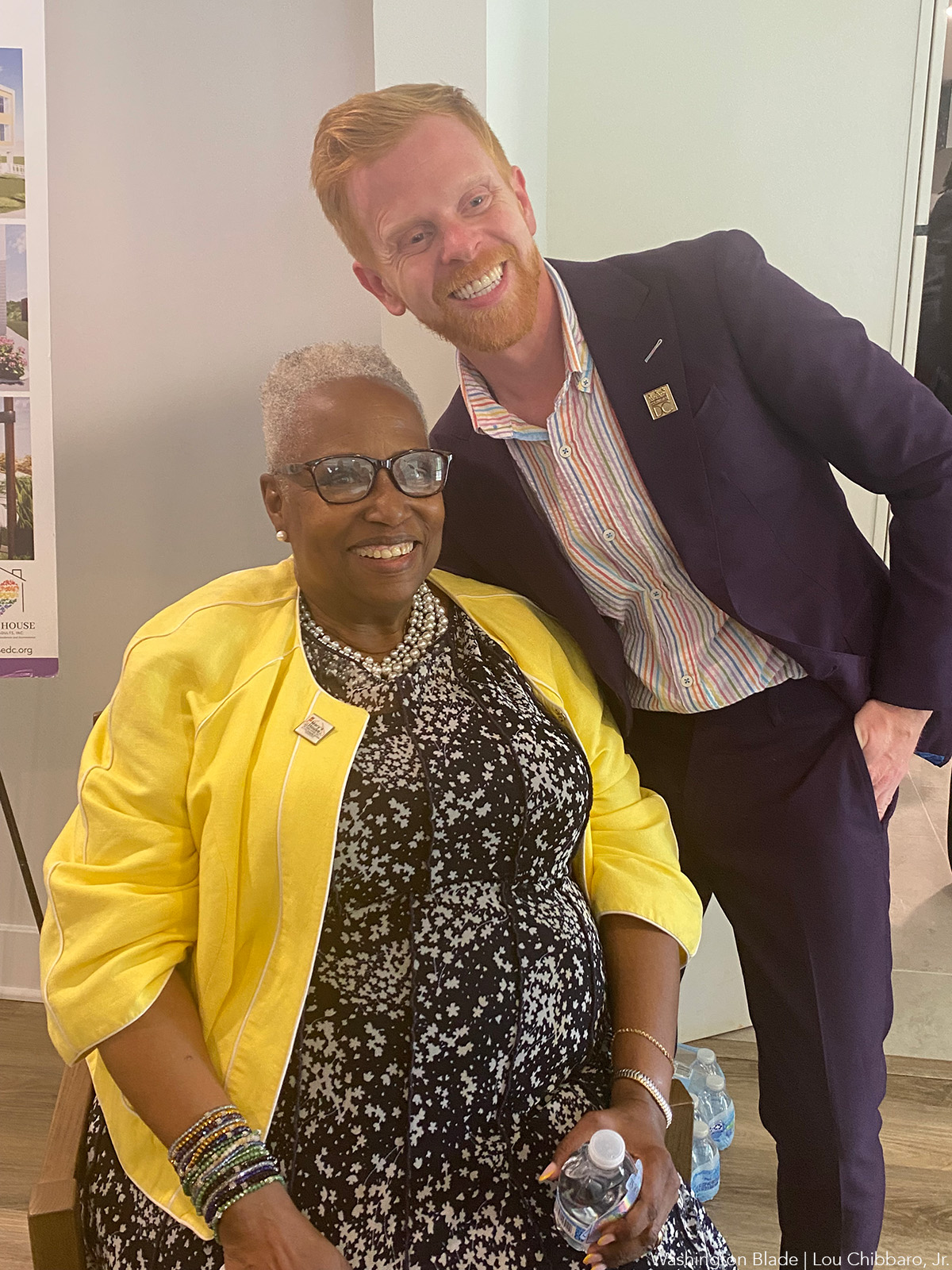
The board of directors for Mary’s House for Older Adults, DC’s first official home dedicated to providing affordable housing for LGBTQ seniors, announced on July 7 that its founding president and CEO, Dr. Imani Woody, has retired.
Woody, who holds a PhD in Human Services, is credited with playing a leading role over many years in arranging both city and private funding needed to construct and operate the Mary’s House three-story building located at 401 Anacostia Road, S.E., in the city’s Fort Dupont neighborhood.
The house, which opened in March 2025, with a grand opening ceremony held in May 2025, includes 15 single-occupancy residential units and more than 5,000 square feet of shared communal living space.
“It is with profound gratitude and hearts full of celebration that the board of directors of Mary’s House for Older Adults, DC (MHFOA) announces the retirement of our visionary founder, Dr. Imani Woody, from her role as president and CEO,” the Mary’s House board says in a statement.
“Dr. Woody’s journey with Mary’s House began with her vision and a kitchen table gathering of women with a bold, urgent, and loving vision: to create safe, affirming, affordable housing for LGBTQ/SGL older adults in Washington, DC,” the statement says.
It adds, “What started as a dream has grown into DC’s first affordable LGBTQ+/SGL affirming communal living space for adults 60 and over, a 15-room community residence at 401 Anacostia Road in Southeast Washington.”
The statement says Woody will continue to serve on Mary’s House board.
“The board will be sharing information about the leadership transition process in the coming weeks,” the statement continues. “We are committed to honoring Dr. Woody’s legacy by ensuring Mary’s House continues to thrive and grow in faithful service to LGBTQ/SGL elders experiencing housing insecurity and isolation.”
District of Columbia
SMYAL receives $25,000 award for ‘courageous acts’
D.C. group provides support services for LGBTQ youth
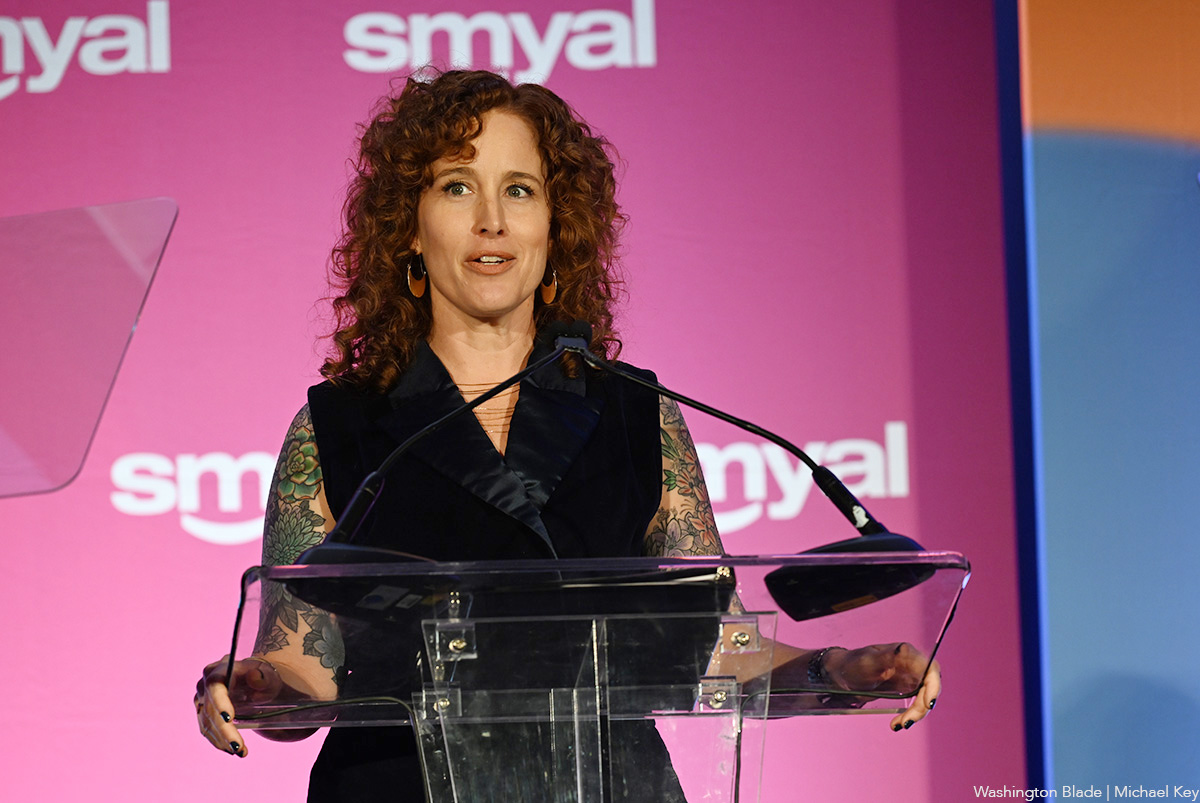
The D.C.-based organization SMYAL, which provides services for LGBTQ youth in the D.C. metro area, including housing for homeless LGBTQ youth, announced on June 30 that it received a $25,000 award for its “courageous acts” in support of the community it serves.
The award was a monetary grant from The Courage Project, which describes itself as a “national initiative investing in acts of courage and compassion that strengthens our communities and democracy.”
A statement on its website says it was launched in May 2025 and is funded and backed by leading national foundations in the U.S.
“At SMYAL, we are deeply grateful to receive support from The Courage Project and are inspired by their bold investment in LGBTQ+ youth at such a critical moment,” SMYAL CEO Erin Whelan said in a statement. “For queer and trans young people, simply showing up as themselves each day requires immense courage, and that courage is strengthened when organizations like The Courage Project stand behind them loudly, proudly, and without hesitation,” Whelan said.
In its statement announcing the award SMYAL says The Courage Project will recognize SMYAL and other awardees and their work on July 3 at the Washington National Cathedral as part of a special interfaith service marking the U.S. 250th anniversary.
“The Courage Project is a bold initiative honoring everyday acts of bravery – the quiet, often unseen acts of heroism that reflect the best of the American spirit and strengthen democracy at the community level,” the project states on its website.
District of Columbia
Longtime Blade staffer Stephen Rutgers steps down after 14 years
Plans to focus on running Crush Dance Bar, other ventures

Longtime Washington Blade employee Stephen Rutgers announced he is stepping down after 14 years to focus on other ventures, including his part ownership of the popular Crush Dance Bar.
Rutgers was hired by the Blade in 2012 to help plan Pride festivities and over the years was promoted to director of sales and marketing. In addition to his broad set of responsibilities, Rutgers planned the annual Pride on the Pier celebration at the Wharf, which has exploded in popularity over the seven years since its launch.
“Watching Pride on the Pier grow from a new community event into one of D.C.’s signature Pride celebrations has been incredibly rewarding,” Rutgers said. “Expanding Pride on the Pier into a two-day festival for WorldPride in 2025 was definitely a career highlight. Seeing thousands of people come together to celebrate our community while supporting the Blade’s mission is something I’ll always be proud of.”

Rutgers described his biggest challenge as navigating the changing media landscape.
“More than ever, we’ve had to remind our community that local journalism matters and that it needs their support,” he said.
He added that he’s most proud of helping to ensure the Washington Blade is positioned to thrive for the next 50 years.
“I was fortunate to be part of the Blade during its 50th anniversary — a milestone that reflects its incredible history and impact,” Rutgers said. “The Blade has been an important voice for the LGBTQ community for more than five decades, and knowing I played a small part in helping its future is most important to me.”
Blade Publisher Brian Pitts praised Rutgers for juggling multiple responsibilities.
“We wish Stephen all the best,” Pitts said. “For the past 14 years, Stephen has been a vital part of the Blade, handling many things — marketing and advertising, sponsorships, and Blade signature events. We will all miss him.”
Blade Editor Kevin Naff thanked Rutgers for his years of service to the community.
“After 14 years, it’s hard to imagine the Blade without Stephen and his boundless energy and creativity,” Naff said. “He’s one of the hardest working and most dedicated people I’ve ever known and he will be missed. But change is the only constant and I know Stephen will move on successfully to new challenges and the Blade will expand on Stephen’s important work.”
As for what’s next for Rutgers, he said he plans to focus on Crush as well as his real estate business.
“I’ve always been someone who likes to stay busy,” Rutgers said. “For the past 12 years, I’ve balanced my work at the Blade and in real estate. Two years ago when I opened Crush, I never realized just how much time and energy it would take. The passing of my father earlier this year also gave me a new perspective. It reminded me that life is short and that it’s important to make time for the people and experiences that matter most. Stepping away from the Blade will allow me to focus on those ventures while also creating more balance in my life. After 14 incredible years, it feels like the right time for a new chapter.”
Naff said that for now Rutgers’s responsibilities will be divided between existing staff along with several new freelance contractors.
“The Washington Blade plays a unique role in our community’s fight for equality,” Rutgers said. “It’s the only LGBTQ news organization with White House credentials, giving it direct access to the people and institutions shaping policies that affect our community. The Blade continues to hold elected officials accountable, report on the issues that matter most to LGBTQ people, and tell the stories that often go uncovered by mainstream media.
“The Blade has been my family for most of my adult life. For 14 years, it has been part of my daily routine, so it’s going to feel very strange waking up and not logging on each morning.”

Gay Fla. Democrat Elijah Manley sees opportunity in Trump’s second term

Ron Singer, owner of popular Mount Vernon gay bar Leon’s, dies

Egyptian authorities refuse to allow gay cruise to dock in country

‘She’s the He’ brings gender-bending twist to teen comedy genre

Supreme Court ruling on trans athletes is a public health story

‘My Favorite Sociopath’ debuts at Shepherdstown’s CATF

Under-the-radar Delaware beach towns smart buyers are targeting

In Trump’s divided America, Michael Weinstein’s AHF responds

Turkish authorities refuse to allow gay cruise to dock in country

When a church fears the rainbow
-

 Theater5 days ago
‘My Favorite Sociopath’ debuts at Shepherdstown’s CATF
-
Real Estate5 days ago
Under-the-radar Delaware beach towns smart buyers are targeting
-
Politics4 days ago
In Trump’s divided America, Michael Weinstein’s AHF responds
-
Turkey4 days ago
Turkish authorities refuse to allow gay cruise to dock in country