India
Kamala Harris represents hope for LGBTQ Indians
Democratic presidential candidate’s mother was born in India
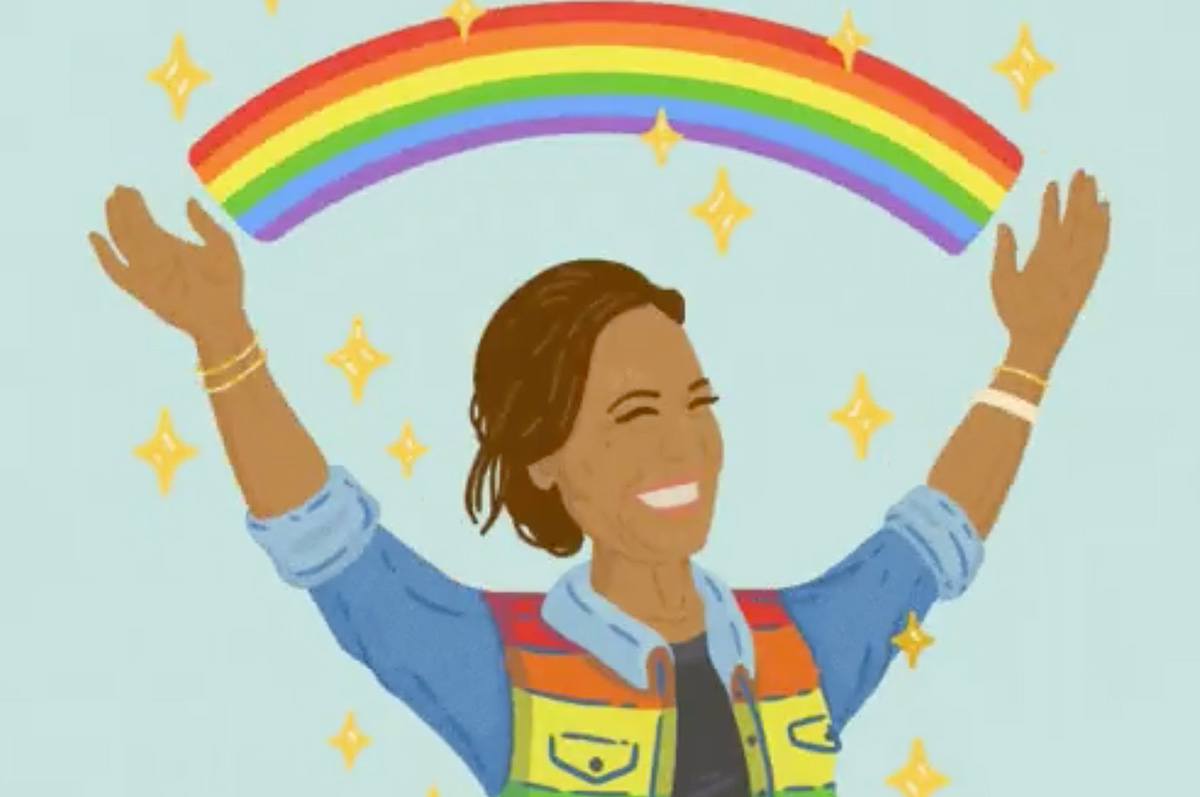
India’s LGBTQ community is watching Vice President Kamala Harris’s presidential campaign with hopeful anticipation.
“Can she be the catalyst for change we’ve been waiting for?” is the question echoing through the colorful streets of India’s metropolises. With her history of advocating for LGBTQ rights, Harris’s candidacy feels like a rainbow beacon in the political storm. As her campaign gains momentum, the Indian LGBTQ community finds itself not just spectators but fervent cheerleaders, hoping her leadership might inspire similar strides in their land.
Her mother, Shyamala Gopalan, who was born into a Brahmin family in 1938, and her grandfather, PV Gopalan, who hailed from the quaint village of Thulasendrapuram in Tamil Nadu state, link Harris to India’s rich cultural tapestry. This connection not only invigorates her campaign as she seeks the White House, but also resonates deeply with LGBTQ Indians who see in her a beacon of progressive change.
Harris’s grandfather later moved to New Delhi to become a civil servant in British-ruled India, paving the way for Gopalan’s journey to the U.S. Her mother’s pursuit of biomedical science at the University of California, Berkeley planted the seeds for her future political aspirations.
The Independent reports Harris’s uncle, Balachandran, from Delhi and her aunt, Sarala, from Chennai still visit their local temple about once a year, keeping the family tethered to their village and cultural roots.
The State Department notes the relationship between India and the U.S. is one of the most strategic and consequential of the 21st century.
‘The U.S. supports India’s emergence as a leading global power and a vital partner in promoting a peaceful, stable, and prosperous Indo-Pacific region,” it reads.
Harris during Indian Prime Minister Narendra Modi’s visit to the U.S. in June 2023 underscored the deep-rooted ties between the two countries, highlighting shared democratic values and the significant contributions of Indian Americans.
India in 2018 decriminalized consensual same-sex sexual relations.
The Indian Supreme Court last October ruled against marriage equality. The justices have agreed to consider an appeal of their ruling.
Harris during a 2023 interview emphasized she has been dedicated to human rights, equality, and LGBTQ issues throughout her career.
Harris was California’s attorney general when she declined to defend Proposition 8, a same-sex marriage ban that voters in her state approved in 2008.
The U.S. Supreme Court on March 26, 2013, heard oral arguments in a case that challenged Prop 8. The justices in a 5-4 ruling said anti-gay groups did not have standing to defend the ban and allowed a federal court ruling that declared it unconstitutional to remain in place.
Same-sex couples have been able to marry in California since June 28, 2013.
“It was clear that this is a case that is about fundamental notions of justice and equality and liberty,” Harris told the Blade after the Supreme Court’s oral arguments.
President Joe Biden in 2021 signed a memo that committed the U.S. to promoting LGBTQ and intersex rights abroad as part of the Biden-Harris administration’s overall foreign policy.
Harris during a 2023 press conference with Ghanaian President Nana Afuko-Addo that took place in Accra, his country’s capital, noted “a great deal of work in my career has been to address human rights issues, equality issues across the board, including as it relates to the LGBT community.”
“I feel very strongly about the importance of supporting the freedom and supporting and fighting for equality among all people and that all people be treated equally,” said Harris. “This is an issue that we consider, and I consider to be a human rights issue and that will not change.”
Ghana is among the countries in which consensual same-sex sexual relations remain criminalized.
Harris’s visit to the country coincided with debate over a bill that would, among other things, criminalize LGBTQ allyship. Afuko-Addo has yet to sign the measure — the Promotion of Proper Human Sexual Rights and Ghanaian Family Values Bill — that MPs passed in February.

Manvendra Singh Gohil, who describes himself as the world’s first openly gay prince, is from Gujarat state and is an activist who runs Lakshya Trust. He told the Washington Blade that Harris is seen not just as a powerful person, but also a serious candidate. Gohil highlighted she embodies not only the hope of representation but also the merit, resonating deeply with the global LGBTQ community.
“Merit and diversity are not mutually exclusive,” he said. “There is merit in diversity, but we must make an effort to look for diversity in merit, too. I wish Kamala all the best and hope that she can carry the energy and dreams of the millions. If she is elected, I hope she serves to be the president for the entire country, the Democrats, Republicans and Independents alike.”
Deepak Kashyap, India’s first openly gay psychologist, told the Blade that Indians view Harris with hope.
“The LGBTQ community, for better or for worse, across the world, follow American examples to quite an extent,” said Kashyap. “Holding the presidency means holding the hopes and dreams of communities who find themselves at the mercy of every election cycle. I wish you well and hope to meet you in the Oval Office someday.”
Harris has often reminisced in interviews about her childhood visits to Thulasendrapuram, fondly recalling walks on the Chennai beach with her grandfather when she was just five. Though those memories of sun-soaked sands linger, she hasn’t set foot in India since becoming vice president.
Her nostalgic tales add a touch of personal warmth to her political journey, endearing her to the Indian LGBTQ community and beyond.
Negha Shahin, the first transgender woman to win an award at the 52nd Kerala State Film Awards and a native of Tamil Nadu, told the Blade that while Harris’s connection to state is heartwarming, it doesn’t directly influence her stance on LGBTQ issues. Shahin pointed out it would be a stretch to attribute Harris’s progressive views on LGBTQ rights to her mother’s background.
“What truly matters in understanding the struggles faced by the trans and queer community is the need for proper education and an open mind,” said Shahin. “Kamala Harris has spoken out about trans rights because she recognizes the importance of these issues and the need to address the discrimination and challenges faced by the LGBTQIA+ community.”
“Her advocacy stems from a broader commitment to equality and justice, rather than any specific cultural influence,” she added.
Shahin said it would be a monumental moment if Harris wins.
“If she wins also I wish it will impact the Indian LGBTQIA community,” said Shahin. “If she holds a position of power her administration might engage in diplomatic efforts to encourage other nations to advance human rights, including LGBTQIA+ rights. This could lead to international pressure on countries like India to improve their legal and social stance on LGBTQIA+ issues.”
Harish Iyer, an Indian activist who participated in the State Department’s International Visitor Leadership Program in 2016, told the Blade the LGBTQ community needs world leaders who are allies and community members.
“Kamala Harris’s ascend to the top of the Democratic ticket is thus a ray of hope,” said Iyer. “She has been unwavering in her allyship. In a world of deniers of queerdom, she is in sync with the ground realities of queer existence.”
Michael K. Lavers contributed to this article.
Ankush Kumar is a reporter who has covered many stories for Washington and Los Angeles Blades from Iran, India, and Singapore. He recently reported for the Daily Beast. He can be reached at [email protected]. He is on X at @mohitkopinion.





India
Iran war causes condom shortage in India
Trade disruptions have strained petrochemicals, lubricant supplies

About 80 days into the U.S.-Iran war, while much of the world struggles with oil supplies, India is confronting a different crisis: a widening condom shortage. Health activists warn the supply disruption could worsen HIV/AIDS risks in the world’s most populous country.
Disruptions in maritime trade through the Strait of Hormuz have strained supplies of petrochemicals and industrial lubricants used in condom manufacturing. The crisis has increased production costs across the sector and pushed retail prices sharply higher.
India’s condom manufacturing industry is valued at nearly $1 billion.
Production depends heavily on silicone oil and ammonia. Silicone oil, a key lubricant used in manufacturing, is in short supply. Ammonia, which stabilizes raw latex, is expected to see price increases of 40-50 percent. Rising packaging costs have added further pressure. Some manufacturers and retailers have reported condom prices increasing by as much as 50 percent.
India is home to an estimated 2.5 million people living with HIV, the world’s second-largest population of HIV-positive people, according to a 2024 report. The Health Ministry’s India HIV Estimation 2025 technical report said 5.4 percent of HIV cases in 2024-2025 were linked to transmission between men who have sex with men.
In 2024, India recorded an estimated 64,470 new HIV infections and 32,160 AIDS-related deaths nationwide. The figures marked declines of 48.69 percent and 81.42 percent, respectively, compared with 2010.
Ankit Bhuptani, an LGBTQ activist in India, told the Washington Blade that the country has made significant progress in reducing HIV infections over the past two decades. But, he said, that progress depended heavily on affordable condoms, targeted outreach programs and on-the-ground work by NGOs serving MSM and transgender people.
“Pull one thread and the whole thing loosens. What worries me about this particular shortage is that it arrives at exactly the moment when India’s LGBTQ community was beginning to access healthcare more openly after the Section 377 reading down,” said Bhuptani. “Young queer Indians in tier-two cities were just starting to trust government health systems enough to engage with them. A price spike that prices them out, or a shortage that sends them to substandard alternatives, could set that trust back by years.”
The Indian Supreme Court in 2018 struck down Section 377, a colonial-era law that criminalized consensual same-sex sexual relations.
In March, the Commerce and Industry Ministry acknowledged the difficulties faced by Indian exporters due to disruptions caused by the war in West Asia and launched a roughly $51.5 million Resilience and Logistics Intervention for Export Facilitation, or RELIEF, program. It provides credit insurance support for exporters whose shipments have been stranded because of the conflict.
“Price elasticity in sexual health products is brutal. When a condom pack goes from 20 rupees to 40, usage drops. It’s that simple,” said Bhuptani. “And when usage drops in populations with higher baseline HIV exposure, you don’t see the consequences for two or three years. Then the numbers arrive and everyone acts surprised.”
The situation has been further aggravated by the structure of India’s condom market, which operates on a high-volume, low-margin model designed to keep products affordable for a population of more than 1.4 billion people. Industry analysts say that model is now under growing pressure from rising raw material and shipping costs.
Reports in Indian media said supply constraints and price volatility involving PVC foil, aluminium foil, and packaging materials have disrupted production and complicated order fulfilment across parts of the condom manufacturing sector.
“Supply chain vulnerability assessments almost never include sexual health commodities. They should. India imports roughly 86 percent of its anhydrous ammonia from West Asian countries including Saudi Arabia, Qatar, and Oman, with that ammonia being essential for stabilizing the natural rubber latex used in domestic condom production,” said Bhuptani. “That is a documented strategic dependency that was never flagged as a risk. The Iran war converted it from a latent vulnerability into an active supply shock in a matter of weeks.”
The National AIDS Control Organization, or NACO, which oversees India’s HIV/AIDS programs, during the 2026-2027 fiscal year received an allocation of about $249 million, up from roughly $238 million the previous year. By comparison, the U.S. approved a $6 billion funding package in 2026 for global HIV/AIDS programs, according to the United Nations.
“The gay and trans community in India report high perceived HIV risk and adopted PrEP through non-profit and private channels, with cost and access remaining consistent concerns,” said Bhuptani. “The community organizations managing that risk perception are now operating in a tighter supply environment while simultaneously absorbing the downstream effects of USAID funding cuts. Health workers seeing increased anxiety among community members are observing the predictable consequence of removing redundancy from a system that had very little to begin with.”
The Washington Blade reached out to Indian condom manufacturer Manforce several times, but the company declined to comment.
Harish Iyer, an LGBTQ and equal rights activist in India, told the Blade that this is the time when the government needs to step in. Condoms, Iyer said, are not about pleasure, but about life.
“Not just in terms of HIV, it is also a source of contraception in a nation which is heavily populated. So, if there is a crisis in the condom industry, it has an adverse effect on the LGBTQ community,” said Iyer. “And eventually it has a compounding effect on the economy as well. Because if the cases of HIV wrecks to rise, if the population was to explode, it is going to have a straining effect on the economy as well. So, I think it is time that the government steps in, and condoms should be recorded as a necessity commodity rather than making it feel like any kind of commodity that some (privileged people) can afford.”
Iyer told the Blade that the government should provide condoms free of cost.
He pointed to the Nirodh Scheme, India’s long-running family planning and safe sex program launched by the government in 1968. Condoms, Iyer said, are a necessity, not a luxury product. He urged the government to classify them as essential items and either remove the Goods and Services Tax or reduce it to a minimum.
The Nirodh Scheme was launched by the Health and Family Welfare Ministry to promote contraception and prevent the spread of sexually transmitted infections, including HIV, through the nationwide distribution of subsidized and free condoms.
India
Amendments to India’s transgender rights law criticized
Lawmakers approved changes that narrow definition of trans person
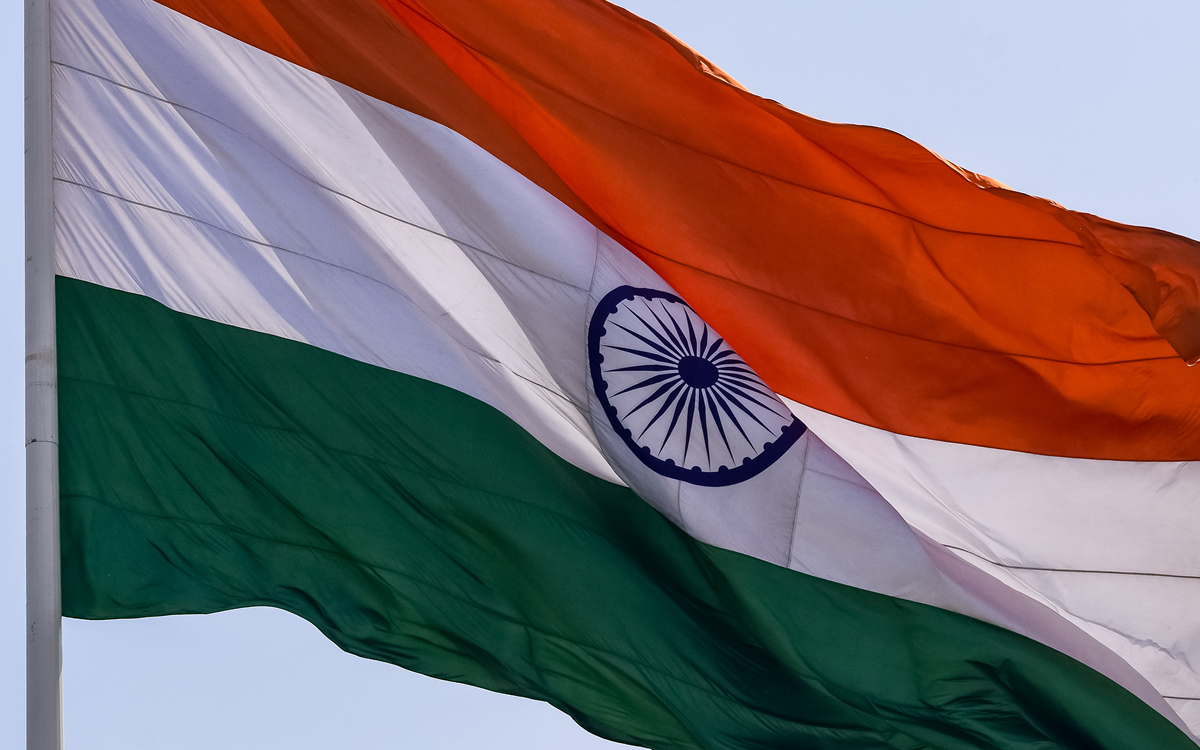
India has enacted the Transgender Persons (Protection of Rights) Amendment Act, 2026, that will reshape the country’s legal approach to gender identity.
Both houses of parliament approved the legislation last month, and it received presidential approval on March 28.
The Transgender Persons (Protection of Rights) Amendment Act, 2026, narrows the definition of a trans person, removes the provision for self-perceived gender identity, and requires medical certification for legal recognition. These changes mark a shift from the framework established under a 2019 law.
The Transgender Persons (Protection of Rights) Amendment Act, 2026, replaces the earlier definition of a trans person — previously framed as someone whose gender does not align with the gender assigned at birth — with a set of specified categories. It further provides that the term does not include, and is deemed never to have included, people defined solely by their sexual orientation or by self-perceived gender identity.
The bill retains certain categories within its definition, including people with socio-cultural identities such as kinner, hijra, aravani, or jogta. It also includes people with variations in sex characteristics at birth, such as differences in primary sexual characteristics, external genitalia, chromosomes or hormones from the normative standards of male or female bodies.
The Transgender Persons (Protection of Rights) Amendment Act, 2026, removes certain categories from the definition, including a trans man or trans woman, irrespective of whether such a person has undergone sex reassignment surgery, hormone therapy, laser procedures, or other forms of medical intervention. It also excludes genderqueer people — a category that had been recognized under the earlier framework. The Transgender Persons (Protection of Rights) Amendment Act, 2026, however, includes eunuchs, as well as people compelled to assume a trans identity through mutilation, emasculation, castration, or other surgical, chemical or hormonal interventions.
The Transgender Persons (Protection of Rights) Amendment Act, 2026, also revises the process for legal recognition, requiring a trans person to apply to a district magistrate for a certificate of identity, which can now be issued only after the recommendation of a designated medical board. The law specifies that the board will be headed by a senior medical officer and may include other experts. It further provides that individuals issued such a certificate will be entitled to change their first name in official documents, including birth records and other government-issued identification.
The Transgender Persons (Protection of Rights) Amendment Act, 2026, also introduces stricter penalties for certain offences, including cases in which a person is forced to assume a trans identity through kidnapping, coercion or physical harm. Such offenses may attract imprisonment ranging from 10 years to life in prison, along with fines, depending on the severity and whether the victim is an adult or a child. The Transgender Persons (Protection of Rights) Amendment Act, 2026, further requires medical institutions to report gender-affirming surgeries to the district magistrate, and mandates that individuals obtain a revised certificate of identity following such procedures.
India’s 2011 Census recorded 487,803 trans persons, yet only 5.6 percent had applied for a trans identity card, according to the Washington Blade’s previous reporting. These identity cards, required to access government welfare programs, have remained difficult to obtain, with delays and administrative barriers limiting uptake.
The Transgender Persons (Protection of Rights) Amendment Act, 2026, revised the certification process, which introduces additional requirements for legal recognition. This change is against this backdrop of uneven access to identity documentation.
India’s Election Commission in 2009 directed states to modify voter registration forms to include an “other” category, allowing individuals who did not identify as male or female to register accordingly. The Supreme Court in National Legal Services Authority v. Union of India in 2014 recognized trans persons as a “third gender” and affirmed their right to self-identification.
Justice Kalavamkodath Sivasankara Radhakrishna Panicker said that “recognition of transgenders as a third gender is not a social or medical issue, but a human rights issue.” Parliament in 2019 approved the Transgender Persons (Protection of Rights) Bill, 2019.
An advisory committee the Supreme Court created that former Delhi High Court Justice Asha Menon has urged the government to withdraw the Transgender Persons (Protection of Rights) Amendment Act, 2026. The panel said the proposal to deny self-identification of gender is inconsistent with theNational Legal Services Authority v. Union of India ruling.
Menon on March 25 wrote to Social Justice Minister Virendra Kumar conveying the panel’s resolution. According to the Hindu newspaper, the committee described the amendment as a “great shock” and a “tremendous setback” to efforts to mainstream trans communities.
The Queer Hindu Alliance, an advocacy group that seeks to uphold the dignity of LGBTQ people within India’s cultural and constitutional framework, expressed concern over the Transgender Persons (Protection of Rights) Amendment Bill, 2026.
“We write not in the spirit of opposition, but in the spirit of samvad — dialogue — and with a sincere call for community consultation before this legislation proceeds further,” the group said in a statement. “The Supreme Court of India recognized the concerns of the transgender community in 2014. The National Legal Services Authority v. Union of India judgment affirmed that a person knows who they are. This bill seeks to reverse that. The Queer Hindu Alliance finds this troubling as a question of basic human dignity.”
The Queer Hindu Alliance added that India “is not a young civilization fumbling for answers on how to understand human identity.”
“This culture has contemplated the nature of the self more deeply, and for longer, than any legal system that has existed. This is not a foreign conversation imported from the West. It is a conversation Bharat (India) has always been capable of having, on its own terms,” the Queer Hindu Alliance said.
Harish Iyer, an LGBTQ rights activist who was among those who fought for marriage equality in the Supreme Court, told the Blade that the amendment is “not just a rollback, but a blatant, arrogant insult” to the Supreme Court.
“The NALSA judgment gave us the fundamental dignity of self-determination — the right to look in the mirror and say, ‘This is who I am.’ This amendment drags us right back into the dark ages, handing over our bodily autonomy to a bunch of sarkari babus (government officers) and medical boards,” said Iyer. “But here is the most absurd part: you simply cannot define if someone is trans through any physical test. How exactly are you going to diagnose a human mind? Are they only going to regard those who have had gender affirmation surgery as trans? Because that is fundamentally not the definition of being transgender; transition is a choice and a privilege, not a prerequisite for identity. Or are they going to look at someone born with ambiguous genitalia and label them trans? Because that is intersex, which is a completely different reality.”
“Forcing a trans person to undergo degrading physical scrutiny based on the government’s spectacular ignorance of basic gender science isn’t a legal process; it’s state-sponsored trauma,” he added. “We fought too hard for our dignity to let a bureaucratic tribunal demand that we strip down to prove our humanity.”
Iyer said the Transgender Persons (Protection of Rights) Amendment Act, 2026, goes beyond protection and instead imposes control.
“You don’t ‘protect’ a community by criminalizing the chosen families and allies who offer safe haven to trans youth fleeing abusive homes,” he said, referring to provisions in the law. “This bill is about regulation, policing and control. By gatekeeping who gets to be trans and punishing those who support us, the government isn’t acting as a guardian — it’s acting as a warden. It is a calculated attack on our existence.”
Iyer said the revised definition could exclude individuals who do not fall within the listed categories.
“It effectively writes them out of existence,” he said.
Iyer added the Transgender Persons (Protection of Rights) Amendment Act, 2026, could create an administrative “black hole” for gender-fluid individuals and nonbinary people who do not fit into the government’s rigid categories.
“If you are legally invisible, you don’t get access to gender-affirming healthcare, you don’t get legal protection, and you are entirely cut off from participating in society,” said Iyer. “They are trying to legislate us into non-existence because they are too lazy to understand us.”
India
Menaka Guruswamy celebrated as India’s first openly LGBTQ MP
Constitutional lawyer elected to Rajya Sabha on March 9
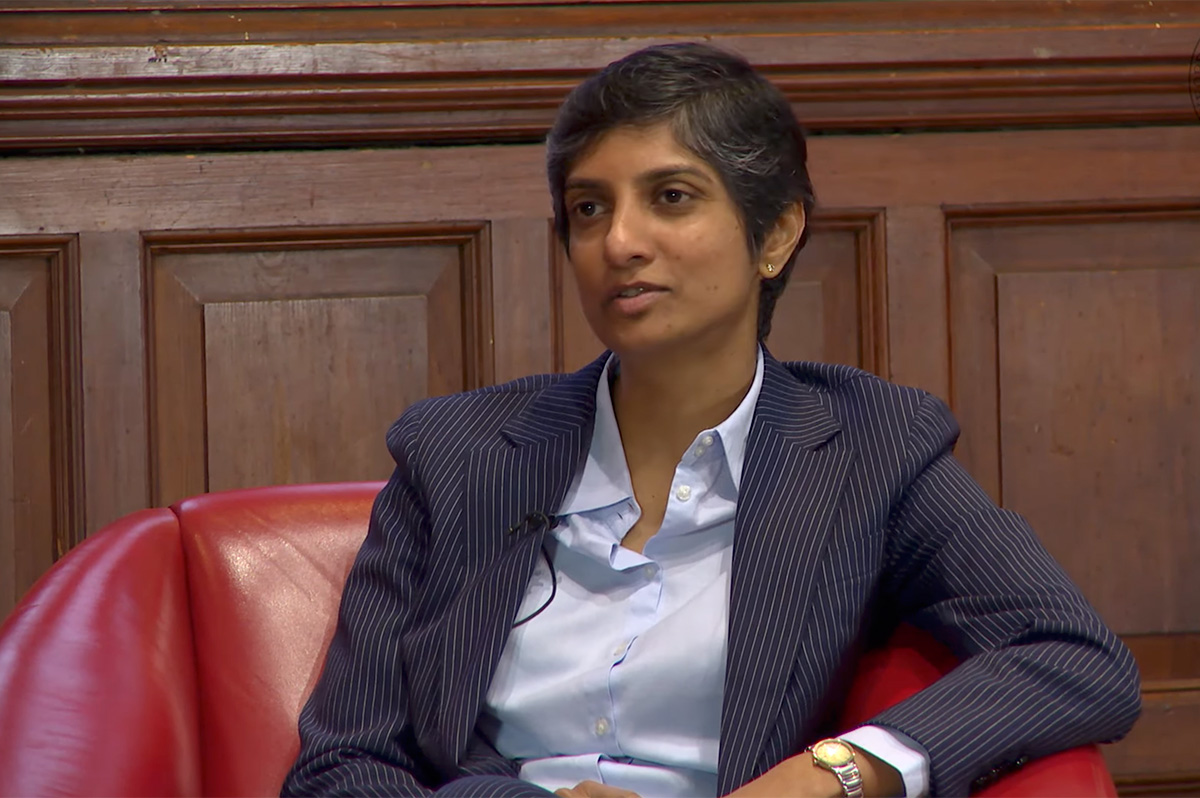
India’s LGBTQ community has found renewed hope in the election of Menaka Guruswamy, a lawyer who has argued before the Supreme Court, as the country’s first openly LGBTQ MP.
Guruswamy was declared elected unopposed to the Rajya Sabha, the upper house of Parliament, on March 9, representing West Bengal. The All India Trinamool Congress, the regional party that governs the state, nominated her.
Guruswamy is a constitutional lawyer who studied at Oxford University, Harvard Law School, and the National Law School of India University. She has argued several significant cases before the Supreme Court and is widely known for her work on constitutional law, civil liberties, and LGBTQ rights.
Guruswamy was part of the legal team that successfully challenged Section 377 of the Indian Penal Code, a colonial-era law that criminalized consensual same-sex sexual relations, which the Supreme Court struck down in 2018. She has also written and spoken extensively on issues of democracy, rights and institutional accountability.
Ankit Bhupatani, a global diversity, equity and inclusion leader and LGBTQ activist, welcomed Guruswamy’s election.
“This is significant not because Parliament needed a queer person, but because a queer person needed Parliament,” Bhupatani told the Washington Blade.
India has seen LGBTQ representation in elected office at the state and local levels, though it has remained limited.
In 1998, Shabnam Mausi was elected to the Madhya Pradesh Legislative Assembly from the Sohagpur constituency, becoming one of the first openly transgender people to hold public office in India. Mausi’s election marked a rare moment of visibility for trans people in the country’s political system, where representation has historically been sparse. Since then, a small number of openly trans candidates have contested and, in some cases, won local and state elections, but no openly LGBTQ person had been elected to Parliament before Guruswamy.
Guruswamy and her partner, Arundhati Katju, who is also a lawyer, were part of the legal team that played a central role in the Section 377 decision.
Representing one of the plaintiffs, the two lawyers helped frame the case around constitutional guarantees of equality, dignity, and privacy. The Navtej Singh Johar v. Union of India ruling marked a watershed moment for LGBTQ rights in India.
“For too long, we have fought our battles only in courtrooms and on streets. Now, there is a seat at the table where laws are written,” said Bhupatani. “Whether that seat produces change depends entirely on how it is used. Representation without substance is decoration. But as a beginning, yes. This matters.”
Guruswamy later represented the plaintiffs in the Supreme Court’s 2023 marriage equality case, Supriyo v. Union of India, which a 5-judge panel heard in the spring of 2023.
Along with other lawyers representing same-sex couples, she advanced arguments rooted in constitutional guarantees of equality, dignity, and personal liberty. The Supreme Court in a 3-2 decision on Oct. 17, 2023, declined to recognize same-sex marriage — holding that such a change falls within Parliament’s domain — but did acknowledge LGBTQ people face discrimination. The Blade previously reported the ruling underscored the court’s view that it could interpret the law, but could not create a new legal framework for marriage rights.
Bhupatani said Guruswamy’s election should not be seen as an immediate shift toward legislative action on LGBTQ rights, cautioning that such expectations may not align with political realities. He said her presence in Parliament could help sustain the issue in a way it has not been before, even as broader legal change is likely to take time.
“What she can do is keep the question alive inside Parliament in a way that it hasn’t been before,” Bhupatani said. “Legislative change in India on social questions usually takes longer than advocates want and shorter than skeptics predict. The 377 decriminalization seemed impossible until it wasn’t. Partnership rights will follow the same pattern eventually.”
Bhupatani added that while Guruswamy’s election may influence the pace of change, it does not, on its own, constitute a broader political movement.
“One person in Parliament, however extraordinary, is not a movement. She is an opening,” he said. “The 2023 ruling created a responsibility. Guruswamy’s election creates an opportunity to fulfill it from inside. Whether opportunity becomes outcome is entirely a question of human will.”
Guruswamy has served as a visiting faculty member at leading American institutions that include Yale Law School, Columbia Law School, and New York University School of Law. She has also worked with international organizations, advising the U.N. Development Fund for Women in New York and the U.N. Children’s Fund in both New York and South Sudan.
According to her professional profile, Guruswamy has been involved in a range of significant cases before the Indian Supreme Court that include matters related to bureaucratic reform and accountability.
One case is connected to the AgustaWestland helicopter deal, an investigation into alleged bribery in a multimillion-dollar defense procurement contract; litigation arising from the Salwa Judum case, in which the court examined the state-backed use of civilian militias in counterinsurgency operations in central India; and cases involving the implementation of the Right to Education Act, a law guaranteeing free and compulsory education for children between the ages of six and 14.
More recently, Guruswamy represented the All India Trinamool Congress in legal proceedings challenging searches conducted by India’s Enforcement Directorate, a federal agency responsible for investigating financial crimes, including money laundering and violations of foreign exchange laws. The searches were carried out at the offices of the Indian Political Action Committee, or I-PAC, a political consulting firm that provides data-driven campaign strategy and election management services to political parties. The case raised questions about the scope of investigative powers and the use of federal agencies in politically sensitive matters.
Guruswamy’s engagement with LGBTQ rights has extended beyond courtroom advocacy into public constitutional discourse.
On July 11, 2018, during hearings in the Section 377 case, she argued the criminalization law could not be justified on the basis of “social morality,” describing it as subjective and incompatible with constitutional guarantees, and framing the case as one fundamentally about “our humanity.” The Thomas Jefferson Foundation Medal in Law at the University of Virginia in February 2023 recognized Guruswamy and Katju for their work on LGBTQ rights.
Guruswamy has not responded to the Blade’s multiple requests for comment about her election.

Campaign launched to elect more LGBTQ candidates to ANC seats

Gay librarian to discuss new novel at Green Lantern

Calendar: July 10-16

Gay Fla. Democrat Elijah Manley sees opportunity in Trump’s second term

Ron Singer, owner of popular Mount Vernon gay bar Leon’s, dies

In Trump’s divided America, Michael Weinstein’s AHF responds

Turkish authorities refuse to allow gay cruise to dock in country

When a church fears the rainbow

PHOTOS: Crush Dance Bar