Delaware
Delaware bill would ban ‘gay panic’ defense
Legislature has until June 30 to advance measure

Delaware may soon become the 16th state to ban the LGBTQ panic defense, in which defendants claim they panicked after learning someone was gay or transgender and injured or killed the victim.
It’s been used five times in Delaware and more than 400 times across the country, said St. Edward’s University professor W. Carsten Andresen, who tracks uses of the defense. The defense is usually used so that defendants can have their charges lessened – often from murder to manslaughter.
If Delaware House Substitutive Bill 1 passes, defendants can’t use that defense to be acquitted of their crime or get reduced charges.
“This defense is used by defendants to justify violent acts against LGBTQ individuals by claiming that their sexual orientation or gender identity poses a sudden threat to their safety,” Sussex Pride Director David Mariner said before the House Judiciary Committee. “This defense is nothing more than a thinly veiled attempt to excuse bigotry and hate crimes, and it has no place in our justice system.”
Scholars and advocates say it’s unknown how many times it’s been used because there is no single national place where the crimes are reported. Andresen said he probably only knows a quarter of the cases in which it has been invoked.
It’s hard to find out when it is used, Delaware lawyer Mark Purpura said, because it’s unlikely researchers will find cases where it has been used successfully because the decision won’t be appealed. Andresen agreed. He said he finds cases through media reports, internet posts, and court appeals.
The House does not seem to be aware of the cases in Delaware; Purpura said during testimony that he was unaware of any uses in Delaware.
The American Bar Association announced its support for LGBTQ+ panic defense bans in 2013. Many legal scholars support bans, but not all. Some argue there are better ways to eliminate the effectiveness of the defense than banning it.
Cynthia Lee, a law professor at George Washington University, was one of them until recently. She argued that defendants should have to explicitly say that they were shocked their victim was LGBTQ. That way, she argued, all the defendant’s cards would be on the table.
“When gay panic arguments are forced to take a covert turn — when they are not explicit or out in the open — they may actually be more effective than they would be if out in the open,” she wrote in 2017, citing a 1986 trial in which the defense called four Black teenagers “savages,” “predators,” and “vultures” but didn’t mention their race explicitly. The jury found the shooter not guilty on almost all the charges.
“The existing research on stereotypes and prejudice suggests that stereotypes, which are deeply entrenched in the subconscious, are triggered more readily when not made salient,” Lee wrote, adding that it’s more effective to educate people. She did not respond to a request for comment.
Asked about Lee’s concerns that lawyers would find a way around the ban Purpura agreed that it’s possible.
“It’s a risk,” he said. “If you’re a defense attorney, that could backfire.”
But, he said, doing nothing is far worse. If the jury hears the defense, he fears, it might resonate. Lee now agrees, writing in 2019 that making the bigotry clear isn’t enough to nullify the defense.
The most famous case of the gay panic defense followed the murder of Matthew Shepard, a gay college student in Wyoming. Aaron McKinney and Russell Henderson had offered Shepard a ride home, which he accepted. Instead of driving him home, the pair drove to a remote area and proceeded to rob and torture Shepard, then tied him to a fence and left him to die. McKinney’s lawyers claimed that Shepard made sexual advances toward him, and was driven to insanity in that moment, leading him to kill Shepard. The judge rejected the defense but allowed evidence portraying Shepard as an aggressive sexual deviant, Lee wrote. Shepard and Henderson were sentenced to two consecutive life sentences.
Morrison cited a 2015 case of the defense being used before the House Judiciary Committee, when Texas resident James Miller invited his neighbor Daniel Spencer over for a night of drinking and music. Miller claimed Spencer came on to him, so he stabbed Spencer in self-defense. Prosecutors argued that the blood at the crime scene didn’t match Miller’s version of events and it could very well have gone down the opposite way.
Either way, the jury sentenced Miller only to 10 years of probation and the judge tacked on six months in jail. Scholars have categorized the killing as using the gay panic defense.
Andresen keeps a private up-to-date database of LGBTQ panic defense uses, and the Williams Institute published its latest database in 2021. Andresen also found a 2018 Texas case in which Mark Daniel Lewis did not face trial after admitting he pushed Kenne McFadden, a transgender woman, into a river. He claimed she had groped him, according to local news reports. Prosecutors are taking a fresh look at the case after Insider found new evidence.
The only opposition so far to Delaware’s bill comes from Rep. Jeffrey Spiegelman, a Republican who represents the Townsend area. He asked why the bill only prohibits LGBTQ+ panic defenses and not those for religion or race. Purpura said he’s unaware of anyone invoking the panic defense after discovering someone’s race or religion.
Still, Spiegelman offered an amendment to the bill to prohibit all panic defenses based on race, religion, color, disability, sexual orientation, sex, age, gender identity, national origin, and a person’s ancestry. He did not respond to a voicemail.
Morrison, who introduced the bill, said the amendment “diminishes” the bill’s purpose.
“It takes the emphasis away from the fact that this is an issue of incredible importance to the LGBTQ+ community that affects the LGBTQ+ community, so we want to keep that spotlight,” he said in an interview.
The original bill, HB 142, was substituted for HS 1 to “make a legislator happy” and clarify that the bill does not ban mental illness from being used as a defense, Morrison said.
The substitution and re-introduction means the amendment attached to the original bill is gone, and Rep. Spiegelman did not respond to a voicemail asking if he will re-introduce it.
Most representatives on the House Judiciary Committee, including Spiegelman, voted to advance the bill out of committee. Rep. Bryan Shupe did not vote either way, saying he needed more information.
The bill currently has 22 co-sponsors. There is one Republican in the group, Rep. Michael Smith, but Purpura said he doesn’t expect bipartisan support, which he said is “disappointing.”
The biggest challenge to the bill may be the time crunch before the Delaware Legislature goes on vacation on June 30. The Delaware House and Senate are currently scheduled to consider 17 bills and 33 more are on the House’s list of bills ready to be put on the agenda. And even more bills will be voted out of committee soon and will take their place on the ready list.
Delaware’s House Speaker, Pete Schwartzkopf, will decide where – or whether – to put the bill on the agenda for the House to vote on it. If the House passes it, it will go to a Senate committee and, if passed out of the committee, will go to the Senate floor for a vote and end up on the governor’s desk if passed. Schwartzkopf’s legislative assistant did not return a voicemail asking whether he will fast track the bill.
But the bill has plenty of time to go through all the motions – the legislature’s last day is June 30. After that, the bill would have most of next year to go through the motions.





Delaware
Democrat Maureen ‘Mo’ Madden takes on longtime GOP stronghold in Delaware’s 38th
Out lesbian candidate for state House focused on infrastructure needs, voting rights
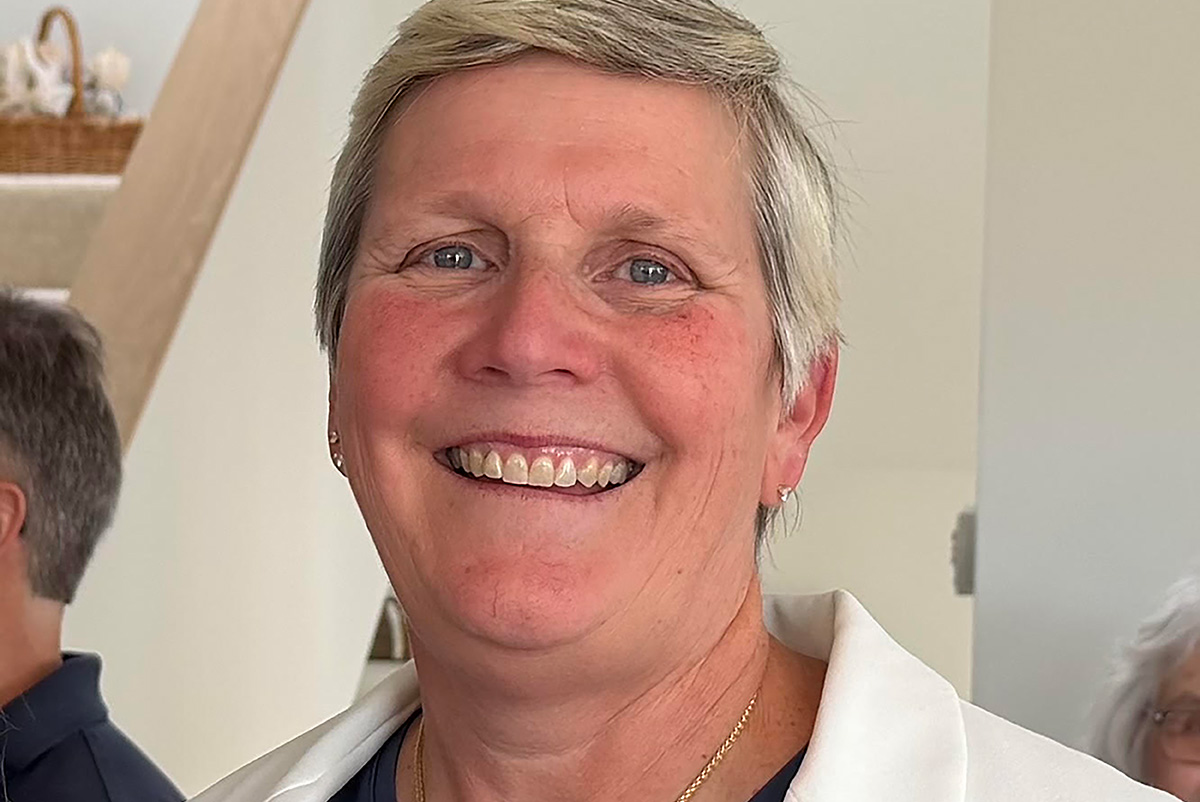
Democrat Maureen “Mo” Madden is running for the Delaware House of Representatives in the 38th District, seeking to win a seat that has been held by Republicans for more than two decades.
The race opened up after Republican state Rep. Ron Gray announced in April that he would not seek reelection after seven terms in the General Assembly.
Gray was first elected in 2012 and represents communities including Bethany Beach, Fenwick Island, Selbyville and Ocean View. Madden, a Dagsboro resident, filed to run for the seat in 2025.
Madden is a retired federal civil servant who spent nearly 23 years at NASA and more than seven years at the National Oceanic and Atmospheric Administration. She holds a master’s degree in physics and previously worked in leadership at NOAA.
She said her professional experience taught her the importance of working collaboratively, something she believes would translate to the legislature.
“Advocating, negotiating, and collaborating are all skills that a legislator needs,” she said. “You learn to collaborate. You learn to negotiate. You learn to advocate for your budget, for your team, and for your projects.”
Madden said her decision to run began after she and her wife moved to the area and she noticed the lack of Democratic candidates on the ballot in her district.
“Somebody’s got to do it, and I’ve got time. I’m retired,” said Madden.
She acknowledged the difficulty of running as a Democrat in the district, which has been represented by Republicans since 2002.
Madden said one of the biggest concerns she hears from residents is the rapid growth of Sussex County.
“We have a massive amount of growth and a massive amount of development,” said Madden.
Madden said the growth has placed additional pressure on roads, schools, emergency services, as well as water and sewer infrastructure.
“We need to find a way to bring more money down here for the school system and for the infrastructure that we need,” she said.
She also raised concerns about the impact of new developments on existing neighborhoods, particularly in regard to flooding and drainage.
“Something needs to be done,” said Madden.
Madden also pointed to climate change as a factor affecting the region.She said the state will need to work on both addressing development and preparing communities for increasingly severe weather.
“We have to work both sides of it,” Madden said.
Madden said improving infrastructure would be a priority if she is elected, particularly roads and other infrastructure that affect residents’ daily lives.
“I want to increase the safety of my neighbors,” she said.
Madden also said she wants to address infrastructure needs related to water and sewer service, as well as the availability of health care in the rapidly growing coastal region.
Madden said protecting voting rights would be another priority in the legislature.
“The right to vote is one of the biggest things that we have here in a democracy,” she said.
She said that she supports early voting, mail-in voting, and same-day registration, as well as restoring voting rights to people who have completed felony sentences.
“You should not lose a constitutional right because you’ve been in jail,” said Madden.
“Protecting the right to vote is how I will defend democracy when I get to the state House,” she said.
Madden said she would also support efforts to enshrine certain rights in the Delaware Constitution, including reproductive rights, voting rights, and the right to marriage.
“Those three protections of our freedoms that are right now under attack need to be more secure in the Delaware State Constitution,” she said.
As an openly lesbian candidate, Madden said LGBTQ+ rights are important to her, particularly the treatment of young transgender people.
She said she is concerned about efforts to restrict transgender students’ participation in sports and other policies affecting transgender people.
“They are picking on the most vulnerable of the most vulnerable,” said Madden.
She said she hopes voters will view LGBTQ+ people as part of their communities rather than as fundamentally different from their neighbors.
“We’re your neighbors. We’re your friends. We’re your family,” she said.
Madden will face Republican Carlie Carey in the general election on Nov. 3.
Delaware
New LGBTQ visitor center slated for Wilmington, Del.
The Collective to feature gift shop, queer museum, more

During Pride month this year, the Delaware Sexuality and Gender Collective (DSGC) announced plans for The Collective, which will become Delaware’s first LGBTQIA+ visitor center and Wilmington’s first dedicated LGBTQIA+ space in nearly 40 years.
“We’ve been talking about the concept of a brick-and-mortar space for a long time,” said Noah Duckett, co-founder of DSGC.
A licensed clinical social worker, Duckett co-founded DSGC with his mother, Julissa Coriano, in 2018. DSGC is an independent nonprofit organization that provides vital clinical and educational support, social programming and direct-need support to the LGBTQIA+ community.
Some of the programs DSGC offers include a free clothing closet for the trans community, meal support for people recovering from gender-affirming surgery, connections to pro bono legal services, a biannual Pride Market featuring over 100 LGBTQIA+-owned small businesses, and more.
“Our vision for The Collective is a place where our community can come to learn, create, work and be inspired,” said Coriano.
The Collective will feature a visitor center and gift shop highlighting LGBTQIA+-owned businesses in Delaware.
“I think that this is something that’s going to benefit our community so much,” said Duckett.
Some of the LGBTQIA+-owned businesses that DSGC has already partnered with include Stress Induced Art Attack, Moonbeam Art Collaborative, Voce Coffee, Groovy Gemini Co., Scout Cafe, Macaron Social and Huxley and Hiro.
“Specifically in Wilmington, we haven’t had an LGBTQIA+-dedicated space in almost 40 years,” said Duckett.
The Griffin Community Center, which operated from 1986 to 1990, was Delaware’s first LGBTQ+ community center. The Griffin was founded by Ivo Dominguez Jr. and James C. Welch and provided a range of community services during the height of the HIV/AIDS crisis, including AIDS hotlines, organizational offices and meeting space. The center ultimately closed because of a lack of financial support.
Duckett said DSGC hopes The Collective will carry on The Griffin’s legacy while building a sustainable space for the LGBTQIA+ community.
“I think now more than ever, there’s more and more spaces closing their doors. More and more spaces are losing funding, seeing reduced funding and reduced access, especially LGBTQ+ organizations and communities,” said Duckett.
The Collective will also feature Delaware’s first LGBTQ+ history museum, curated by LGBTQ+ historian Carolanne Deal.
“We don’t have any permanent displays in the state about Delaware’s queer history, and we want people to be able to access that history any day of the year, not just during Pride Month,” said Deal.
With a master’s degree in art history for museum professionals, Deal has more than seven years of experience in curatorial work and hands-on collections care.
“It’s mainly going to be a graphic display with photographs, articles and accessible text that draws people in and creates a story for the community,” said Deal.
Although the museum will not initially have an object collection, Deal said she hopes to add physical archival pieces in the future.
“Delaware has been at the forefront of a lot of queer civil rights, and it’ll be really amazing to have that enshrined in a permanent display that’s not only up for Pride Month,” said Deal.
Duckett said DSGC is currently raising funds with the goal of beginning construction this summer and opening by the end of the year.
Duckett told the Blade that fundraising efforts have reached just under $29,000 and that the organization is awaiting several major donations from community partner organizations.
However, he said DSGC continues to be denied many grants tied to federal or state funding because of restrictions on those funds being used for LGBTQ+-serving organizations.
“Private and corporate donations are absolutely vital,” said Duckett.
Anyone interested in supporting the construction and renovation of The Collective can donate online or contact [email protected] for more information.ose funds being used for LGBTQ-serving organizations.
“Private and corporate donations are absolutely vital,” said Duckett.
Anyone interested in supporting the construction of The Collective can donate online or contact [email protected] for more information.
Delaware
Delaware approves amendment protecting same-sex marriage
Measure must pass second vote in next year’s session

The Delaware General Assembly passed Senate Substitute 2 for Senate Bill 100 on the last day of the legislative session on Tuesday after being rescinded last week.
Senate Substitute 2 for Senate Bill 100 (SB-100) passed with 28 ‘yes’ votes, meeting the two-thirds threshold required for the bill to pass. Tuesday was the last day of the 153rd General Assembly.
The amendment would enshrine the right to same-sex and interracial marriage in the Delaware Constitution.
SB-100 was rescinded last week after it did not receive enough votes to pass. Democrats were short by three votes, with two Democratic members missing from the vote.
Rep. Josue Ortega (D-03) voted ‘no’ on SB-100 and Rep. Medinah Anton-Wilson (D-27) did not vote. However, both members voted ‘yes’ for Senate Substitute 2 for SB-100 on Tuesday.
Prime sponsor of SB 100, Rep. Claire Snyder-Hall (D-14), made the technical decision to change her vote last week from a ‘yes’ to a ‘no’ at the last minute to keep the bill alive.
Additionally, Republican Assemblyman Michael Smith (R-22) joined the Democrats with a ‘yes’ vote after voting ‘no’ on SB-100 last week.
In order for SB 100 to be enshrined into the state Constitution, it must be passed by two consecutive General Assemblies. Thus, the amendment will not be officially added to the Constitution unless it passes in the 154th General Assembly next year.
Rep. Snyder-Hall introduced the measure earlier this week.
“Just one week ago, we failed to pass this legislation. We failed the people of Delaware. But today, on the final day of the legislative session, the 153rd General Assembly affirmed that every Delawarean has the fundamental right to marry the person they love, regardless of race or gender,” said Snyder-Hall.
“Thank you to my colleagues for recognizing that the right to marry is a right worthy of protection and for voting yes on this important constitutional amendment.”

Gay-owned pizzeria in Dupont Circle burglarized

Advocates honored at Engendered Spirit Awards

Two awesome, affordable rides

Proposed Indian foreign funding law overhaul could further pressure LGBTQ groups

Why we need to protect ‘sacrilegious’ art

Black Educated Lesbians: A movement rooted in community

I respect AOC, even though I often disagree with her

Chicago’s LGBTQ+ youth: Why their zip code still matters

Hegseth uses transphobic slur while campaigning for Iowa congressman

Trump-Vance administration’s LGBTQ brain drain: what you need to know
-

 Opinions5 days ago
I respect AOC, even though I often disagree with her
-
Opinions5 days ago
Black Educated Lesbians: A movement rooted in community
-
Illinois5 days ago
Chicago’s LGBTQ+ youth: Why their zip code still matters
-
U.S. Military/Pentagon5 days ago
Hegseth uses transphobic slur while campaigning for Iowa congressman