Europe
More than 10K participate in anti-LGBTQ rights march in Turkey
Organizers called for protection of children from ‘LGBTQ terrorist propaganda agenda’
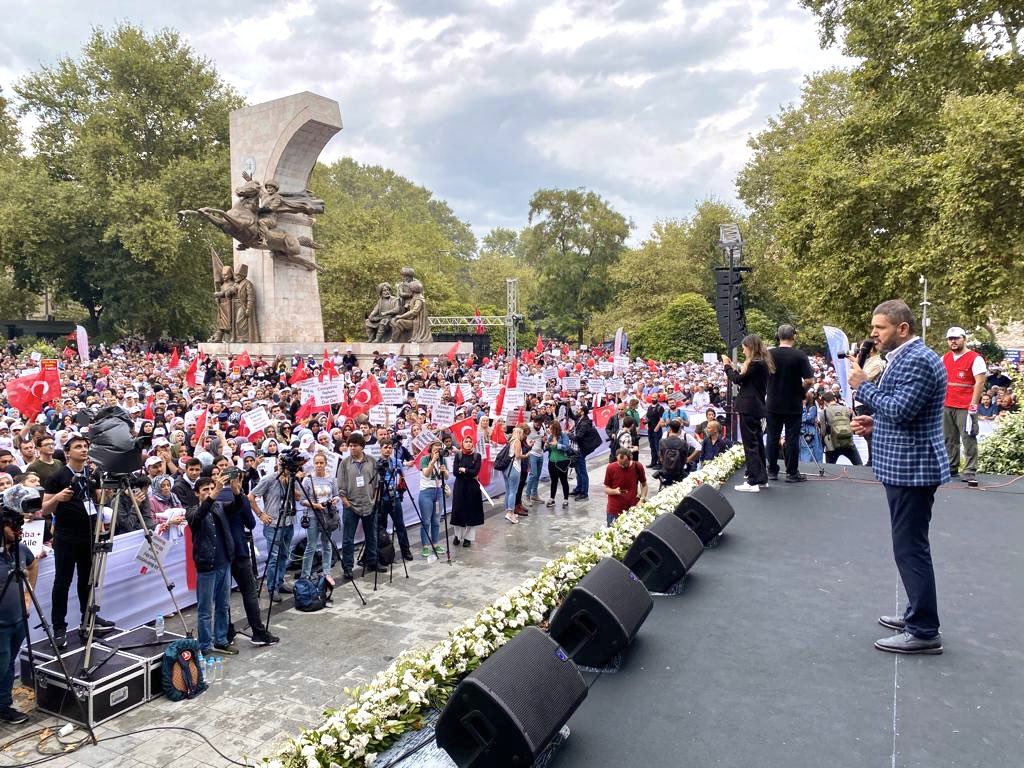
Despite heavy downpours mixed with light rain showers, more than 10,000 anti-LGBTQ protestors gathered in this ancient city and principal seaport of Turkey on Sunday, protesting what organizers said was to protect their children from the “LGBTQ terrorist propaganda agenda.”
Billed as the “Great Family Walk” lead organizer Kürşat Mican, speaking to the crowds gathered, demanded that the Turkish government ban all LGBTQ activities and shut down all LGBTQ organizations. The organizers were also demanding that Turkey’s parliament ban what they called LGBTQ “evil,” which they claimed pervades Netflix, social media, arts and sports in the country.
Gathering at Saraçhane Park, protestors carried signs with the slogan “protect your family and generation,” the speakers, in addition to Mican, told the crowd that they were taking action to combat the “LGBT lobby,” which they alleged “has become a global problem.”
In a tweet Monday, Mican wrote (translated from Turkish): “The fact that tens of thousands of people from all walks of life came together to put a stop to #LGBTdayatması (#LGBTimposition) and draw attention to the danger is an indication of how much our ‘Necip Nation’ values (a reference to Necip Fazil Kisakürek, Turkish poet, novelist, playwright, and Islamist ideologue) his family and generation. No lobby can bring this strong will to its knees, biiznillah! (Will of Allah.)
Aile olmazsa, millet olmaz!#LGBTdayatması ‘na dur demek için her görüşten onbinlerce insanın bir araya gelerek tehlikeye dikkat çekmesi ‘Necip Milletimizin’ ailesine ve nesline ne kadar değer verdiğinin göstergesidir. Bu güçlü iradeye hiçbir lobi diz çöktüremez biiznillah!🇹🇷 pic.twitter.com/PbTqUCaRmL
— Kürşat MİCAN (@kursatmican) September 19, 2022
The anti-LGBTQ rights were organized by Mican, Ersin Çelik and non-governmental organizations. The march, in which 150 NGOs participated, had a great impact organizers claimed.
Ersin Çelik, a writer for a conservative, Islamist Turkish daily newspaper, Yeni Şafak, has been fighting against LGBTQ rights and making efforts to what he has said on his social media accounts is to “protect young people and children from this trap,” called for the march on his social media account.
Mican and other organizers had also circulated a video prior to Sunday’s rally that showed clips from previously LGBTQ Pride parades, which was then also broadcast as a public service announcement by Turkish state media, prompting an angered response from the country’s LGBTQ advocacy groups and activists.
Others who supported the rally included a popular female Turkish writer known by her pseudonym of Tahteşşuûr who tweeted: “LGBT looking for children to recruit! God damn you. #LGBTdayatması (#LGBTimposition.)”
Saraçhane Parkı #LGBTdayatması’na karşı dolup taşıyor. pic.twitter.com/6gpw2TNnNO
— Özlem Doğan (@ozlemdogan_) September 18, 2022
This year, hundreds of LGBTQ people, allies, and supporters took to the streets of Istanbul this past June in defiance of the Turkish government’s ongoing 2014 ban of LGBTQ Pride parades and Pride Month festivities. Protestors violently clashed repeatedly with police and security forces in various neighborhoods located around the Bol Ahenk Sokak and other sections of the central downtown areas.
Government security forces arrested more than 373 people and the largest Turkish LGBTQ activist group, the Ankara-based Kaos GL, documented the arrests and clashes which occurred prior to the 5 p.m. planned parade kick-off in a series of Twitter posts.
Turkish Media Independent Media/News Outlet Ahval has reported that Turkey’s LGBTQ groups accuse the government of President Recep Tayyip Erdoğan of waging a “hate campaign” against them, encouraging violence against a vulnerable community.
Turkey has ranked second worst country in the European Union for LGBTQ people, scoring only above Azerbaijan, according the 2022 “Rainbow Europe” ranking compiled by Brussels-based ILGA-Europe.



Germany
German group slams White House’s LGBTQ rights record ahead of World Cup
LSVD says trans, nonbinary soccer fans safety ‘not guaranteed’ in US

A German advocacy group on the eve of the 2026 World Cup sharply criticized the Trump-Vance administration over its anti-LGBTQ policies.
The World Cup will take place in the U.S., Canada, and Mexico through July 19. The tournament began on Thursday in Mexico City with Mexico beating South Africa 2-0.
“In the USA, democracy is being gradually dismantled,” said Julia Monro of Federation Queer Diversity, a German LGBTQ and intersex rights group known by the acronym LSVD, in a statement released on Wednesday. “In particular, the human rights of trans, intersex, and nonbinary individuals, as well as other queer people, are facing massive attacks and political instrumentalization by the Trump administration.”
The LSVD statement notes sports “has a special responsibility in this situation because it conveys values worldwide that extend beyond the playing field: fairness, respect, and inclusion.”
“This must apply to everyone, including trans* and nonbinary people,” says LSVD. “Those who love sport must also protect those who can only experience it under difficult circumstances.”
“The public visibility of queer people is being pushed back, companies and organizations with diversity strategies are being pressured, and laws for trans*, intersex, and nonbinary people are being tightened,” added the group. “This is not a fringe issue, but directly affects everyday life, mobility, and safety. The way minority rights are treated is a measure of the state of a democratic society. Inhumane measures must not be normalized. The international community must not remain silent as attention on the host country, the USA, increases. The Trump administration could exploit this media platform for further inhumane purposes, in order to transfer its homophobic agenda to other countries.”
LSVD also stressed the “safety of trans* and nonbinary soccer fans is currently not guaranteed in the USA.”
“We advise all queer fans to inform themselves carefully beforehand and to take precautions for their safety,” it said.
The Council for Global Equality is one of the more than 100 organizations that issued a travel advisory for the U.S. ahead of the World Cup.
LSVD in its statement pointed out the German government in 2025 issued a travel advisory for trans and nonbinary people who are planning to visit the U.S. The warning specifically noted President Donald Trump’s executive order that banned the State Department from issuing passports with “X” gender markers.
InterPride, the organization that coordinates WorldPride events, issued a travel advisory for trans and nonbinary people who planned to travel to the U.S. for WorldPride that took place last summer in D.C.
“Due to an executive order issued by the U.S. president on Jan. 20, all travelers must select either ‘male’ or ‘female’ when applying for entry or visas. The gender listed at birth will be considered valid,” read the InterPride advisory. “If your passport has ‘X’ as a gender marker or differs from your birth-assigned gender, we strongly recommend contacting the U.S. diplomatic mission before traveling to confirm entry requirements.”
LSVD notes the German government reiterated its 2025 travel advisory ahead of the World Cup.
“Anyone traveling with a different gender entry, with an ‘X’ marker in their passport, or who does not conform to the state’s expectations during checks, must expect problems in the USA,” said LSVD.
Hungary
Charges against Budapest mayor for organizing Pride march dropped
Country’s new government took office last month
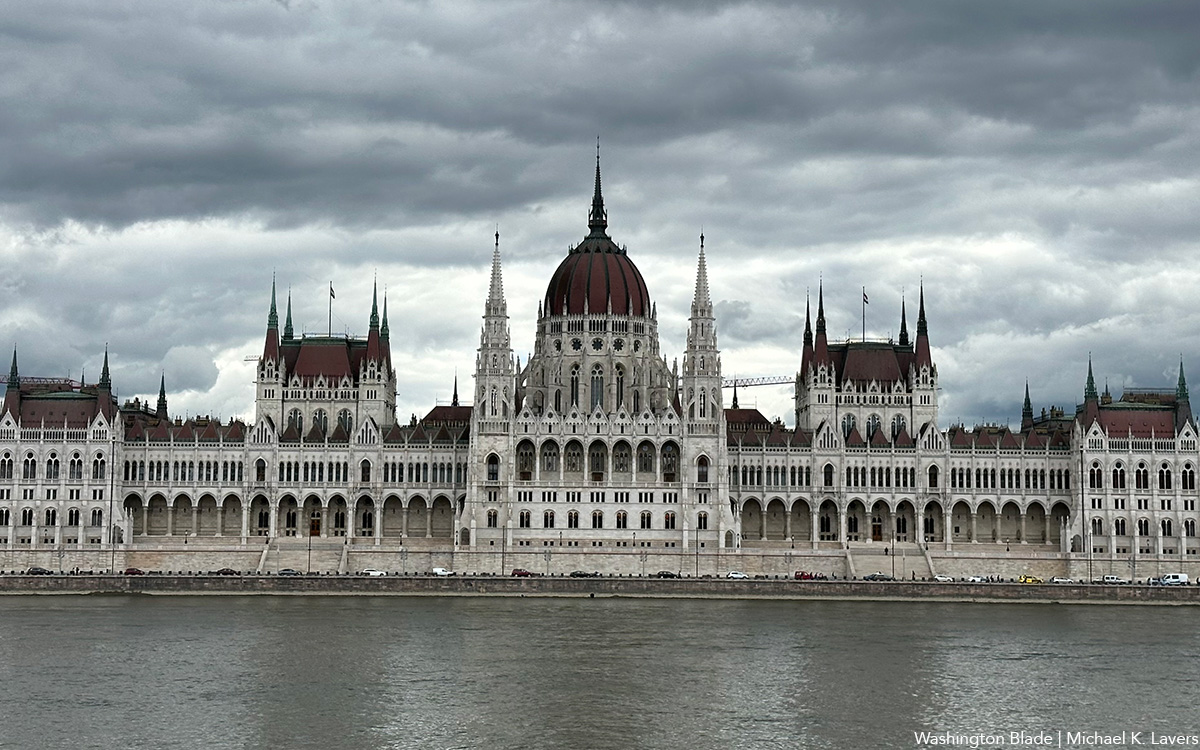
Hungarian authorities on Thursday dropped charges against Budapest Mayor Gergely Karácsony over his role in organizing the city’s 2025 Pride march.
Karácsony spoke at the event, even though then-Prime Minister Viktor Orbán’s government banned it.
More than 100,000 people defied the ban and participated in the march that took place on June 28, 2025. The Associated Press notes the Budapest Chief Prosecutor’s Office in January charged Karácsony with “organizing the unlawful assembly despite a prohibition order.”
Karácsony, who has been Budapest’s mayor since 2019, described himself as a “proud defendant” after his indictment.
“It seems that in this country, this is the price you pay if you stand up for your own freedom and the freedom of others,” he said in a statement, according to the AP. “If anyone thinks they can ban me, deter me, or prevent me and my city from doing so, they are gravely mistaken.”
Budapest is Hungary’s capital and largest city.
Prime Minister Péter Magyar took office last month after his center-right Tisza party ousted Orbán’s Fidesz-KDNP coalition in elections that took place on April 12.
Hungarian police on May 29 announced they will allow the Budapest Pride march to take place this year.
The European Union’s top court, the EU Court of Justice, days after Orbán’s ouster struck down Hungary’s anti-LGBTQ propaganda law that MPs approved in 2021. The BBC notes Hungarian authorities cited the decision in their decision to drop the charges against Karácsony.
Authorities in Pécs, a city near Hungary’s border with Croatia, have also dropped charges against Géza Buzás-Hábel, who organized a 2025 Pride event.
Hungary
Hungarian authorities lift Budapest Pride ban
Country’s new government took office last month
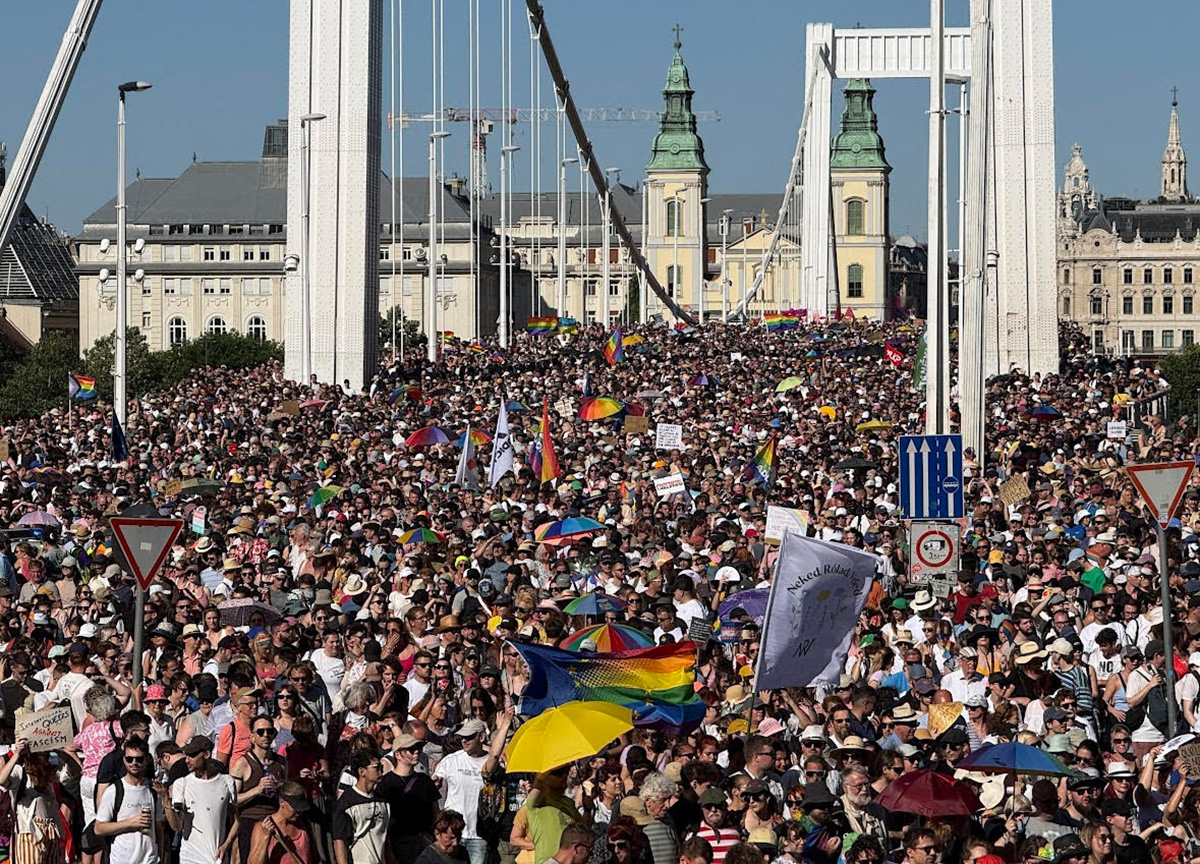
Hungarian police on May 29 announced they will allow the annual Budapest Pride march to take place.
“The Budapest Metropolitan Police has approved the 2026 Budapest Pride Parade and also has issued restrictive orders in relation to three counter-demonstrations,” a Budapest Metropolitan Police spokesperson told Politico.
Budapest is Hungary’s capital and largest city.
Hungarian lawmakers last year passed a bill that banned Pride events and allowed authorities to use facial recognition technology to identify participants. MPs later amended the Hungarian constitution to ban public LGBTQ events.
More than 100,000 people defied the ban and participated in last year’s Budapest Pride parade. The event became one of the largest protests against then-Prime Minister Viktor Orbán and his government since he took office in 2010.
Prime Minister Péter Magyar took office last month after his center-right Tisza party ousted Orbán’s Fidesz-KDNP coalition in elections that took place on April 12. The European Union’s top court, the EU Court of Justice, days after Orbán’s ouster struck down Hungary’s anti-LGBTQ propaganda law that MPs approved in 2021.
The EU on May 29 announced it will release more than €16 billion ($18.59 billion) in funds to Hungary that it withheld while Orbán was in office.
The Budapest Pride march will take place on June 27.
“We will march freely in fresh air for our rights, for the democratic Hungary,” said Budapest Pride on its Facebook page.

PHOTOS: The Audacity Brunch

D.C. Council approves expanded grant funding for Mayor’s Office of LGBTQ Affairs

Congressional Cemetery hosts Gays & Graves

Baltimore Pride is here

Calendar: June 12-18

Hundreds of thousands expected to attend D.C. Pride events

PHOTOS: Pride Run

Queen Jean is Tony’s first transgender winner

David Archuleta, Monroe Alise named D.C. Pride parade marshals