Local
Local news in brief: April 15
Delaware passes civil unions bill; Stein Club elects new president
Del. Senate passes civil unions bill
The Delaware Senate voted 13-6 late last week to approve a civil unions bill that would provide same-sex couples with all of the rights and benefits of marriage under state law.
LGBT activists were optimistic that the Delaware House of Representatives would approve the bill; a vote was expected this week. The state’s governor, Democrat Jack A. Markell, has said he plans to sign the bill.
“We are delighted that not only did the civil unions bill get passed by the Senate but that it got passed by a two-to-one margin,” said Lisa Goodman, president of Equality Delaware, a state LGBT group coordinating lobbying efforts for the bill.
“We think that says a lot about what the citizens of Delaware want to see, that the citizens of Delaware are two-to-one in favor of civil unions,” she said.
Joe Solmonese, president of the Human Rights Campaign, called on the Delaware House to quickly pass the bill and send it to the governor for signing.
“Today we applaud the Delaware Senate for valuing all Delaware families,” Solmonese said.
A public opinion poll commissioned by Equality Delaware and conducted in March by the survey research firm Lake Research Partners found that 62 percent of voters favor allowing same-sex couples to form legalized civil unions, with 31 percent opposing such a law. Seven percent of the voters polled were undecided. The poll had a margin of error of plus or minus 3.8 percent.
“We feel very optimistic about getting the bill through the House,” Goodman said. “We have all three of the Democratic leaders in the House on the bill as sponsors and we’ve been working very hard with House members.”
Democrats hold a 26 to 15 majority in the 41-member Delaware House of Representatives.
Goodman said a debate and vote on the bill in the full House was expected to take place April 14.
Similar to civil unions laws in other states, the Delaware measure, Senate Bill 30, would provide same-sex couples with all of the rights, benefits and obligations of marriage under state law but would not provide any federal rights or benefits related to marriage.
The Defense of Marriage Act (DOMA), which Congress passed in 1996 and President Bill Clinton signed, bars same-sex couples from receiving federal marriage-related rights or benefits.
If the Delaware civil unions measure is approved by the legislature and signed by the governor, Delaware would become the eighth state to provide marriage-related rights and benefits to same-sex couples – either through either civil unions or comprehensive domestic partnership laws.
Two of the other states – Illinois and Hawaii – approved such laws earlier this year. The Illinois law is scheduled to take effect in June and the Hawaii law goes into effect in January 2012.
Stein Club elects new president
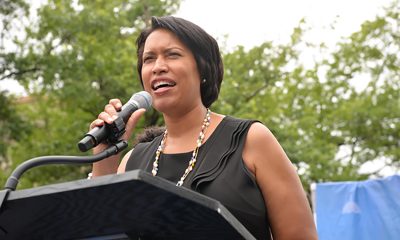
The Gertrude Stein Democratic Club, the city’s largest LGBT political group, Monday night elected local attorney and lesbian activist Lateefah Williams as its new president.
Williams replaces Jeffrey Richardson, who resigned as president after being appointed by Mayor Vincent Gray as director of the Mayor’s Office of GLBT Affairs.
She becomes the first African-American woman to hold the post of Stein Club president since the club’s founding nearly 35 years ago.
Williams also serves as national committeewoman for the D.C. Young Democrats and is a member of the D.C. Democratic State Committee and the Metropolitan Women’s Democratic Club.
Career wise, Williams is political and legislative director for Local 689 of the Amalgamated Transit Union. She previously worked as a policy analyst for the think tank and government watchdog group OMB Watch and as an attorney in private practice for local D.C. area law firms. She holds a law degree from Georgetown University Law School and is a member of the bar in D.C. and Maryland.
“It is truly an honor to preside over an organization with such a storied history and to follow in the footsteps of the many great club presidents who have preceded me,” she said. “I am truly committed to service and l look forward to working with our members and the community at large to continue to advance LGBT equality and Democratic ideals in the District of Columbia.”





District of Columbia
Blade welcomes fall intern
Alexis McLean is student at University of North Florida
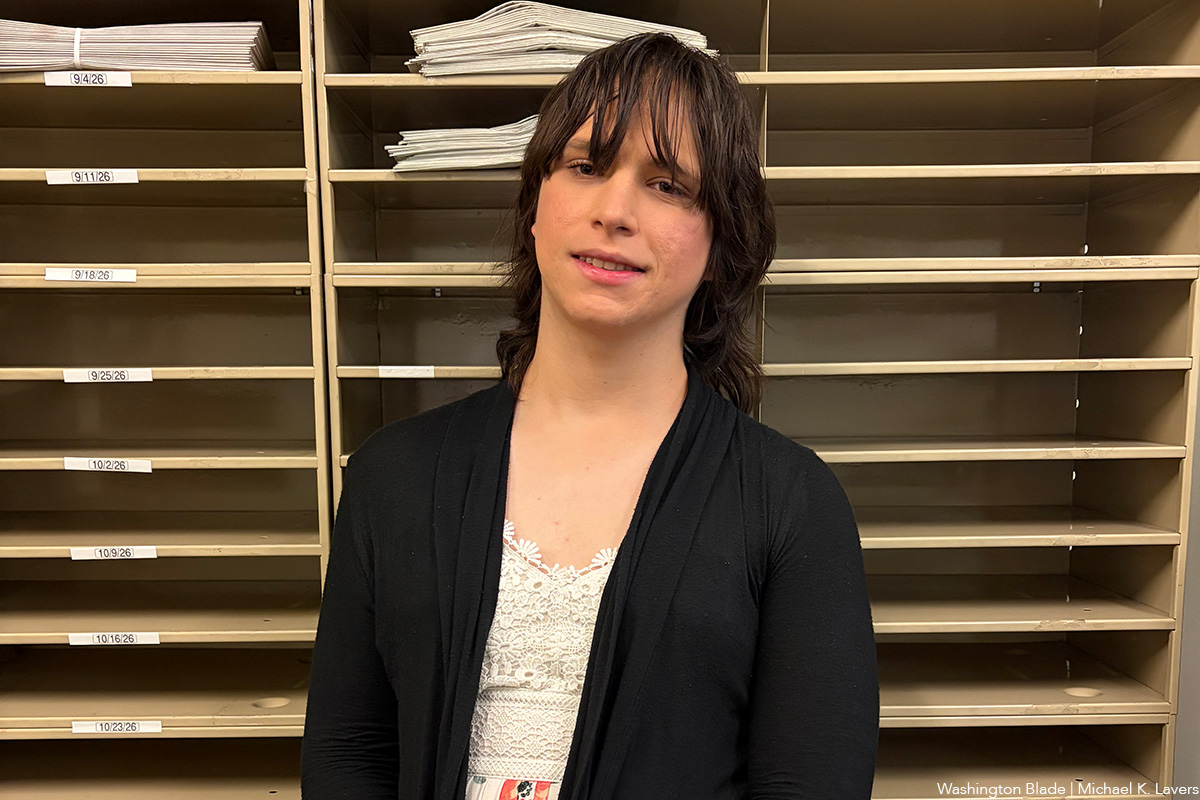
The Washington Blade this week welcomed Alexis McLean as its fall intern.
Alexis is studying political science at the University of North Florida in Jacksonville, Fla. She is interning with the Blade as part of a continued partnership with the Washington Center.
“I am looking forward to spending my time in the fall with the Washington Blade, as this is a new experience for me,” said Alexis. “I have not experienced any journalist jobs in the past so this would be my first time, and I am excited to better my writing and communications skills with this internship.”
Alexis’s internship with the Blade ends in early December.
Rehoboth Beach
SUNFESTIVAL takes center stage as Rehoboth Beach closes out summer
Labor Day Weekend bustling with events, including David Archuleta performance

Labor Day Weekend marks the unofficial end of summer in Rehoboth Beach, but there will be no shortage of LGBTQ events, with CAMP Rehoboth’s annual SUNFESTIVAL taking over town this weekend.
Thursday (9/3)
Get your Labor Day Weekend started early Thursday night with happy hour from 5-7 p.m. at Diego’s Bar & Nightclub, followed by Naughtee Bingo hosted by Magnolia Applebottom at 8:30 p.m.
After bingo, the party continues with Dancing at Diego’s from 9 p.m. to 1:30 a.m.
Aqua Bar & Grill will also kick off its Labor Day Weekend festivities Thursday with a DJ spinning from 9 p.m.-1 a.m.
Friday (9/4)
The weekend ramps up Friday night at Aqua, where DJ Matt Bailer will keep the dance floor moving from 9 p.m.-1 a.m.
Over at Diego’s, DJ Steve Sidewalk will then take over Diego’s for Freedom Friday from 9 p.m.-1:30 a.m.
Saturday (9/5)
The main event of the weekend arrives Saturday with the opening night of CAMP Rehoboth’s SUNFESTIVAL.
Billed as the ultimate party to close out the summer, SUNFESTIVAL has become one of Rehoboth’s signature Labor Day Weekend events. The annual celebration sells out each year, with proceeds benefiting CAMP Rehoboth.
Doors open at 6:30 p.m. with refreshments available at the cash bar while attendees are invited to socialize and find their seats.
Saturday night will feature local singer Ashley Williams as the opening performer, followed by headliner David Archuleta. The event will also feature a live auction.
Back across town Saturday, Aqua will continue its Labor Day Weekend DJ lineup from 9 p.m. to 1 a.m.
Diego’s will also have plenty happening, with ‘Splash Party’ hosted by Magnolia Applebottom at 5 p.m., followed by a Saturday Dance Party with Brett Oosterhaus from 9 p.m.- 1:30 a.m.
The Blue Moon hosts its popular Legends Show at 9 p.m. It’s an all-live singing show by the Blue Moon cast of celebrity impersonators.
Etienne Pilon has taken Rehoboth by storm this summer. Check out the talented singer/pianist at The Pines from 7-10 p.m.
Sunday (9/6)
Sunday’s SUNFESTIVAL event will shift the focus to the dance floor, with globally renowned DJs Robbie Leslie and James Anthony scheduled to perform. Doors open at 7 p.m., with dancing continuing until 1 a.m.
On Sunday, Aqua will throw its annual White Party, with DJs spinning from 9 p.m.-1 a.m. Guests are encouraged to dress in white for the holiday weekend celebration.
Diego’s will host its Sunday High T-Dance with Pamala Stanley at 5 p.m. Later that evening, DJ Tannr will be spinning at 9 p.m.
John Flynn is on the piano from 6-8 p.m. at the Blue Moon.
Monday (9/7)
The final day of Labor Day Weekend brings one last chance to hit the dance floor before summer officially winds down.
Aqua will close out its five-day Labor Day Weekend celebration with DJ Biff from 3-7 p.m.
Maryland
Anne Arundel schools now need parent permission to call trans students by preferred names
Conservative groups challenged system’s policy
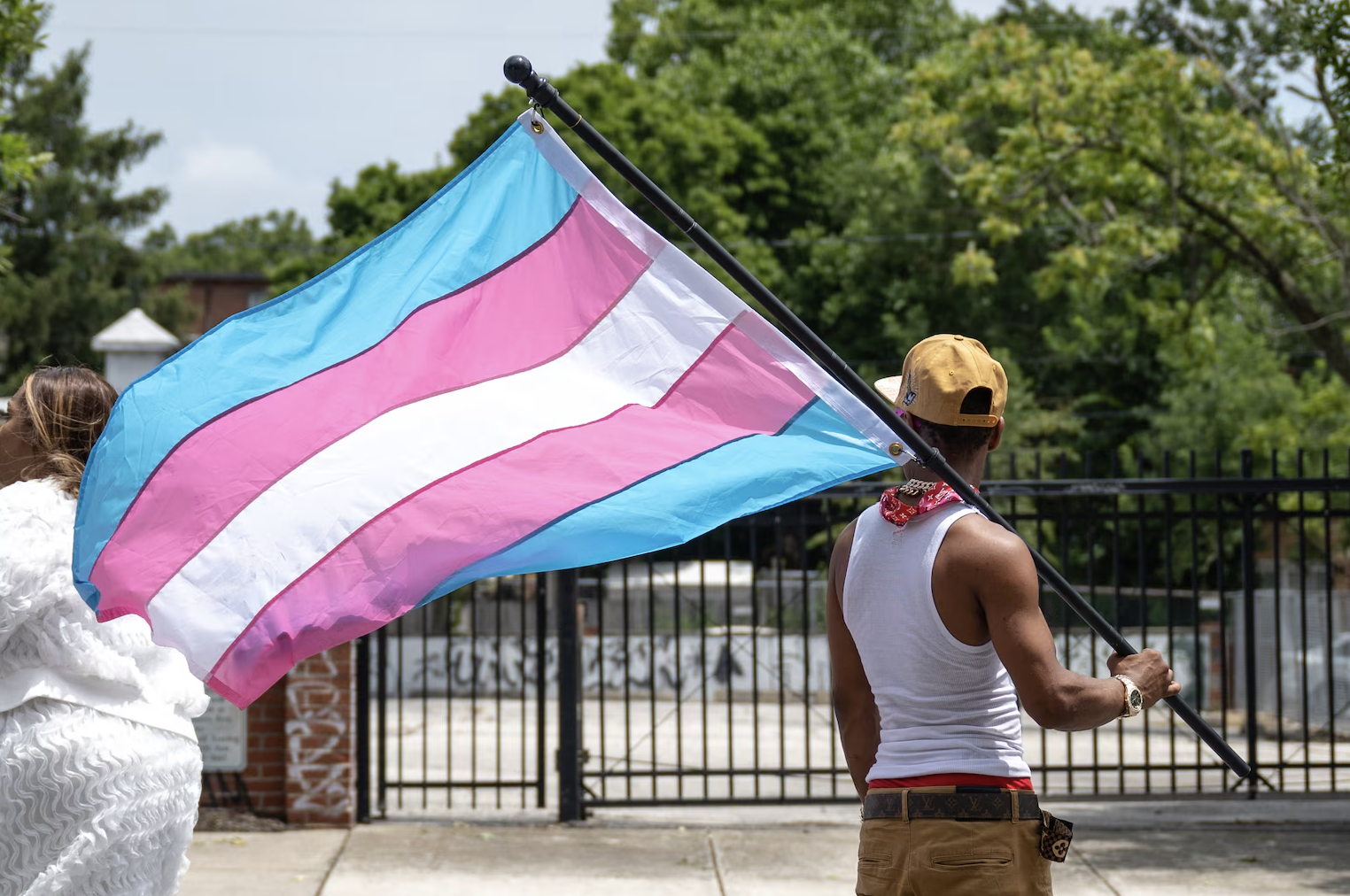
By JESSICA CALEFATI | Anne Arundel County Public Schools staff cannot use transgender students’ preferred names if their parents oppose it, according to an internal document reviewed by the Banner, a change that comes after conservative groups challenged the school system’s approach to gender identity.
Teachers union president Kristina Korona told members in an Aug. 20 email that the new guidance undermines district policy on acceptance and inclusivity and “will begin harming affected students immediately.”
Previously, the district didn’t require parental permission to use a high school student’s chosen name and pronouns corresponding to their gender identity, the internal document says. Now it does. The change comes as parents challenge the suburban school system’s gender identity policy and regulation in court and the Trump-Vance administration threatens the district’s funding.
The rest of this article can be found on the Baltimore Banner’s website.

Pentagon expands testosterone screening as trans troops face hormone therapy restrictions

Calendar: September 4-10

Swiss government backs nationwide conversion therapy ban

Gloria Steinem dies at 92

The mastery of love

Prominent French activist attacked outside Paris bar

Whitman-Walker’s 40th Walk & 5k Run to End HIV set for Sept. 19

Shooting outside gay bar in Ariz. leaves three dead

PHOTOS: Miss Gay Old Bay