Local
Gallaudet official sues after marriage flap
McCaskill seeks $16 million in damages for defamation, Human Rights Act violations
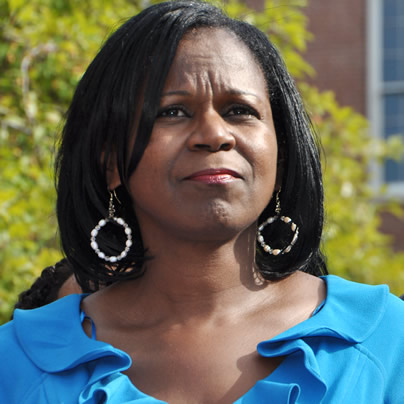
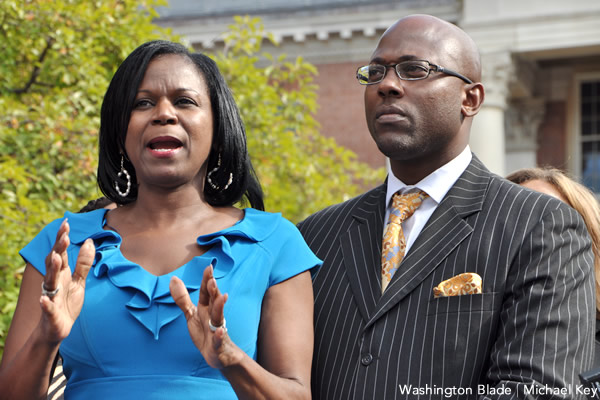
Gallaudet University Chief Diversity Officer Angela McCaskill (left) says the school discriminated against her after she signed an anti-gay marriage petition last year. (Washington Blade file photo by Michael Key)
Gallaudet University’s chief diversity officer filed a $16 million discrimination and defamation lawsuit on Sept. 27 against the university and two out lesbian faculty members on grounds that they “tarnished” her professional reputation by implying she held anti-gay views.
The university’s president suspended Angela McCaskill from her job as Associate Provost of Diversity and Inclusion last October after news surfaced that she signed a petition to place Maryland’s same-sex marriage law on the November ballot in a voter referendum.
McCaskill, a Maryland resident, explained at the time that she signed the petition when it was circulated at her church. She said her intention was to allow Maryland voters to decide on the gay marriage question and that she had taken no public position on the controversial issue.
The 39-page lawsuit filed in U.S. District Court for the District of Columbia accuses Gallaudet faculty members Martina “MJ” Bienvenu and Kendra Smith of pressuring Gallaudet President T. Alan Hurwitz into violating the D.C. Human Rights act by illegally suspending McCaskill.
The lawsuit calls the suspension a form of retaliation against McCaskill for her decision to exercise her constitutional right to sign a petition on a pending civic matter.
A Gallaudet spokesperson told the Washington Post the university would have no comment on the lawsuit. Bienvenu and Smith couldn’t immediately be reached for comment. At the time of McCaskill’s suspension last October the two women told the Blade through an intermediary that they had no comment on the matter.
McCaskill’s lawsuit comes nine months after Gallaudet President Hurwitz reinstated McCaskill to her job in January. McCaskill states in her lawsuit that Hurwitz reinstated her to a slightly different position that represents a demotion.
“[O]n or about October 7-8, 2012, co-defendant, Bienvenu, and her same-sex partner, Smith, began making false and malicious statements that plaintiff was ‘anti-gay,’” the lawsuit says.
“[A]nd on those same dates, from the university campus, co-defendants, Bienvenu and Smith, falsely reported to PlanetDeafQueer.com, a Lesbian, Gay, Bisexual, Transgender (‘LGBT’) publication, that plaintiff, Gallaudet University Chief Diversity Officer, was ‘anti-gay’ in an article entitled ‘Gallaudet’s Chief Diversity Officer Sign’s Anti-gay Petition,’” the lawsuit states.
It adds, “Co-defendant, Bienvenu, and her same-sex partner, Smith, further falsely stated, ‘[S]igning that petition is an act against many of Gallaudet’s constituents.’”
The lawsuit charges Gallaudet University and Bienvenu and Smith with one count of a D.C. Human Rights Act violation, two counts of defamation, two counts of intentional infliction of emotional distress, and one count of invasion of privacy.
The suit seeks $2.5 million in compensatory damages and $1 million in punitive damages for the first count of a Human Rights Act violation and $1.5 million in compensatory and $1 million in punitive damages for each of the remaining counts. The total amount of damages sought by the lawsuit comes to $16 million.
The decision to suspend McCaskill came at a time when LGBT students at the school raised concerns about the appropriateness of McCaskill appearing to side with anti-gay groups that were pushing the ballot referendum while she served as chief diversity officer, a position thought to be a manifestation of the school’s support for equality for everyone, including gay people.
“The plaintiff explained that her signature on the petition solely represented her desire to have the same-sex marriage issue vetted through public discourse so that Maryland voters could become more understanding, informed, and enlightened about the issue once they entered the polls,” the lawsuit says.
“Plaintiff further explained that it was not an ‘anti-gay’ petition and plaintiff’s signature thereupon did not express an opinion on same-sex marriage one way or another,” it says.
According to the lawsuit, Bienvenu acted in a hostile way toward McCaskill after the two met last October at Bienvenu’s request to discuss revelations that McCaskill signed the marriage petition.
“…Co-defendant Bienvenu responded in a very animated manner with her sign-voice elevated, exclaiming, ‘I am really disgusted with you!” the lawsuit says. “She asked rhetorically, ‘Are you still a member of that church?’ and then criticized plaintiff’s Christian faith and belittled her religious beliefs,” the lawsuit says.
The Gallaudet website identifies Bienvenu as a professor of American Sign Language and Deaf Studies. It says she received a doctorate degree in linguistics in 2003 and served as co-chair of the Deaf Lesbians Festival from 2000 to 2004.
The website identifies Smith as chairperson of the Gallaudet Department of Counseling. She has a doctorate in Interdisciplinary Studies with a specialization in Counseling Education and Supervision. Among the areas she specializes in is “gay/lesbian/bisexual identity development and issues in counseling,” the website says.




Delaware
Delaware fines Rehoboth bar $15,000 for discriminating against trans woman
Hideout told patron she had to use men’s room due to gender marker on driver’s license
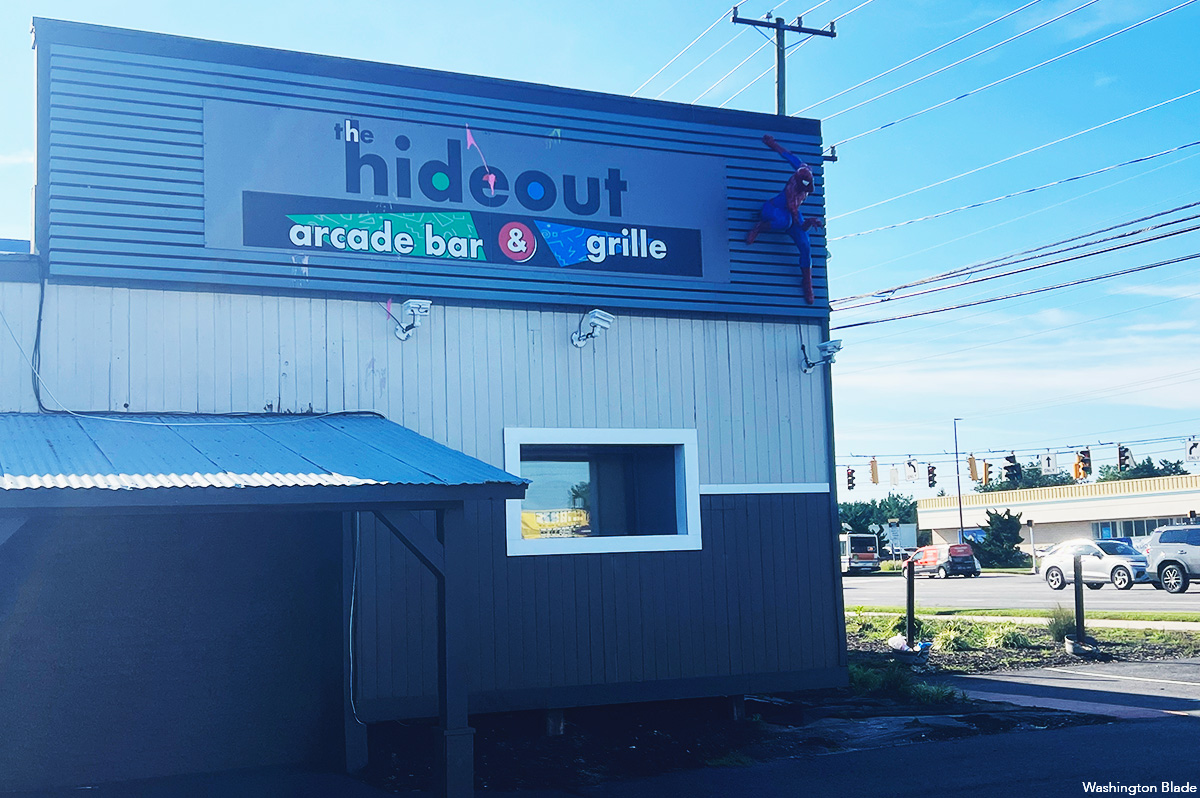
The Delaware Human and Civil Rights Commission voted to fine Hideout Arcade Bar & Grille $15,000 last month due to a discrimination complaint filed by a trans woman over her use of the bathroom.
Katie Sorber, a transgender woman, said that on April 5, 2023, she was stopped by employees and told she could only use the men’s bathroom due to the “male” gender marker on her driver’s license. This occurred after Sorber presented her ID upon entering the bar and ordering a drink.
Sorber took to Facebook to complain about her experience at the bar after she was told to use the men’s bathroom.
On April 12, 2023, Sorber returned to the Hideout but was barred from entering due to her post on social media.
Following Sorber’s post, Bryan Derrickson, the owner of Hideout Arcade Bar & Grille, allegedly began enforcing a policy in which patrons had to use the bathroom that corresponded to the gender marker on their ID.
Derrickson was ordered to pay $10,000 to Sorber, $5,000 to the Special Administration Fund, as well as conduct anti-discrimination training with employees, remove the ban on Sorber from the establishment, and revise the bar’s bathroom policy.
The commission ruled that the bar and Derrickson had wrongfully discriminated against Sorber on the basis of her gender.
Derrickson’s explanations for the denial included safety concerns, a third-party patron complaint, and a reference to the health code. The panel found this to be inconsistent and lacking factual support upon cross-examination.
The case was evaluated under the Delaware Equal Accommodations Law, which explicitly prohibits discrimination and retaliation in places of public accommodation based on gender identity.
This was the second time that the bar has been fined for discriminating against a transgender woman. The bar received a $2,000 penalty in September of last year for denying a transgender woman entry in 2023.
Half of the fine went to Kathy Carpenter Brown, the trans woman who experienced the discrimination. Brown is the founder of TransLiance, an LGBTQ+ advocacy group in Delaware.
District of Columbia
Push to elect more LGBTQ ANC members yields results
31 of 43 known LGBTQ ANC members elected in 2024 seeking re-election
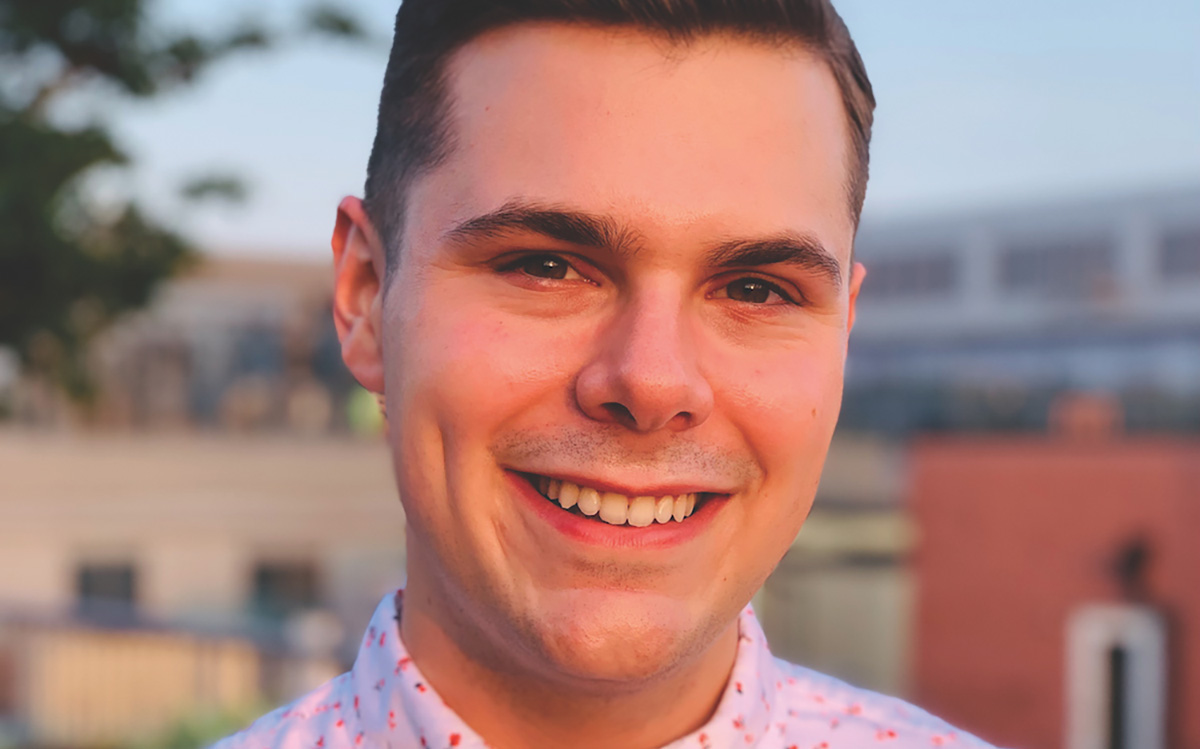
A 2026 list of candidates released by the D.C. Board of Elections shows that 31 of the 43 known LGBTQ candidates who won election in 2024 as Advisory Neighborhood Commissioners have filed the required petition signatures to be placed on the ballot this year to run for re-election.
The Washington Blade reported in 2024 that 43 known LGBTQ candidates won election to ANC seats that year in the November election
In a related development, the president of Capital Stonewall Democrats, D.C.’s largest local LGBTQ political group, said the group this year has recruited at least 39 LGBTQ candidates to run for Advisory Neighborhood Commission seats in the city’s Nov. 3 general election.
The group’s president, Stevie McCarty, an incumbent ANC member in the city’s Shaw neighborhood who is running for re-election, said the 39 candidates and possibly more responded to the group’s Queering ANCs campaign launched on July 7 that includes a website with detailed instructions for how best to run for an ANC seat.
“Since launching in early July, the site has drawn more than 20,000 views, and 39 candidates have used it to actually run,” McCarty said in a statement. He said he wasn’t sure if all the 39 candidates wanted to be identified as LGBTQ, and he was reviewing the list of incumbent LGBTQ ANC members who won election in 2024 to determine if any of the 39 candidates recruited were among those incumbents. He said he was not ready to release the names of the 39 candidates he said his group recruited to run for an ANC seat.
If none of the 39 candidates recruited by Capital Stonewall Democrats are among the 31 known LGBTQ ANC incumbents running for re-election, it would mean at least 70 LGBTQ ANC candidates will be on the city’s November election ballot.
McCarty said Capital Stonewall Democrats will send candidate questionnaires to the known LGBTQ ANC candidates as part of its process for endorsing candidates in the November election. He said he expects the group to help campaign for and provide financial support for the ANC candidates it endorses.
The D.C. local government is believed to be unique among U.S. cities in currently having 46 Advisory Neighborhood Commissions consisting of 345 single member districts in neighborhoods throughout the city in which unpaid Advisory Neighborhood Commissioners are elected for two-year terms.
The commissions are charged with considering a wide range of policies and programs impacting their neighborhoods, including traffic, parking, recreation, street improvements, zoning, liquor licenses, and economic development. Although ANCs do not have authority to set or reject policies or actions by city agencies, the agencies are required to give “great weight” to ANC recommendations, according to the law creating the ANCs.
“As an ANC member, I know firsthand how these seats shape our neighborhoods, from housing and public safety to sanitation,” McCarty said in the Capital Stonewall Democrats statement announcing the launch of the Queering ANCs campaign in July. “I’m proud to lead this effort to ensure more LGBTQ+ Washingtonians see themselves as leaders in their communities,” he said.
Some local LGBTQ activists, who asked not to be identified, said they were not aware of a significant boost in new LGBTQ ANC candidates from the Queering ANCs campaign. However, they praised the effort to recruit more LGBTQ ANC candidates and said the campaign could have yielded more candidates if it had started sooner than less than a month before the deadline for becoming a candidate.
McCarty said Capital Stonewall Democrats will continue to recruit LGBTQ D.C. residents to run as write-in candidates for ANC seats, especially in the 45 single member districts in which no candidate will be on the ballot. The Board of Elections candidate list shows many ANC single member districts that have just one candidate running without an opponent.
Following is a list of 33 known LGBTQ ANC candidates running in D.C.’s November 2026 election and the single member districts and neighborhoods in which they are running. All but two – Vita Rangel and J. Swiderski – are incumbents running for re-election. The Washington Blade will update this list if and when more LGBTQ ANC candidates become known.
1A04 – (Columbia Heights) Jeremy Sherman, he/him
1A10 – (Columbia Heights) Vita Rangel, she/ her [non-incumbent candidate]
1B03 – (Columbia Heights/U Street) J. Swiderski, they/he [non-incumbent candidate]
Jamie S. Sycamore, he/him
1B06 – (Columbia Heights/Meridian Hill) Miguel Trindade Deramo, he/him
1B07 – (U Street) Matthew Holden, he/him
1E01 – (Park View) Brad Howard, he/him
2B02 – (Dupont Circle) Jeffrey Rueckgauer, he/him
2B03 – (Dupont Circle) Vincent Slatt, he/him
2C01 – (Penn Quarter) Michael D. Shankle, he/him
2F05 – (Logan Circle) Christopher Dyer, he/him
2F07 – (Logan Circle) Kevin Cataldo, he/him
2G01 – (Shaw)Parker Griffin, he/him Howard Garrett, he/him
2G02 – (Shaw) Alexander ‘Alex’ Padro, he/him
2G04 – (Shaw) Steven McCarty, he/him
3B06 – (Wesley Heights) S. Robert Rodriquez, he/him
3F05 – (Van Ness/Cleveland Park) Adrian Jesus Iglesias, he/him
4B01 – (Takoma) Doug Payton, he/him
4B10 – (Lamond Riggs) Jinin Berry, she/her
4C06 – (Petworth) Christen Boss Hayes, they/them
4E02 – (16th Street Heights) Vince Micone, he/him
5B04 – (Brookland) Ra Amin, he/him
5B05 – (Brookland) Mónica Martínez López, she/her
5D05 – (Trinidad) Salvador Sauceda-Guzman, he/him
5F06 – (Eckington) Joe Bishop-Henchman, he/him
6B03 – (Capitol Hill) David Sobelsohn, he/him
6B09 – (Capitol Hill/Barney Circle) Karen Hughes, she/her
7C01 – (Deanwood) Brian Glover, he/him
7C03 – (Lincoln Heights) Carlos Richardson, he/him
7C04 (Deanwood) Anthony Lorenzo Green
7C08 – (Capitol View) Brandon M. Scott, he/him
8A01 – (Fairlawn) Tom Donohue, he, him
8B06 – (Garfield Heights) Marcus Thomas Hickman, he/him
Congress
Chris Van Hollen says the Democratic Party needs change. Is he the one to lead it?
Senator is backing anti-establishment Democrats across the country
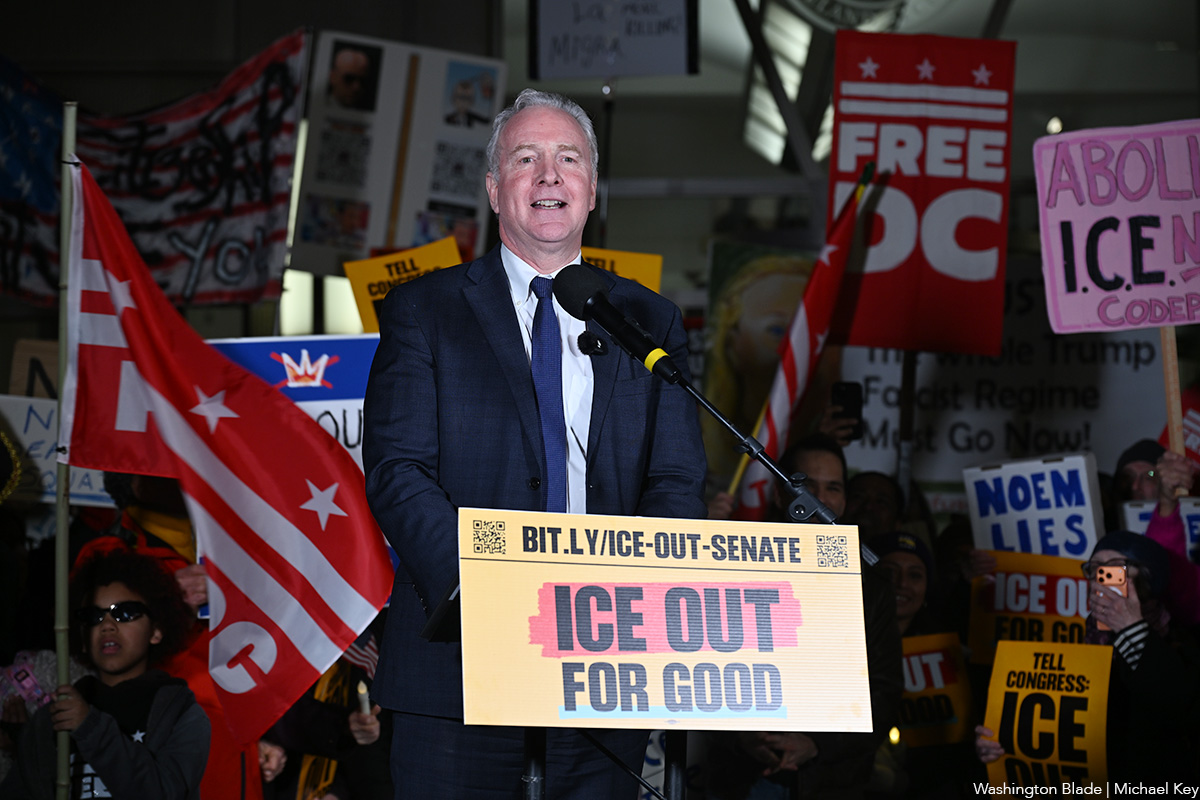
By LEE O. SANDERLIN | The Democratic Party is having something of an identity crisis — losing to President Donald Trump twice in three elections will do that.
Should the party embrace anti-establishment figures who espouse progressive policy ideas like Medicare for all and rhetoric about unrigging the economy for the 1 percent? Or should Democrats try to appeal to moderates who want to return to semi-normalcy in a time of political upheaval?
Although he’s been in Congress since 2002, with key leadership roles throughout his tenure, Maryland Sen. Chris Van Hollen, 67, counts himself firmly in the anti-establishment camp.
The rest of this article can be found on the Baltimore Banner’s website.

Delaware fines Rehoboth bar $15,000 for discriminating against trans woman

Music icon and dear LGBTQ friend Dolly Parton remembered

Push to elect more LGBTQ ANC members yields results

Chris Van Hollen says the Democratic Party needs change. Is he the one to lead it?

New data shows record-high LGBTQ population amid Trump attacks

Exploring Renée Richards’s life through lens of a trans author

Why we need to protect ‘sacrilegious’ art

New GALA show about WWII spy full of conflict, intrigue

Proposed Indian foreign funding law overhaul could further pressure LGBTQ groups

Gay-owned pizzeria in Dupont Circle burglarized
-

 Books4 days ago
Exploring Renée Richards’s life through lens of a trans author
-
Opinions3 days ago
Why we need to protect ‘sacrilegious’ art
-
Theater3 days ago
New GALA show about WWII spy full of conflict, intrigue
-
India2 days ago
Proposed Indian foreign funding law overhaul could further pressure LGBTQ groups