Local
Maryland transgender rights bill introduced
Rich Madaleno introduced bill

 Maryland State. Sen. Rich Madalenoby a 6-5 vote margin struck down an identical bill that Madaleno and state Sen. Jamie Raskin (D-Montgomery County) introduced that would have banned anti-trans discrimination in housing, employment and public accommodation. State Sens. Norman Stone (D-Baltimore County), C. Anthony Muse (D-Prince George’s County) and James Brochin (D-Baltimore County) voted against the measure.
Senate President Thomas V. “Mike” Miller (D-Prince George’s and Calvert Counties) state Sen. Katherine Klausmeier (D-Baltimore County) support the bill. House Speaker Michael Busch (D-Anne Arundel County) also backs the measure.
Governor Martin O’Malley and the three Democrats who are running to succeed him — Lieutenant Gov. Anthony Brown, Attorney General Doug Gansler and state Del. Heather Mizeur (D-Montgomery County) — are expected to testify in support of the bill. Brown’s running mate, Howard County Executive Ken Ulman, has also pledged to speak for the measure in Annapolis.
“No one should face discrimination on the basis of gender identity,” Mizeur told the Washington Blade last week. “Equality in Maryland shouldn’t have to wait this long.”
Both Mizeur and Gansler’s running mate, state Del. Jolene Ivey (D-Prince George’s County), co-sponsored the 2011 trans rights bill in the House of Delegates.
“Inequality anywhere should be recognized as wrong for anybody,” Gansler told the Washington Blade during a Jan. 10 telephone interview. “Inequality for any person is inequality for all of us.”
Gender Rights Maryland Executive Director Dana Beyer welcomed the introduction of the bill.
“I’m glad to see that this year’s gender identity bill is now in play and we are all looking forward to an expedited hearing in the [Senate] Judicial Proceedings Committee,” she told the Blade. “With strong support in both the Senate and House, as well as from senior leadership, the administration and all the Democratic gubernatorial candidates, the time has come to finally move the bill from the Senate committee to the floor.”
The bill remains a legislative priority for Equality Maryland, the state’s largest LGBT advocacy group, after voters in 2012 approved the Free State’s same-sex marriage law.
Gansler told the Blade the organization “traded” its endorsement of Brown for governor last month for his support of the trans rights bill. Gansler said the measure would have “a stronger chance of becoming law” this year if the lieutenant governor made it an administrative bill as O’Malley did when he made the same-sex marriage bill a legislative priority in 2012.
“That would be sort of putting his money where his mouth is,” said Gansler. “If it’s not an administration bill, I just don’t know.”
Brown’s campaign manager, Justin Schall, blasted Gansler’s claims.
“The leaders of Equality Maryland are dedicated, honest people and this unfounded accusation by Gansler is incredibly disrespectful of their process and the integrity of their organization,” Schall told the Blade on Monday. “Anthony Brown is, and has always been, a strong supporter of equality and justice because it’s the right thing to do.”
Baltimore City and Baltimore, Montgomery and Howard Counties have already added gender identity and expression to their non-discrimination laws. Hyattsville last month became the first jurisdiction in Prince George’s County to pass a trans-inclusive anti-discrimination ordinance.
Neighboring Delaware is among the 17 states along with D.C. and Puerto Rico that include gender identity and expression in their anti-discrimination laws. Pennsylvania Gov. Tom Corbett last month announced his support of a bill that would ban anti-LGBT discrimination in the Keystone State.




District of Columbia
Blade welcomes fall intern
Alexis McLean is student at University of North Florida
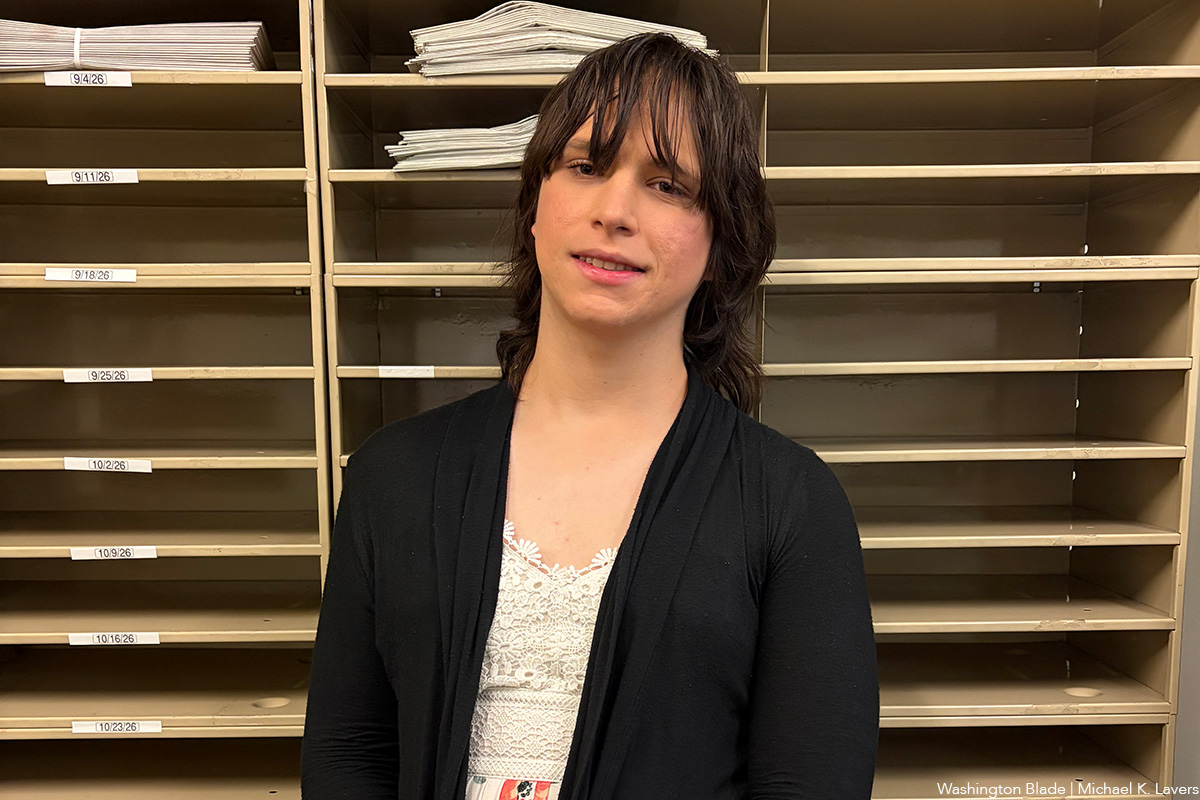
The Washington Blade this week welcomed Alexis McLean as its fall intern.
Alexis is studying political science at the University of North Florida in Jacksonville, Fla. She is interning with the Blade as part of a continued partnership with the Washington Center.
“I am looking forward to spending my time in the fall with the Washington Blade, as this is a new experience for me,” said Alexis. “I have not experienced any journalist jobs in the past so this would be my first time, and I am excited to better my writing and communications skills with this internship.”
Alexis’s internship with the Blade ends in early December.
Rehoboth Beach
SUNFESTIVAL takes center stage as Rehoboth Beach closes out summer
Labor Day Weekend bustling with events, including David Archuleta performance

Labor Day Weekend marks the unofficial end of summer in Rehoboth Beach, but there will be no shortage of LGBTQ events, with CAMP Rehoboth’s annual SUNFESTIVAL taking over town this weekend.
Thursday (9/3)
Get your Labor Day Weekend started early Thursday night with happy hour from 5-7 p.m. at Diego’s Bar & Nightclub, followed by Naughtee Bingo hosted by Magnolia Applebottom at 8:30 p.m.
After bingo, the party continues with Dancing at Diego’s from 9 p.m. to 1:30 a.m.
Aqua Bar & Grill will also kick off its Labor Day Weekend festivities Thursday with a DJ spinning from 9 p.m.-1 a.m.
Friday (9/4)
The weekend ramps up Friday night at Aqua, where DJ Matt Bailer will keep the dance floor moving from 9 p.m.-1 a.m.
Over at Diego’s, DJ Steve Sidewalk will then take over Diego’s for Freedom Friday from 9 p.m.-1:30 a.m.
Saturday (9/5)
The main event of the weekend arrives Saturday with the opening night of CAMP Rehoboth’s SUNFESTIVAL.
Billed as the ultimate party to close out the summer, SUNFESTIVAL has become one of Rehoboth’s signature Labor Day Weekend events. The annual celebration sells out each year, with proceeds benefiting CAMP Rehoboth.
Doors open at 6:30 p.m. with refreshments available at the cash bar while attendees are invited to socialize and find their seats.
Saturday night will feature local singer Ashley Williams as the opening performer, followed by headliner David Archuleta. The event will also feature a live auction.
Back across town Saturday, Aqua will continue its Labor Day Weekend DJ lineup from 9 p.m. to 1 a.m.
Diego’s will also have plenty happening, with ‘Splash Party’ hosted by Magnolia Applebottom at 5 p.m., followed by a Saturday Dance Party with Brett Oosterhaus from 9 p.m.- 1:30 a.m.
The Blue Moon hosts its popular Legends Show at 9 p.m. It’s an all-live singing show by the Blue Moon cast of celebrity impersonators.
Etienne Pilon has taken Rehoboth by storm this summer. Check out the talented singer/pianist at The Pines from 7-10 p.m.
Sunday (9/6)
Sunday’s SUNFESTIVAL event will shift the focus to the dance floor, with globally renowned DJs Robbie Leslie and James Anthony scheduled to perform. Doors open at 7 p.m., with dancing continuing until 1 a.m.
On Sunday, Aqua will throw its annual White Party, with DJs spinning from 9 p.m.-1 a.m. Guests are encouraged to dress in white for the holiday weekend celebration.
Diego’s will host its Sunday High T-Dance with Pamala Stanley at 5 p.m. Later that evening, DJ Tannr will be spinning at 9 p.m.
John Flynn is on the piano from 6-8 p.m. at the Blue Moon.
Monday (9/7)
The final day of Labor Day Weekend brings one last chance to hit the dance floor before summer officially winds down.
Aqua will close out its five-day Labor Day Weekend celebration with DJ Biff from 3-7 p.m.
Maryland
Anne Arundel schools now need parent permission to call trans students by preferred names
Conservative groups challenged system’s policy
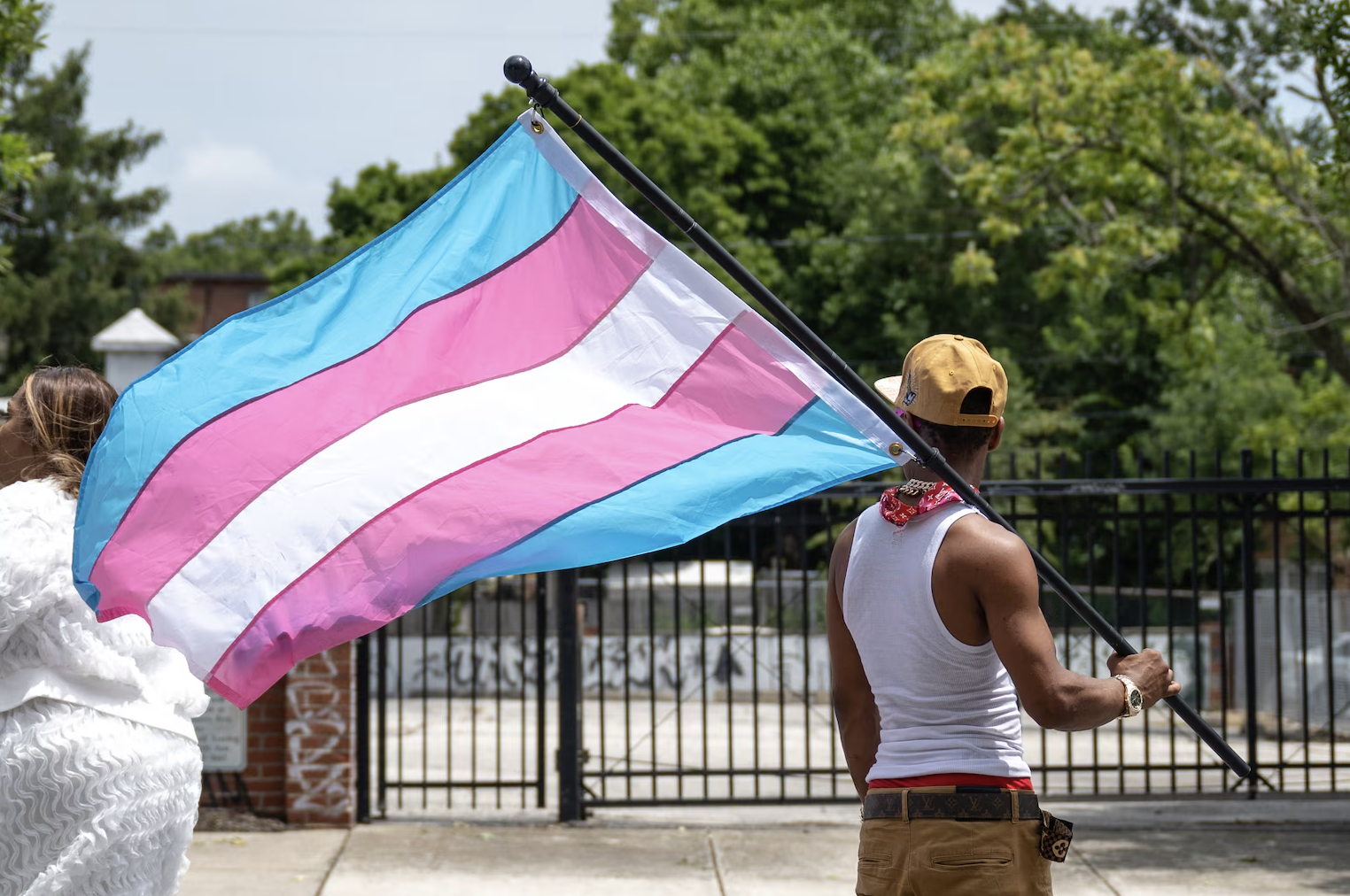
By JESSICA CALEFATI | Anne Arundel County Public Schools staff cannot use transgender students’ preferred names if their parents oppose it, according to an internal document reviewed by the Banner, a change that comes after conservative groups challenged the school system’s approach to gender identity.
Teachers union president Kristina Korona told members in an Aug. 20 email that the new guidance undermines district policy on acceptance and inclusivity and “will begin harming affected students immediately.”
Previously, the district didn’t require parental permission to use a high school student’s chosen name and pronouns corresponding to their gender identity, the internal document says. Now it does. The change comes as parents challenge the suburban school system’s gender identity policy and regulation in court and the Trump-Vance administration threatens the district’s funding.
The rest of this article can be found on the Baltimore Banner’s website.

‘Here the Whole Time’ delivers queer coming-of-age comedy

Pentagon expands testosterone screening as trans troops face hormone therapy restrictions

Calendar: September 4-10

Swiss government backs nationwide conversion therapy ban

Gloria Steinem dies at 92

PHOTOS: Miss Gay Old Bay

Anne Arundel schools now need parent permission to call trans students by preferred names

SUNFESTIVAL takes center stage as Rehoboth Beach closes out summer

Beloved D.C. ‘Old Catholic’ Bishop Charles Braun dies at 86

Blade welcomes fall intern
-

 Photos5 days ago
PHOTOS: Miss Gay Old Bay
-
Maryland5 days ago
Anne Arundel schools now need parent permission to call trans students by preferred names
-
Rehoboth Beach5 days ago
SUNFESTIVAL takes center stage as Rehoboth Beach closes out summer
-
Obituary4 days ago
Beloved D.C. ‘Old Catholic’ Bishop Charles Braun dies at 86